Novak Djokovic: Your time is now. Why US Open is Serb’s best chance to make history
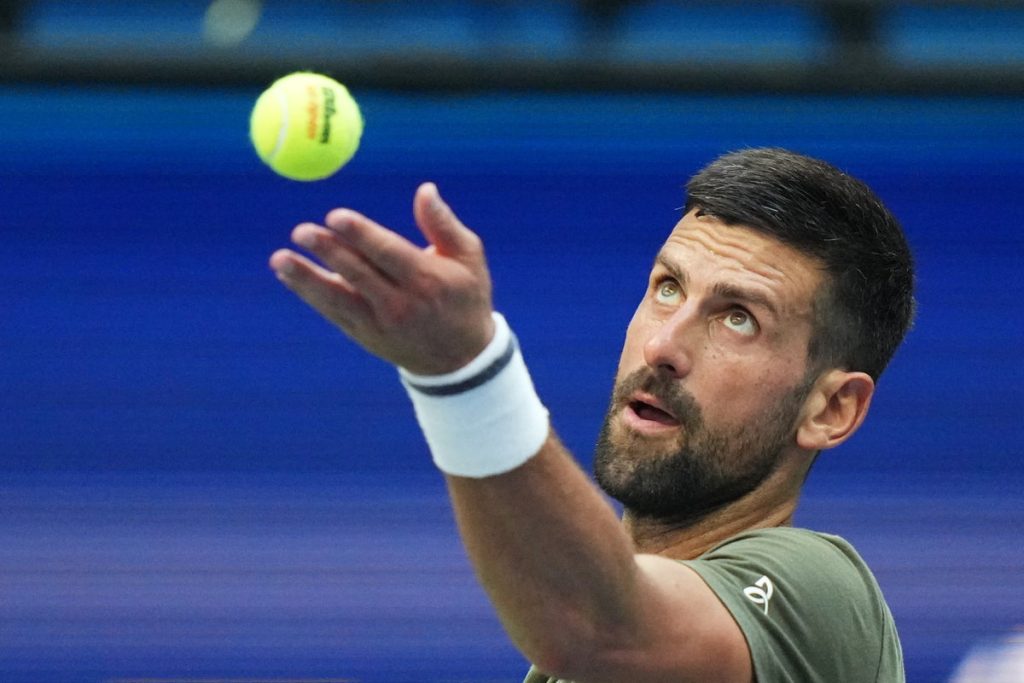
Eyes slapped shut as the sun rises beyond him, a meditating Novak Djokovic steadfastly smacks his chest, his arms and his legs. Then, cutting to the customary docu-series interview chair-of-doom, the Serb says: “I cannot say I feel content with what I have and who I am. I am always looking to be more: better, faster, stronger.”
If you had to envisage how a 92-minute documentary about one of world sport’s most successful stars begins, these snippets would not follow the status quo. Yet 24-time major winner Djokovic doesn’t do status quo: he is an athlete, an enigma, known as much for his greatness on court as his nonconformity off it. Think Melbourne tree-hugging; think magic potions; think no Covid vaccine.
For Djokovic’s The Wolf in Winter fly-on-the-wall movie released last week, as “Prime Video Sports Presents” and “A Film By Jason Hehir” entrance frames are enveloped by clips of Djokovic literally howling into the distance, it all feels rather appropriate. Much like Rafael Nadal’s Netflix series earlier this year, it is a genuinely insightful and engaging look at one of tennis’ all-time greats. If you haven’t watched it yet, consider this a gentle nudge of encouragement.
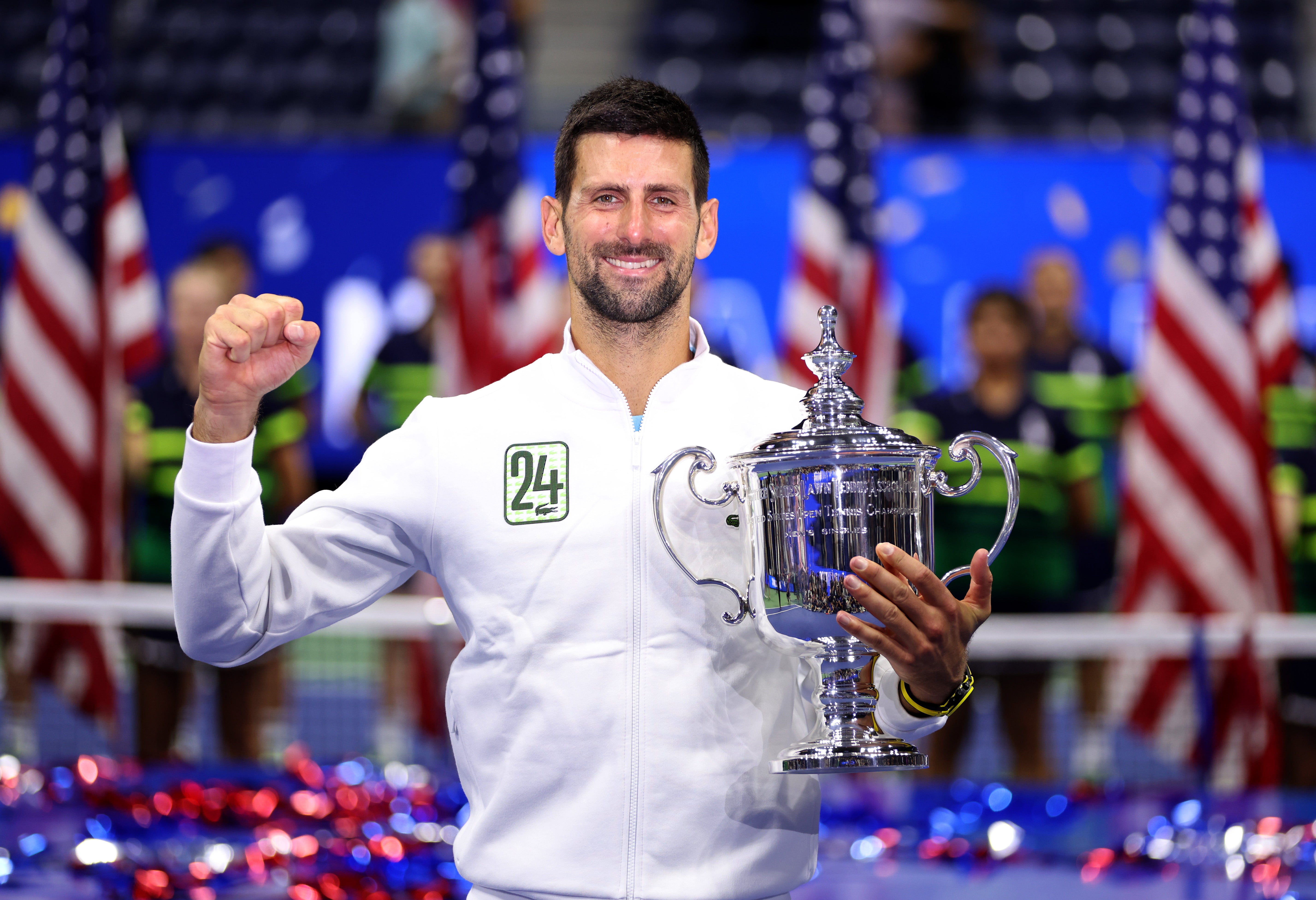
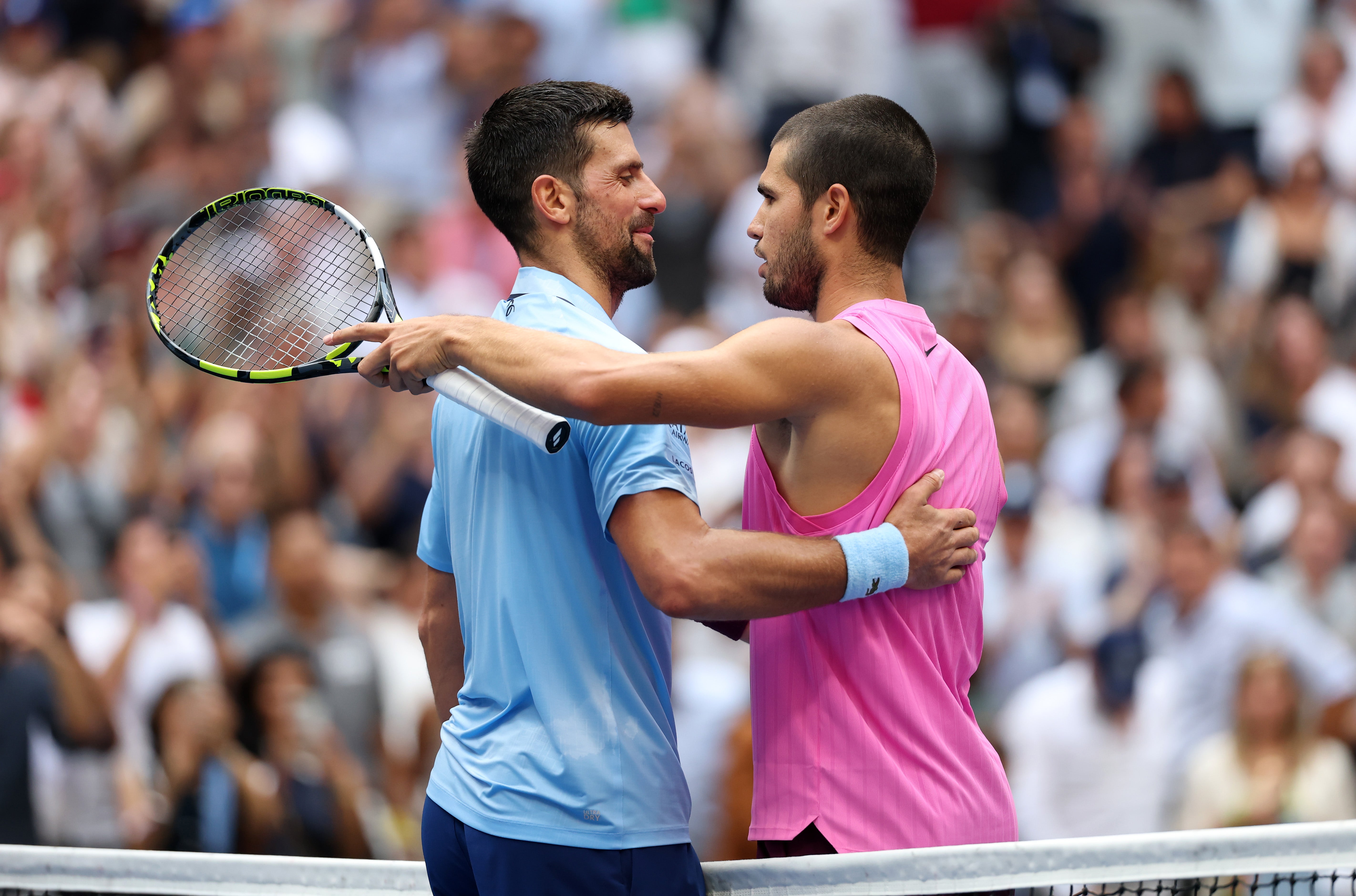
The timing is conspicuous, too, ahead of the final Grand Slam of the season in New York, starting on Sunday. The US Open marks three years since Djokovic’s last major triumph, in a 2023 campaign where he won three of the big four and only missed out on a historic calendar Grand Slam in a final-set defeat to Carlos Alcaraz at Wimbledon.
At that point, a record-breaking 25th singles Grand Slam – which would put him ahead of Margaret Court at the top of the all-time standings, male or female – seemed a simple inevitability. Yet now, this is Djokovic’s 12th Grand Slam chasing that elusive No 25. But it might just be his best shot.
Why? Put simply: it’s the first major where both Jannik Sinner and Alcaraz are either absent or undercooked.
Sinner announced his withdrawal last week owing to a knee problem, with the Italian not hitting a ball in anger on the match court since triumphing at SW19 at the start of July. Defending champion Alcaraz, meanwhile, is making his return after four months out with a wrist injury. No warm-ups, no match practice, ahead of potentially a fortnight in the heat and humidity of best-of-five set tennis at Flushing Meadows.
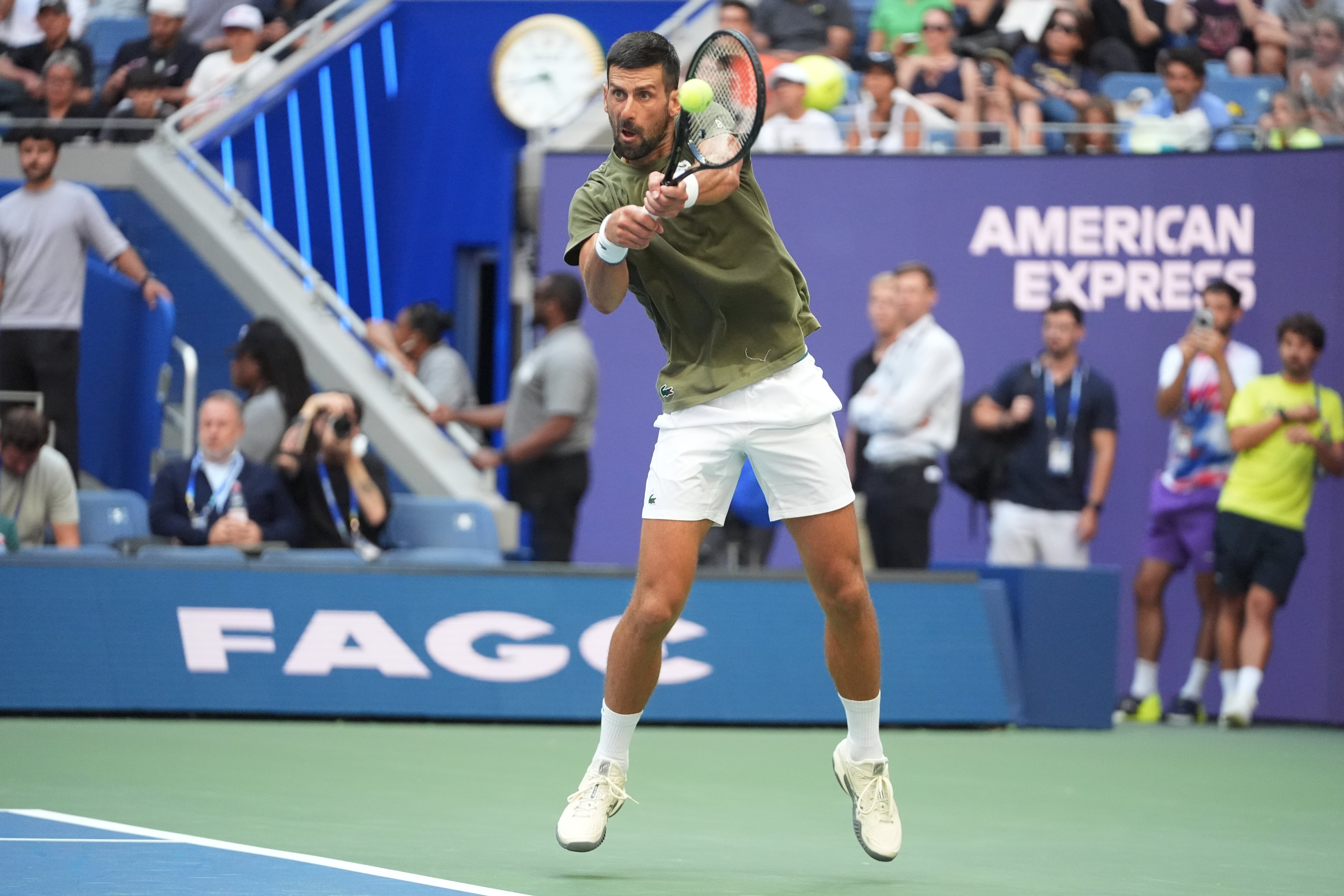
It may seem naive to simply dismiss the rest of the field here. Alexander Zverev, who Djokovic practiced with on Arthur Ashe on Wednesday, is the top seed and could be a man unleashed after shrugging the major monkey off his back at Roland Garros. Here, the German also has a kinder half of the draw with third seed Felix Auger-Aliassime, while Djokovic is slated to play Alcaraz – again – in the semi-finals.
Djokovic’s Grand Slam defeats since last title
- Australian Open 2024: Lost to Jannik Sinner (semi-finals)
- French Open 2024: Withdrew before Casper Ruud (quarter-finals)
- Wimbledon 2024: Lost to Carlos Alcaraz (final)
- US Open 2024: Lost to Alexei Popyrin (third round)
- AO 25: Lost/retired vs Alexander Zverev (semi-finals)
- FO 25: Lost to Sinner (semi-finals)
- WIM 25: Lost to Sinner (semi-finals)
- USO 25: Lost to Alcaraz (semi-finals)
- AO 26: Lost to Alcaraz (final)
- FO 26: Lost to Joao Fonseca (third round)
- WIM 26: Lost to Sinner (semi-finals)
Elsewhere, Arthur Fils is looking to continue the three-year streak of the Cincinnati Masters champion claiming the title in New York, while big-serving Americans Taylor Fritz and Ben Shelton will also fancy their chances of a deep run.
But in the last 11 Grand Slams, seven of Djokovic’s defeats have come against the big two. To his immense credit, and a tribute to his otherworldly excellence in the athleticism department, the 39-year-old has reached the last four of nine of those 11 events. His five-hour-plus triumph over Auger-Aliassime, 13 years his junior, at Wimbledon last month speaks to Djokovic’s unrelenting dedication off-court.
Yet his age is an undeniable factor. Nobody has ever won a men’s singles title at 39. Nor 38. In fact, Ken Rosewall’s triumph at the 1972 Australian Open is the oldest men’s singles triumph – and that was aged 37. Djokovic is constantly fighting Father Time.
An insight into his mentality, though, was again depicted in his documentary. “Why would I retire when I keep proving myself that I can win?” he noted, in and around a segment focused on his Olympic gold medal victory at the 2024 Games in Paris; the final piece to his mind-blowing tennis jigsaw. As his tennis manager Carlos Gomez-Herrera stated: “Novak is Novak when the moment matters.”
It is his unimpeachable attribute: his never-say-die attitude, his ability to execute to the maximum at the most critical of moments. This is the very factor which means this next fortnight could represent his new Everest in a career of scaling the highest of peaks.
And yet, all the signs give the polar opposite feeling. He has never played in fewer tournaments leading up to the final major of the year: only six all season. He most recently lost in his first match in Cincinnati to world No 42 Thiago Tirante. By all accounts, he has looked sluggish in pre-tournament practice, opting to stop when broken twice by world No 33 Zizou Bergs in a practice set. His draw is also tough: he has former top-30 player Mariano Navone in round one before a potential match-up against Stan Wawrinka (whom he lost to in the final in New York 10 years ago) or Matteo Berrettini in round two. It could be all over for the fourth seed before it even really gets going.
And yet, Djokovic is motivated by something deeper within. “There is a word in Serbian called inat,” Djokovic explains in The Wolf in Winter. “When people doubt you, when everyone is basically against you, that’s when you use that inat, that force of stubbornness to prove everybody wrong.
“That inat is actually quite widespread in the mentality of Serbian people.” You could say that sense of inat is the most innate element in the psyche of Djokovic. And it is why, despite the form book and the historical statistics, you can never write him off. In fact, his time could well be now.