Mac Nano Cyberdeck Consists of an M4 Mac Mini That Slides In Like a Game Boy Cartridge
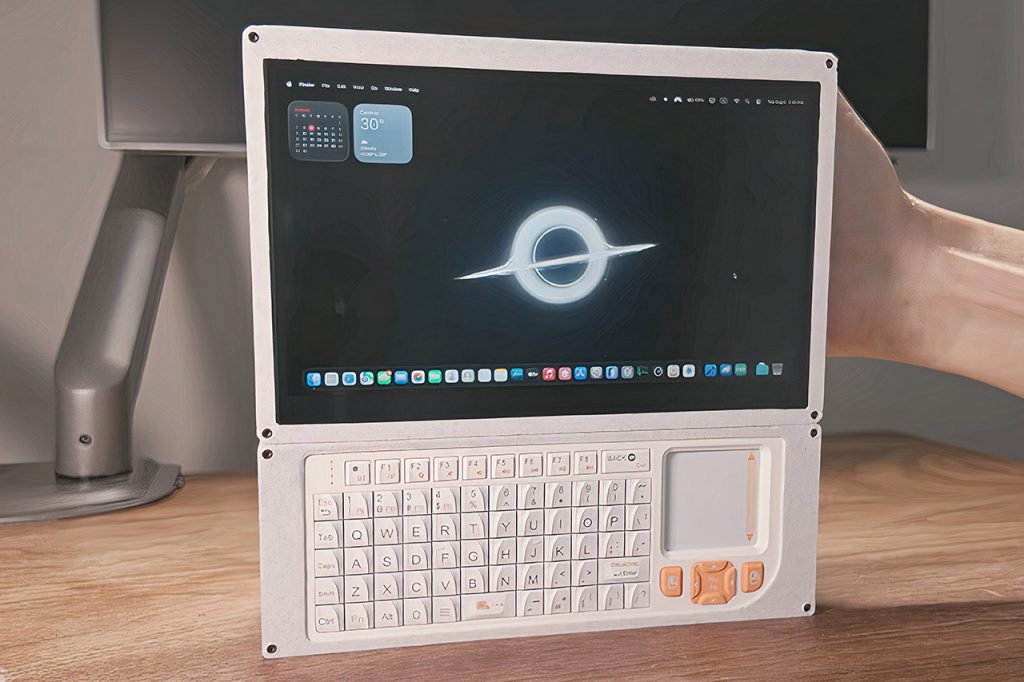
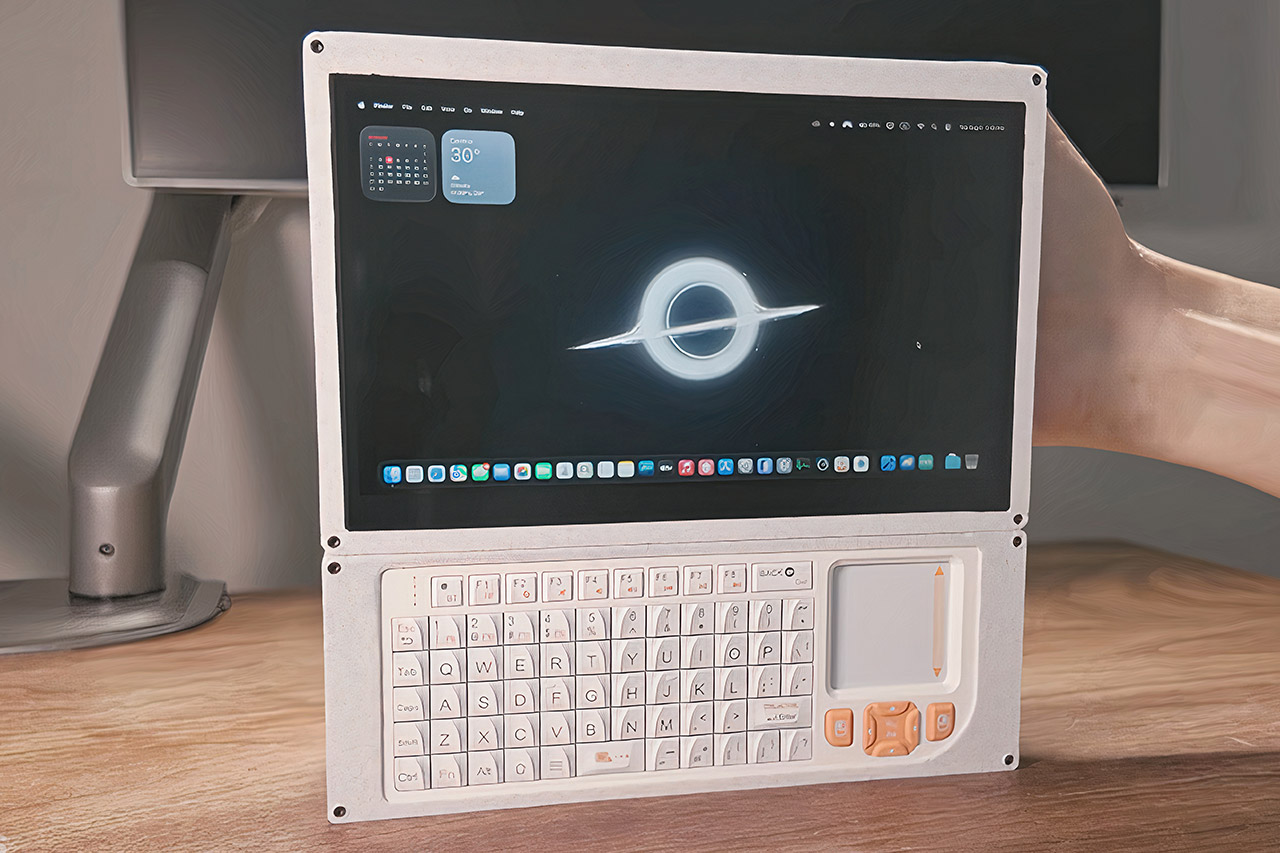
Shing Solutions already had a name for a gutted M4 Mac Mini. Once the retail shell came off and the board sat in a printed sleeve with Apple’s original heatsink and blower still bolted on, that package became the Mac Nano. The new project puts that sleeve inside a second body, a handheld deck that treats the whole computer like a giant Game Boy cartridge you can pull and replace.
Most homemade decks you build from scratch begin with a Raspberry Pi for obvious reasons: it’s inexpensive and small. This one, however, begins with a fresh new M4 mini, as the idea was to condense desktop Mac performance into something you could actually carry around. He kept the standard cooling system for a purpose. The heatsink is 32.8 mm tall, thus the Nano case needs to expand somewhat to fit it, in this example to 37.5 mm. Later on, the extra depth proves to be ideal for attaching Joy-Con rails on both sides, which is a much better solution than attempting to hack Apple’s thermal stack and combat heat.

Apple 2026 Mac mini Desktop Computer M6 chip
- LITTLE DO-IT-ALL — Mac mini packs pure power into a small, five-by-five-inch desktop as the M6 chip delivers next-level AI capabilities. Mac mini…
- M6 CHIP — Everything you do on Mac mini feels more responsive with the M6 chip and its next-generation CPU. Fly through AI workflows with up to 4.8x…
- CONNECT IT ALL — Features three Thunderbolt 4 ports, an HDMI port, and a 2.5Gb Ethernet port in the back, and two USB-C ports and a headphone jack…
The Nano deck slips easily into the case thanks to the rails it rests on. A center plate houses a headphone jack and a USB-C connector, as well as some useful short extensions that allow you to use the original connections while outside the case. And the hatches over here do an excellent job of concealing all of the extra cable runs. On more current macOS releases, such as Tahoe 26.5 and later, there’s even a hardware power switch that allows the system to start automatically. If Apple decides to remain with the same board layout for a future mini, the printed frame is designed to simply accept the new board without requiring a whole redesign. Shing has also left some flexibility available, so you could theoretically fit more boards on the same bus.

Up front, you’ll find a sleek 7-inch 120 Hz IPS touchscreen that simply slides into a printed frame and can be unscrewed and replaced if necessary. Just below that is a small QWERTY keyboard with a built-in touchpad; it came in as a wireless unit, so all we had to do was remove the battery, solder in a USB-C line, and add a 5.1k ohm resistor to resolve the power handshake and allow the module to run off the internal bus without requiring a second radio or battery.

Most portable Mac builds fail due to a lack of power. A wall-wart small requires far more power from a standard USB power bank than can be given cleanly, and it wants that power without any brownouts when you pull a charger. We’ve used four high-drain 18650 cells to power a customized UPS board, giving you a useful capacity of 36 watt hours. When you unhook the cord, everything automatically switches to battery power, and when you plug it back in, the board waits three seconds before trusting the wall again. A BMS will turn off the pack at 12v, preventing you from blowing anything. Charging peaks at roughly 16.8 volts at 1 amp, so a full charge takes slightly under three hours. If you’re working and charging at the same time, you’ll need a 100-watt USB C PD supply. If you’re only watching videos, the battery will last for up to six hours. An unpleasant 3.4 milliamperes of parasitic drain on the UPS was resolved with an extra BMS and some heat-shrink to prevent the pack from quietly draining away on a shelf by itself.

Organizing the battery data required the use of a small computer. We’re using a Seeed Studio XIAO ESP32S3, which reads a DFRobot INA219 fuel gage and two NTC thermistors before sending all of the capacity, voltage, current, and cell temperature data over USB to a bespoke macOS menu bar app, allowing you to know the pack is in good health without having to open the case.

When he tried to install anything useful, his USB space quickly ran out. He modified two of those tiny USB 2.0 splitter boards down to something much more compact, removing the large bulky connectors and converting them into a three-port internal hub with a few extra resistors to ensure everything enumerates properly and the keyboard’s power request is on the up and up. The Joy-Cons were somewhat problematic. When plugged in, macOS treats them as second-class citizens, so we mapped the pads over with almost no lag using circuit boards from authentic Nintendo charging grips, an offset breakout, and even a Steam wrapper. He’s had to use the same grips for mouse, shortcuts, and games.
[Source]
Mac Nano Cyberdeck Consists of an M4 Mac Mini That Slides In Like a Game Boy Cartridge
#Mac #Nano #Cyberdeck #Consists #Mac #Mini #Slides #Game #Boy #Cartridge