Transcript: Former CDC chief medical officer Dr. Debra Houry on “Face the Nation with Margaret Brennan,” July 5, 2026
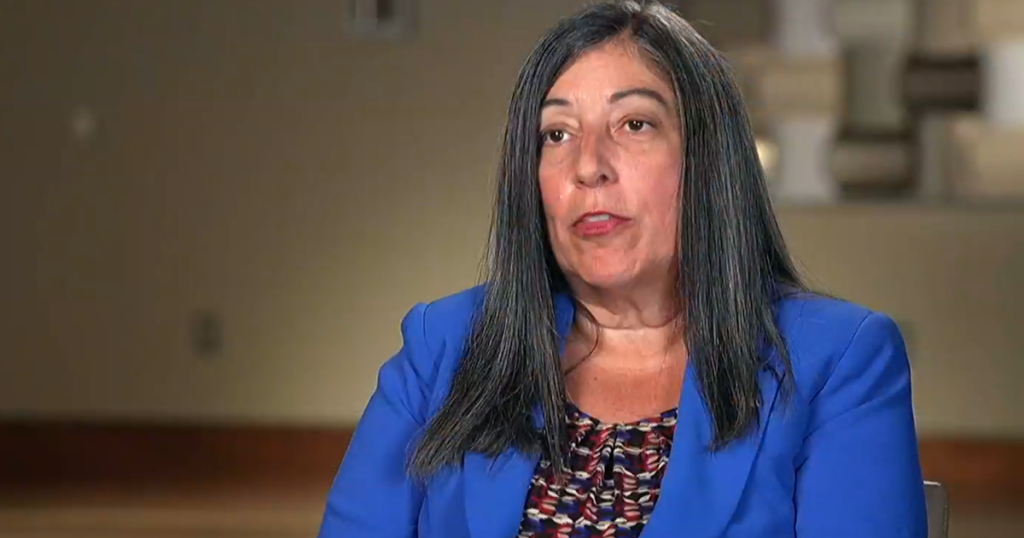
The following is the full transcript of an interview with former CDC chief medical officer Dr. Debra Houry, a portion of which aired on “Face the Nation with Margaret Brennan” on July 5, 2026. This interview was taped on July 1, 2026.
MARGARET BRENNAN: Doctor, thank you very much for making time.
DR. DEBRA HOURY: My pleasure.
MARGARET BRENNAN: So, you were the chief medical officer at the CDC until August last year. You spent 11 years at the agency. When President Trump was elected, he did so with the alliance of the Make America Healthy Again movement, and the secretary that he put in place said the CDC is the most corrupt federal agency in all of HHS. What did you think him being in charge was going to mean for you?
DR. HOURY: Well, certainly I was a little concerned, but under the first Trump administration things went really well overall, you know. We saw things like suicide prevention get started under the first administration, so I was cautiously optimistic. And then I was also the transition lead for the agency, so I knew that our goal was to really position ourselves to work with the new administration, and that hopefully, if we could actually meet with the secretary, present data, and align with some of his priorities, we wanted, say, food and water as well, that maybe we could find some common ground, but I was worried.
MARGARET BRENNAN: I know that you were asked by the Senate committee that oversees the health agencies to share some of the documents and emails that you had collected during your time leading up to your departure. Why were you saving your emails?
DR. HOURY: You know, I think just in general good clinical practice, you know, I always documented on patients, and so similarly, as I was, you know, overseeing many decisions or part of discussions, I thought it was important to really document how those decisions were being made, particularly when I had concerns that there were conflicts of interest that weren’t being taken care of, when there were issues around scientific integrity and political interference, so- and despite all that, you know, I was a capstone official, which meant any of my emails always are retained through Freedom of Information Act, so I just thought it was prudent to really document what was going on.
MARGARET BRENNAN: I mean, at one period of time, you were actually the acting CDC director.
DR. HOURY: So the first few days I was the acting CDC director, although I was never named by the Trump administration, but through the memo that had been left, and our operating plan, I stepped into that role.
MARGARET BRENNAN: So, why were you- you said it was good clinical practice. Did you also feel like you were creating a paper trail?
DR. HOURY: Yes, but I would also say it was the paper trail, but it was also when there’s different inputs, different politicos that would come and go. I wanted to show how we were making decisions, and if there were concerns, why that was there. I knew that history, at some point, would look back on this, and so I wanted to make sure that we had that historical record.
MARGARET BRENNAN: And that’s how 250 of your emails and documents were made public by the Senate committee. What was happening inside the CDC that made you say, this is going to be historic?
DR. HOURY: It happened almost from the very beginning under the new administration. Within the first week or two, we started getting executive orders where we took down hundreds of websites, and I thought this is highly unusual, you know. Science doesn’t change based on who is in office, and so when these things were happening, I knew this was different than before. I also didn’t brief the secretary, which was very different than prior administrations. And when we had many requests coming from political appointees on things that had happened 30 years ago that didn’t really need to be relitigated at a taxpayer expense, I became very concerned that data, science and facts would not be enough.
MARGARET BRENNAN: So, the websites you were talking about being taken down, this was because of the executive order to remove references to gender ideology?
DR. HOURY: Yes and that included the term gender, and gender was in many of our data sets. Gender of animals, you know, we had transgender guidance around Mpox, all of that we were told to take down.
MARGARET BRENNAN: So it included the CDC and FDA pulling down how physicians should treat STDs. It seems important information.
DR. HOURY: It’s very important information, but it referred to transgender, and you couldn’t just do a word replace and say we highlighted things like this that you know- and again, as a doctor, it was very concerning to me that if you’ve got patients and doctors that need specific clinical guidance to not be able to provide that information. So, that’s when we really started trying to document concerns. We raised them to the department. Over time, we did get most of the materials back up with really an asterisk saying this was, you know, pre-executive order, but the concern was really, and I think I said this many times, including to the new administration, you know, science doesn’t change, you know, the data should stand on its own, you don’t just, you would never want to have that inconsistency over each administration, and this was my fourth presidential administration.
MARGARET BRENNAN: You also documented a scramble on the inside to get some of the sites back up, and this happened to be just a day after the secretary had finished his confirmation hearings. Why?
DR. HOURY: We were told that there was a concern it could hurt the secretary’s confirmation, that if vaccine-related information was missing from the website, that it could reflect poorly on him.
MARGARET BRENNAN: Specifically information about vaccines.
DR. HOURY: Yes.
MARGARET BRENNAN: Because–
DR. HOURY: –There was a concern that the secretary had expressed anti-vaccine sentiments, and that if CDC, as he was coming on board, didn’t have information on vaccines on the website, that it had to do with his hearing and his direction. So we got an email from the acting CDC director Friday night to get those websites back up, and then, beginning at 8:30am on a Saturday morning, myself and several other CDC staff would meet regularly with HHS political leaders to go through our process to get some of those websites back up.
MARGARET BRENNAN: So all of these have been taken down because you’re trying to comply with what the president wanted?
DR. HOURY: Correct.
MARGARET BRENNAN: But then realizing it might hurt votes to confirm the secretary, he had to scramble, put some of them back up?
DR. HOURY: That’s our understanding. And to be very clear, when we took the websites down, we flagged that many of these websites contained information such as that. I don’t think they understood the volume or the impact until media and others started noticing all the websites that were gone.
MARGARET BRENNAN: During the secretary’s confirmation hearing, he said all decisions would be free of political influence and guided by science, but you received an email from his chief of staff telling you of the quote “absolute need for political review of major decisions at the CDC.” How different is that from typical management?
DR. HOURY: That has never happened before. Usually, you know, certainly there would be political review of high-level decisions, but not every decision, and scientists’ careers would be at the table. I can tell you, through my eight months when I was the transition lead and only career in the Office of the Director, I was not part of most of the conversations with the political appointees at HHS.
MARGARET BRENNAN: And did most of those political appointees have medical degrees?
DR. HOURY: I don’t think any in HHS at that time had medical degrees. We had one person at CDC who was a political appointee who had a medical degree. He didn’t come for the first few months, and then the Office of the Director, we had no one with a medical background or even a public health background.
MARGARET BRENNAN: So the decisions being made were by individuals who had no medical background?
DR. HOURY: No medical background, and not only no medical background, no science background, and for many of them, no background in government. And I want to be clear, it’s certainly okay to have different perspectives, you know, and different expertise, but then you want to make sure that the scientists and the experts are also being heard and part of those decisions, and we weren’t.
MARGARET BRENNAN: You also saved an email here, and in it, you said you never had briefed RFK Jr. But tell me, sorry, I don’t have that graphic there. You said you never briefed RFK Jr., but who were the advisors around him that you were interacting with?
DR. HOURY: So very few. You know, our Acting CDC Director, Dr. Monarez was one of the people I would relay information to. Certainly, our chief of staff, also a political appointee. We had different HHS counselors, and those are usually representatives to the secretary that would interact with us, and so they would interact with us. One was a physician who started around April or May, Dr. Reyn Archer, but other than that, most had no medical background. They had come from different think tank organizations, and in general, they didn’t want to interface with career staff at all.
MARGARET BRENNAN: I want to talk about the flu.
DR. HOURY: Yeah.
MARGARET BRENNAN: Because this stood out in some of the emails that were made public. So, back in 2024, 2025, this was a really intense flu season, the worst in more than 15 years. Nearly 300 kids died. At that time, HHS had this awareness campaign called ‘Wild to Mild.’
DR. HOURY: Yes.
MARGARET BRENNAN: And it encouraged everyone, it said, six months and older, to get a flu shot. So one day after Secretary Kennedy is sworn in, there are then a flurry of emails saying this is a direct request, that was the language used, from the secretary to pull down all of those ads. Why?
DR. HOURY: It was one of those things, I got calls from our communication staff saying this has happened, and I first thought there’s a misunderstanding, where children are dying, it’s an active flu season, it’s not like flu is over, and we’d already paid for these- for these ads, so it didn’t make any sense. And so I brought it to our political leaders and brought it back to our communications staff, and asked them to please relay back to the department, surely this isn’t what you want. And then we got a note back, it’s a direct request from the secretary.
MARGARET BRENNAN: And in those emails, you can see a conversation–
DR. HOURY: Yes.
MARGARET BRENNAN: –that must have been happening amongst you, saying–
DR. HOURY: –this is one of the worst flu seasons ever. Why would we do this? Children are dying.
MARGARET BRENNAN: And you’re saying, can we keep up parts of this?
DR. HOURY: Yes.
MARGARET BRENNAN: –change or tweak the message?
DR. HOURY: Yes. And when CDC puts out messages, it’s not something that is just, you know, generated quickly. These were message tested, you know, these were professionally developed, and they had chosen ‘Wild to Mild’ to show that, like, you might still get flu, but it will be mild, and so it was the messaging, you know, that was meant to really help people understand the importance of vaccination.
MARGARET BRENNAN: So the communications official is writing in these emails that the leaders- you were among them–
DR. HOURY: Yeah.
MARGARET BRENNAN: –pushed back and said, can we emphasize informed consent? Can we just tweak the message a little bit? And again it came back, take it down.
DR. HOURY: Yes.
MARGARET BRENNAN: Do you have any way of gauging the impact of that?
DR. HOURY: We don’t, you know, but I think during a bad flu season, if there’s less messaging to remind people, you can still get a flu shot, it’s still beneficial, it has harmed the American public, and you know, since the secretary has been in office, we have seen vaccinations across the board for childhood illnesses go down.
MARGARET BRENNAN: The secretary has said he thinks the vocal issues that he struggles with are a possible side effect of the flu vaccine. Was any of that personal belief or experience shared with you?
DR. HOURY: It was not. I read about it after I left CDC, and what I would say is, when we looked retrospectively, that is not one of the side effects of flu vaccine. There are many other things that can result in that vocal cord paralysis that the secretary has. And you know, some of it has to do with different, you know, uses of substances, different medical conditions. So I think you need to approach it as a scientist, and you might have a personal belief about something, but what does the science show? And what’s the risks and benefits? What are the risks to the American public of stopping a flu vaccine at the height of a flu outbreak? Significant.
MARGARET BRENNAN: Let’s continue to talk about some of the other vaccines and some of the emails that we saw here. Now it’s April, and the country has experienced its worst measles outbreak since 2000. You’re receiving a lot of messages asking for information about measles from Kennedy aides, but it was backward looking. It wasn’t about the ongoing outbreak, and you wrote, active measles response has to take priority. Why did you feel you had to say that to the people running the health agency?
DR. HOURY: One would think you wouldn’t need to, but you know, as we were trying to support Texas and other states, we had limited staff. As you know, staff had been fired under DOGE, trying to respond to an active measles outbreak, and also trying to support the secretary using appropriate talking points, you know, he would say things like there’s fetal parts in vaccines, and I had sent an email to correct that, and said, how can we help him? You know, how can we make sure it’s the right messaging? During all of that, we also get, you know, requests for 15 years of data on every single measles case, and were there any, you know, other diseases that those people had, that died from measles. Same time, a former group of the secretary’s put out a statement saying that some of the measles deaths weren’t due to measles. So, to me, it seemed like they were looking through CDC data, these requests to answer some questions from other organizations, or potentially promote their beliefs. Again, not based on science or reality, but trying to answer an agenda that was already in place.
MARGARET BRENNAN: Which organizations?
DR. HOURY: It was the Children’s Health Defense.
MARGARET BRENNAN: That’s where RFK worked, that was his–
DR. HOURY: Yes. He was a leader of that organization.
MARGARET BRENNAN: And sued some of the vaccine makers–
DR. HOURY: Yes.
MARGARET BRENNAN: –as I recall. In the email exchange, it stood out that you seem to be using very diplomatic language, very careful language, but you’re offering to help the secretary. You said, ‘can I help him with his talking points?’ Why were you so concerned?
DR. HOURY: It impacts lives, you know. When you look at him talking about misinformation on measles vaccines, people are going to be less likely to get the measles vaccine in an active outbreak. We had children being hospitalized, we had children dying from measles. We needed people to respond during a measles outbreak and get vaccinated if they weren’t. Instead, he talked about healers and treatments around like, steroids and antibiotics, and even vitamin A. We actually saw vitamin A toxicity cases in hospitals. People were taking too much vitamin A because there had been messaging that it was helpful for measles.
MARGARET BRENNAN: Once you have it, not as preventative–
DR. HOURY: Correct. Once you have it, and then limited amounts, and you know, with a doctor’s oversight.
MARGARET BRENNAN: You talked about public messaging by the secretary. In one of the emails, you explained vaccines are made by growing the viruses in fetal cells, but the measles vaccine does not include DNA particles, nor does it have what Kennedy described as “a lot of debris from aborted fetus.” When you wrote out the clarification for the staff, did they even respond to that?
DR. HOURY: My political staff did. They thanked me for the information, and I think over time they got used to me doing that, because I would see the secretary tweeting about something, or on TV, staff would be alarmed, or I’d hear from outside partners, “Can you do anything about this?” And each time, I just tried to be factual and helpful. Didn’t get responses from the department, and certainly the secretary didn’t correct what he was saying.
MARGARET BRENNAN: There was no thought of clarifying the record?
DR. HOURY: No.
MARGARET BRENNAN: It’s interesting because when the secretary gave- when the secretary made those remarks, he was talking about people in religious communities who objected to taking the vaccine, and that this fear was why they weren’t taking it.
DR. HOURY: Yes.
MARGARET BRENNAN: But he didn’t want to clarify that that was wrong?
DR. HOURY: I can’t say if he didn’t want to, but I certainly never heard him clarify.
MARGARET BRENNAN: You also point out in that same TV appearance that the CDC was not doing studies that he said they were doing, and he referred to diabetes statistics that were–
DR. HOURY: — 100 fold off. Yes–
MARGARET BRENNAN: 100 fold off. No retraction, no correction, no clarification.
DR. HOURY: No correction. And this is where I just thought, you know, if the secretary was speaking publicly, if we could provide him correct statistics, correct information, or maybe even a briefing on what CDC did, that might help them when he was speaking publicly, but we weren’t taken up on that.
MARGARET BRENNAN: But, you were offering briefings?
DR. HOURY: Multiple times.
MARGARET BRENNAN: Do you know if the secretary wanted them or was his staff turning away the medical professionals trying to give him information?
DR. HOURY: I don’t know where it was turned down.
MARGARET BRENNAN: So the push against some of these vaccines is a theme here.
DR. HOURY: Yes.
MARGARET BRENNAN: Right now, the American Academy of Pediatrics is suing RFK in federal court. Sorry, let me use his proper term. Currently, the American Academy of Pediatrics is suing Secretary Kennedy in federal court due to changes in the childhood vaccine schedule, as well as the firing of the Federal Advisory Committee on Immunization Practices, A-C-I-P, or ACIP. Before all of this erupted into the federal courts and public view, what was happening on the inside?
DR. HOURY: It was pure chaos, you know. It was one of those things to where we would hear from some of the political appointees that they were looking at the vaccine committee, and they wanted to either get rid of all of the vaccine committee members or at least have enough to have the votes for the administration, and we pointed out that it doesn’t change administration to administration. You know, there’s a couple spots that come open each time, it should be based on expertise, should be based on science, and that there was a process for doing it, including ethics and conflict of interest. And I think what was disheartening is the secretary had talked about CDC and conflicts of interest and patents. We looked, found very few conflicts of interest over two decades for the vaccine committee members, yet when the secretary and the political appointees brought on these new vaccine committee members, I raised concerns that they hadn’t gone through the ethics and conflicts of interest process as others had. They eventually did, but they first said ‘it’s okay, our own ethics and conflicts of interest staff at CDC weren’t aware, and hadn’t been involved, and had to become engaged.’ If you’re talking about radical transparency and wanting to minimize conflicts of interest, that should be at the top of the things you’re doing for the American public.
MARGARET BRENNAN: What’s interesting in these- in these documents is you see not that you were resisting the request, but that you are going and investigating–
DR. HOURY: — Yes–
MARGARET BRENNAN: –And cross checking to see if there were conflicts of interest. And then you came back with what you found, which was contrary to the belief.
DR. HOURY: And I think, maybe naively, I hoped that by presenting facts that facts would matter or help, but I’m also an ER doc, you know. I always just present the facts and try to do what I can to solve the problem.
MARGARET BRENNAN: One of your colleagues, who worked on immunization studies, wrote that in a meeting, Stuart Burns, a Kennedy ally, said the goal was to “depoliticize” the committee by installing people aligned with the secretary’s agenda, and it’s clear here that you’re upset by this.
DR. HOURY: Yes, I think you want robust discussion, and to me, de-politicizing something doesn’t mean you take away voices that might disagree with you. I was supportive of putting more people on the committee that would align with secretary, but not to sway votes, and that should be based on expertise, and this was the clear direction that they didn’t care what the expertise was, they wanted to align with an agenda, and you should never be following an agenda and back filling the science and the data. It should be the research and what is needed to protect health that drives the agenda.
MARGARET BRENNAN: What was the agenda?
DR. HOURY: The agenda was things like taking hepatitis B vaccines away from children or babies. It was removing thimerosal, a mercury type compound, from all vaccines, despite the science that showed it wasn’t linked to autism, and as we have seen now, changing the childhood vaccine schedule to reflect another country’s, Denmark’s, which is certainly not similar to our health care system. These were preconceived notions, and- that they wanted to do, even though the science shows how many babies were saved by the hepatitis B vaccine, and Senator Cassidy has spoken publicly, you know, as a hepatologist around the importance of that hepatitis B vaccine, but they came in clearly saying we don’t want to give it at birth.
MARGARET BRENNAN: You wrote that the HHS lawyers told you, quote, “if candidates actively promoted misinformation, were fired from a university, or do not have expertise, they could still move forward.”
DR. HOURY: Yes, so I had called our CDC lawyers when I heard about some names potentially being considered, and I was concerned because these were not what I would have considered experts, if you’ve been fired from a job or promote misinformation. And so I called CDC Office of General Counsel to get advice, and what I was told was that they didn’t have conflicts of interest, the department could still put them forward, and if the names came to me to sign off on, at that point I could raise concerns. The names didn’t come to me to sign off on.
MARGARET BRENNAN: You’re the chief medical officer at the CDC at this moment.
DR. HOURY: Yes.
MARGARET BRENNAN: And the names were not coming to you?
DR. HOURY: They didn’t come to me. Usually they would have, because all the federal advisory committees would come through the CDC, but since this point it was being directed by HHS, we didn’t have a CDC director, and so the secretary was serving in that, essentially, delegation of authority. He was determining who was on the vaccine committee, so the names did not come to me.
MARGARET BRENNAN: So he was putting people on the committee, signing off on it, even though they had not gone through a conflict of interest background check or ethics–
DR. HOURY: He put those names forward. When they did get put on the committee, I believe they had completed the conflicts of interest.
MARGARET BRENNAN: Because that was something you had raised here–
DR. HOURY: Yes.
MARGARET BRENNAN: –the White House had cleared them, but they hadn’t gone–
DR. HOURY: They hadn’t gone through it, but then after I raised the concern, they went through the final process.
MARGARET BRENNAN: Bottom line on this, we checked, a growing number of states–
DR. HOURY: Yes.
MARGARET BRENNAN: –29 plus the District of Columbia have announced they’re no longer following CDC recommend- let me start this again. A growing number of states, 29 plus DC, have announced they’re no longer following CDC recommendations as a benchmark for childhood vaccines. They said this is too much. Do you think that public health and faith in public health can be restored?
DR. HOURY: I think the secretary has caused a lot of irreparable harm, and when you look at many of the polls out there, the trust in public health, specifically CDC, has decreased dramatically over 20 points in many polls. That’s really difficult to recover from, and when states are removing links to the CDC website and following other medical organizations, I don’t know how you build back that trust overnight.
MARGARET BRENNAN: Autism, and finding out more about it, is a real focus for the secretary. Before, when he was running for president himself, he put this at the top of his agenda as well. A lot of families are looking to him–
DR. HOURY: Yes.
MARGARET BRENNAN: –with a lot of hope. Do you trust what is being conducted in terms of research into autism?
DR. HOURY: Absolutely not, and that’s unfortunate, because autism is a significant issue in our country and worldwide, but there’s not a single answer to it. You know, we know that 40% to 60% is linked to some sort of genetic etiology. There’s environmental factors, there’s probably infectious disease factors. So you need to really have a robust field of study around autism versus again looking at a single question. And what we saw was back in February and March, we were asked to look at autism, and we proposed several different ideas, including a large study looking at autism and working with NIH. And what came back to us was no, we want to look at the Vaccine Safety Datalink data for autism. So narrowing in on vaccines and autism versus what we had proposed. And even more concerning is when my staff reached out to NIH scientists who did autism work, they weren’t aware that the NIH acting director and some of the other NIH politicals had reached out to us about looking at vaccine and autism and CDC data.
MARGARET BRENNAN: How is that possible?
DR. HOURY: I guess there wasn’t communication between the NIH politicals and the NIH experts on autism, and after that, there was no more communication between our scientists and autism and the NIH scientists on autism around that topic.
MARGARET BRENNAN: They didn’t trust- the Kennedy aides did not trust the professionals within the CDC and the NIH? Is that fair?
DR. HOURY: I would say that’s fair.
MARGARET BRENNAN: In your emails, there’s one from the Director of the National Center on Birth Defects and Developmental Disabilities, and she said they’re looking at how to respond to questions about vaccine safety and autism, and that’s when you said, “Not until we’re asked, and don’t go so narrow.” What ever happened to that? Was there ever a CDC study launched?
DR. HOURY: No. Well, not on what I had proposed. What I proposed back to that center director was that autism was an important thing to study, and we should be looking broader and working with NIH. What came back instead was that NIH, the acting director, as well as the contractor, John Powers, who is now NIH Institute acting director, we’re going to look at the vaccine safety data with a lens towards autism.
MARGARET BRENNAN: Back in April, the secretary held a press conference on what he called the autism epidemic, and he claimed that the media has an ideology of epidemic denial, that we are not asking enough questions about why there is an uptick. You wrote in one of your documents here that there was a bit of concern that you heard after the secretary spoke. What concerns were you hearing?
DR. HOURY: Even you know President Trump’s first surgeon general, Jerome Adams, put out on social media about how the secretary really focused on profound autism and not really looking at the whole spectrum of autism and–
MARGARET BRENNAN: — Not looking at highly functional?–
DR. HOURY: — Yeah, and just really demeaning. You know, in my mind, anybody with autism versus recognizing the struggle that individuals and families have, and how we could support them. And he- you know, really kind of misrepresented the data, like conflating information on states, when a lot of it had to do with detection. And if we had been able to brief him, like I had suggested, since it was a CDC paper, we could have walked through that with him, like what the statistical analyzes meant, what some of these findings meant, but we weren’t given that opportunity. And there was backlash from many in the autism community, including groups like Autism Speaks, because of how the secretary spoke about autism. And again, autism is impacting so many families in our nation. We need to look at it seriously, and not with a conspiracy lens, like the secretary is doing.
MARGARET BRENNAN: You say a conspiracy lens. The secretary from the podium said, “Somebody made a profit by putting environmental toxins in our air, our water, our medicines, our food. It’s to their benefit to normalize it, to say this is all normal.” You believe he had already concluded this, and that’s what you were hearing?
DR. HOURY: It was also that, you know, in my emails, you’ll see that he has requested data from 30-plus years ago from studies that have been replicated that Congress has found that there was no wrongdoing on, because he was convinced that CDC was hiding information on autism and vaccines. Again, if we want to do studies looking at all of autism, you know, and vaccines as a component of it, maybe that’s okay. But looking at studies from 30 years ago that have really been litigated over and over, that’s a waste of taxpayer money, and really, in my mind, a disservice to families that want to know what is causing autism in their children, and how can you treat it.
MARGARET BRENNAN: But he seemed to believe that there was a cover-up?
DR. HOURY: Yes.
MARGARET BRENNAN: Within the CDC?
DR. HOURY: Yes, and he had written about that in many of his books as well. When I was transition lead, I prepared for his arrival by reading many of his books and taking notes, and had really looked at what were some of the falsehoods in those books and tried hopefully to have a discussion with him around what we had found in data, but that didn’t happen.
MARGARET BRENNAN: There was a CDC report that was released last April, and that–
DR. HOURY: Yes.
MARGARET BRENNAN: –scientist actually stood beside the secretary at one point during the press conference- conference, and he showed that autism rates have reached a record high, with one in 31 children identified with ASD, somewhere on the spectrum. It’s now more prevalent among minority children than white children it found. Did that scientist who received CDC funding and spoke, did he have communication with the CDC after that?
DR. HOURY: I don’t know if he did after that, but before that we weren’t aware, and he was one of many authors on the paper. He was, I think, a middle author of about 20, so certainly usually you would want the senior scientist or the lead author, or maybe even the CDC center director who oversaw that study joining the secretary, but that didn’t happen. We also didn’t look at the secretary’s slides, you know, to make sure that they accurately reflected the data, as well as the increase in screening and coding that is done for autism, that also is why we’re seeing some of these increases, because of the increase in recognition.
MARGARET BRENNAN: And you document saying that you would have liked to have helped with the slides that he showed, because of irregularities. I want to talk to you about COVID as well. In May of 2025, the Secretary announced in a social media video that the CDC would change its recommendation on the vaccine for healthy pregnant women and healthy children. You testified to Congress that no one consulted with you as the chief medical officer. Why weren’t you involved?
DR. HOURY: Can’t explain why I wasn’t involved. That’s very irregular, and certainly hasn’t happened. Not only was I not involved, but you know, my two CDC center directors and scientists who oversaw vaccines in their portfolio and COVID in their portfolio also weren’t aware. We were in the same seniors–
MARGARET BRENNAN: — Those who oversaw COVID?
DR. HOURY: Correct, was not aware of this change, and the person that oversaw vaccine safety was also not aware. We were sitting in a senior leadership meeting, and my phone, I started getting like texts, and you know, and I looked at it, and I’m like, what’s going on. And we saw a video of the secretary with the NIH director and the FDA administrator with a change to CDC guidance, but nobody from CDC alongside the secretary and nobody from CDC aware of this. And what made it even worse was we were then asked to implement it, and you know, I said I couldn’t implement off of a tweet. We involved lawyers at that point and asked for a memo, and there was a memo we received, actually dated a week or two earlier than the video, so this had been planned and it didn’t match what the video said.
MARGARET BRENNAN: The policy was different.
DR. HOURY: The policy was different. He talked about in his video healthy pregnant women, and the memo said all pregnant women. And so we were trying to help, but we said we can’t implement when there’s a discrepancy, and we would also just like to see the data and the science behind it. I said to our CDC political leaders at that point in time because there was also an email about changing pregnancy on the website as a COVID risk factor and I just said I can’t do that, it is a risk factor. When you look at changes in pregnancy there’s changes in lung capacity and blood volume and pregnant women are at risk for severe consequences from COVID compared to non-pregnant women, so again I can’t change science based on an agenda.
MARGARET BRENNAN: But the two men that were standing beside him are doctors. They seemed okay with it.
DR. HOURY: I can’t explain that. They didn’t speak with us.
MARGARET BRENNAN: The FDA commissioner at the time, who came on Face the Nation argued there was no randomized control data, which is why they could no longer recommend the vaccine. Is that a sufficient exp–
DR. HOURY: The COVID vaccine had been one of the most well-studied vaccines when it comes to safety and effectiveness. We were in the middle of a pandemic, so there was sufficient data to show that it was effective. I would also say, you know, over time placebo-controlled is not always the only study that needs to be done. You can look at some of the other types of methodologies, and what we saw in hospitals, you know, and from frontline providers. That’s what matters, is, you know, the impact it was having on pregnant women, and you know we’ve seen children too with long-term consequences from COVID, and I also think if we talk about vaccine choice, why would we take that choice away from pregnant women?
MARGARET BRENNAN: Their argument is now it’s up to a woman and her doctor to have a conversation, but the effect you’re saying is that it makes the vaccine less available or people more hesitant.
DR. HOURY: Particularly, how they initially proposed it was to take it off, you know, the recommended list, and that could have had insurance issues. We provided data, and they went with shared clinical decision-making.
MARGARET BRENNAN: In all of these documents, there also seems to be a theme here of the political leadership being completely out of sync with the medical professionals and also disconnected from the Trump administration’s DOGE cuts.
DR. HOURY: Yes.
MARGARET BRENNAN: One of the secretary’s aides is emailing asking why data crunching hadn’t been done for weeks, and you explained the chief data officer, and so many people on the IT team had just been laid off.
DR. HOURY: Yes.
MARGARET BRENNAN: Did they not know about the RIFs and the layoffs?
DR. HOURY: It seems, you know we had to really emphasize that at multiple points. You know, once I got asked around a firefighter program, and what was the, you know, operating plan to make sure that program was still in place, and I explained we don’t have one, they’ve all been laid off. You know, you can’t replace firefighters with an infectious disease specialist when they’ve been laid off. So, similarly, when I got asked, why is this taking so long, I said, you know, our chief data officer, our chief information officer and the head of our forecasting group, were all part of the group that was RIFed, you know, a reduction in force, and, or transferred to the Indian Health Service, or put on administrative leave. These cuts, when you lose 30% of your workforce, and over time we ended up losing about 80% of our senior leaders, had a dramatic impact on the functioning of the agency.
MARGARET BRENNAN: But the people in charge didn’t know that from a management perspective.
DR. HOURY: We told them that from a management perspective, but oftentimes either it seemed like they forgot, or they thought you could just replace an expert with another person. And as we’ve seen, you know, on things like rabies, you know, and pox viruses now, those are extremely short-staffed at CDC. Some of these experts are world-renowned and really hard to replace. You can’t just put another person in.
MARGARET BRENNAN: There are emails you saved about a researcher named David Geier.
DR. HOURY: Yes.
MARGARET BENNAN: He had been hired by Secretary Kennedy to work on a database containing vaccine safety data. Previously, the state of Maryland had disciplined him for practicing medicine without a license, he and his father were accused of giving aut- sorry, let me say this again. Let me take a sip of water.
DR. HOURY: If you’re doing that, I’m going to too.
MARGARET BRENNAN: You saved emails about a researcher named David Geier. He had previously been disciplined by the State of Maryland for practicing medicine without a license, and he and his father were accused of giving autistic children a prostate cancer and puberty blocker drug, but he was then hired by Secretary Kennedy to work on vaccine safety data. What do you think- what did you think he was doing? What do you think he was working on?
DR. HOURY: He had a history of looking at the link between vaccines and autism. My concern was his issue before around things with research ethics, and to also not follow the usual processes anybody at CDC would do, like, you know, following data privacy, you know, having a research protocol developed. The things that we would ask our own scientists to do, we were told he didn’t need to follow because he was acting as an agent of the secretary. For me that was very concerning, so we did bring legal, our privacy officer, others to meetings about this, and so everything we did was legal, but that doesn’t always mean it’s the right thing to do from a research or an ethics standpoint, so we documented our concerns and raised them to the department.
MARGARET BRENNAN: He was given access. David Geier was given access at home to the vaccine safety data, and there is an email in here that says Secretary Kennedy wants to buy all the data and put it in the office of the secretary. Why would he want all that information?
DR. HOURY: So it goes back to what I call kind of conspiracy theories. So the secretary believed, you know, we were hiding all this hospital data, and hospitals are the ones that actually own data on patients. The CDC doesn’t. We had the de-identified data, so very little personal identifiers. There’s some, but not patient medical records, that’s all at the hospital level. And they wanted to have all of the data that was at the hospital level that we didn’t have, that would come through a server to answer different research questions, but the secretary wanted all of the data, patient medical records, and that was something that we certainly had concerns over, as did all the sites that participated in this safety monitoring. I had actually raised in discussions that if something like this happened, we’re going to see hospital sites withdraw from this vaccine safety monitoring, and then our country won’t have a vaccine safety monitoring program, because hospitals very much are going to want to protect their patients’ privacy.
MARGARET BRENNAN: You have extensive fact checks, pages of them, where you sent that to Secretary Kennedy’s staff.
DR. HOURY: Yeah, I was drinking coffee, I think was a Saturday morning, and I saw this long tweet from the Secretary about how we had locked up this researcher in a windowless room to 90 degrees with burly guards and rip data out of his hands, and how we hadn’t allowed anybody else in the world to access this data. I read it a few times because it was really, really out there. And then I went to my program, said, help me fact check all this. And then I sent a four page response for each of the points in the secretary’s tweet, and I sent it to our legal, to our external affairs, to our media, because there were a lot of inquiries around the vaccine safety data at this point, and having a leader in government really misspeaking, actively promoting misinformation was concerning.
MARGARET BRENNAN: And you documented your response to leaders who were trying to use a special hiring authority to put an autism activist, Mark Blaxill, in charge of CDC’s birth defect center. You respond, HR says he didn’t meet scientific credential requirements, he only has a business degree, nothing medical at all, but the secretary and his aides saw him as uniquely qualified, qualified to do what?
DR. HOURY: I can’t answer that, but he was brought on as a senior advisor at CDC after I left, we just, you know, as a scientific agency, you need people that have medical or doctorate degrees to supervise other medical or doctorate people, and those were just the standards I believe across all of the department, but certainly at CDC.
MARGARET BRENNAN: One of his medical journal pieces on autism was retracted in 2023 but that was not disqualifying to his hiring.
DR. HOURY: I don’t believe so. Similarly, you know, when I looked at some of the vaccine committee members, as well as some of their presentations, many of them had retracted studies, and when I read Secretary Kennedy’s books, many of the studies in it come from retracted papers.
MARGARET BRENNAN: Does the fact that there were legal checks here and regulations, that you could go to HR, that you could go to ethics and legal, does that show that the system really worked here?Are there still professionals in place who can put a check on things?
DR. HOURY: I think that’s difficult to answer. After I left, there was no chief medical officer or any other careers put in my place. There’s a chief medical officer that started two weeks ago, but for at least eight months there was no career scientist in the office of the director. So I don’t know what happened during that time. I can also tell you I was concerned about my job. Actually, I shouldn’t say I was concerned. I knew there was a good chance I would be fired, or that I would quit during that time, because my mind, it was to protect the American public, is to protect the science, and it’s to protect CDC. And so I did my job by knowing I could lose my job, and that’s not a job most people want.
MARGARET BRENNAN: And you quit because of it.
DR. HOURY: I quit because I could no longer protect the scientific integrity of the agency, and I was concerned about the impact on the American public. We’ve seen measles deaths, we’ve seen whooping cough deaths, we’ve seen children dying from flu. We’re seeing the trust and scientific community go down, the erosion of CDC. I couldn’t stand behind that.
MARGARET BRENNAN: Senator Cassidy told Face the Nation recently that he ultimately voted to confirm Secretary Kennedy because it allowed him to put guardrails, some congressional oversight in place. He thought the risk was having a very influential person without those guard rails in place, do you think ultimately that was the right call?
DR. HOURY: I don’t think it was the right call, because although Senator Cassidy probably believed in agreements and trust, but certainly, as he mentioned on the interview, those agreements were never held, and so the guardrails that he believed would be in place were disregarded.
MARGARET BRENNAN: The secretary since said not to us, but to others, that he upheld his agreements.
DR. HOURY: I’m not sure how he upheld his agreements. If he talked about not changing the vaccine committee, if he fired all the members, he talked about not restricting access, and he has tried to change the access to that of another country’s limiting many childhood vaccines. And even the vaccine website, it has a nice asterisk, as kind of a note to Senator Cassidy, who you know is worried that it will change after he is out of office.
MARGARET BRENNAN: So I’m wondering, because the Senate has these documents, and the minority Senator Bernie Sanders has released them. Do you have hope that it will lead to something more, that they will do something with all this information?
DR. HOURY: I certainly hope that there is really careful investigation into what’s going into CDC and all the federal agencies. We need to protect the American public and the health. And when it’s clearly documented, political interference concerns around scientific integrity, not following the processes that are put in place to protect standards. We need to look closely at that. I’m just an ER doc, you know, I’m a scientist and a mom, I wanted to work with the administration. Unfortunately, they didn’t want to work with us. They came in with 30 year old theories and didn’t want to follow data or science, and in my mind they’ve put so many lives at risk.
MARGARET BRENNAN: Doctor, thank you for your time.
DR. HOURY: Thank you.
Transcript: Former CDC chief medical officer Dr. Debra Houry on “Face the Nation with Margaret Brennan,” July 5, 2026
#Transcript #CDC #chief #medical #officer #Debra #Houry #Face #Nation #Margaret #Brennan #July