U.S. Army moves to end drone battalion set up to absorb lessons from Ukraine war
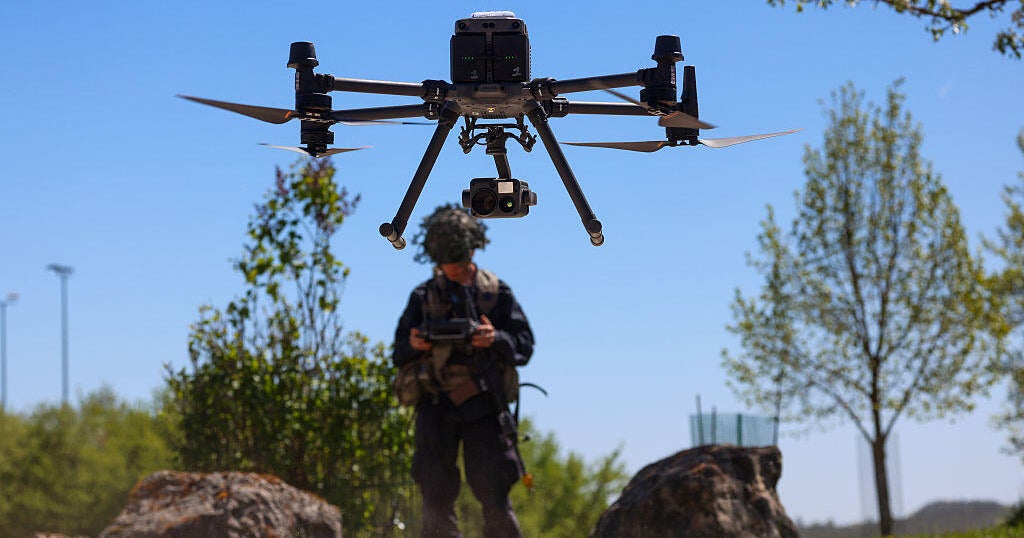
The U.S. Army is planning to phase out a drone battalion tasked just last year with studying and taking onboard lessons on drone warfare, including from the ongoing Ukraine war, an Army official confirmed to CBS News on Thursday.
Multiple current and former U.S. officials told CBS News the decision to nix the unit came amid tension between the senior officers who championed the battalion and Gen. Christopher LaNeve, the acting chief of staff of the Army.
The unit was pushed by former Army Chief of Staff Gen. Randy George and the former commander of U.S. Army Europe and Africa, Gen. Christopher Donahue. Both were fired or forced to retire early, paving the way for LaNeve’s rise to acting Army chief of staff.
The unit, known as the Unmanned Assault Battalion, was schooled in drone warfare and set to be used as a special group that could deploy anywhere drones were required.
The war in Ukraine has highlighted the key role drones now play in warfare for several years. Early in the war launched jointly by the U.S. and Israel against Iran, that message was driven home further as Iran launched one-way attack drones at U.S. military installations across the Middle East.
The Unmanned Assault Battalion is participating in an exercise set to run through September, where it will deliver what its members have learned over the past year to inform the Army’s future warfare.
An Army official told CBS News that, after the exercise, the unit will “refocus on its core warfighting tasks as an airborne infantry battalion,” which means they’re trained to parachute and drop out of aircraft. The battalion is part of the 173rd Airborne Brigade.
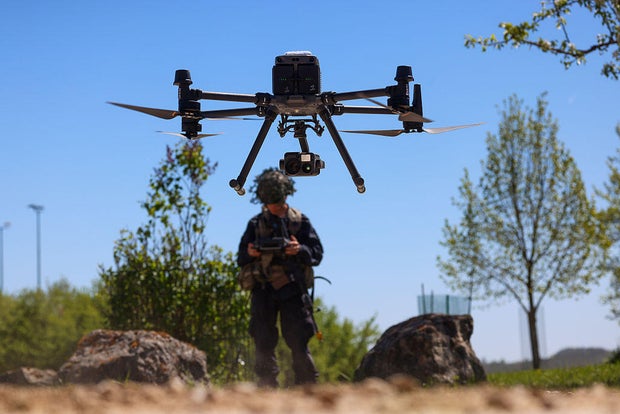
Alex Kraus / Bloomberg via Getty Images
The Wall Street Journal first reported that the drone unit would be phased out.
Last year, George, the former Army chief of staff, and Army Secretary Dan Driscoll rolled out what they called the Army Transformation Initiative, which emphasized unmanned systems.
“I don’t think I’ve talked to a single person who has said we shouldn’t be learning from what’s occurring in Ukraine,” Driscoll told Margaret Brennan on “Face the Nation” last year.
A spokesperson for the Army secretary said Driscoll did not have a comment on the drone unit.
Strategic moves based on personal disagreements?
Multiple current and former officials told CBS News there has been long-simmering tension between LaNeve and the former senior officers who pushed for the unit to be established.
The officials said there was prior tension between LaNeve and Donahue after LaNeve’s tenure as the commander of the Army’s 82nd Airborne Division ended earlier than what is typical for that position. After he was “soft relieved,” the officials said, LaNeve was quickly pushed out of his house at Fort Bragg in North Carolina so the new commander could move in. Officials said that episode contributed to ill will between LaNeve and Donahue.
A spokesperson for LaNeve referred questions to the Army, which declined to comment beyond the statement confirming plans to shut down the drone unit.
LaNeve published his vision for the Army this week in a document titled “The Army Azimuth.” The document said soldiers will focus on the fundamentals of soldiering while incorporating new capabilities, including defending against unmanned systems or drones.
“Every Soldier deserves to know where this Army is headed and what’s expected of them. That’s what an azimuth is — clear direction. My focus is simple and it hasn’t changed: this Army must fight and win today,” LaNeve said in a statement.
“There needs to be more drones”
David Petraeus, a retired Army general and former director of the CIA, told CBS News in April that the U.S. needs to act now to incorporate drones for future warfare.
“In some Western countries right now, they think that innovativeness is giving 50 drones to an armored battalion,” Petraeus said. “No. What we should do is scrap the armored battalions and replace them with a drone battalion.”
U.S. Army Capt. Ronan Sefton was first deployed to Germany with the Army’s 2nd Cavalry Regiment not long after Russia launched its invasion in 2022. In March, he told CBS’ “60 Minutes” that Americans had been learning from the Ukrainians’ battlefield experience.
“The first really poignant lesson for us was, there needs to be more drones,” Sefton told correspondent Holly Williams. “They need to be everywhere involved in the training to add to the realism.”
Sefton said he told every senior U.S. commander he could find that “this is important, it’s changing warfare and here’s how we can actually implement it now.”
He went on to join the Army’s Ukraine Lessons Learned Task Force, a separate unit to the one which is being phased out, but which was also given the job of translating experience from Ukraine’s fighting force to America’s military. New technology will not make the U.S. military’s traditional firepower obsolete, Sefton said, but it will need to adapt, urgently, to counter the drones developed by America’s adversaries.
U.S. Army moves to end drone battalion set up to absorb lessons from Ukraine war
#Army #moves #drone #battalion #set #absorb #lessons #Ukraine #war