Inevati Systems Builds a Reverse Polish Scientific Calculator Meant to Last for Decades
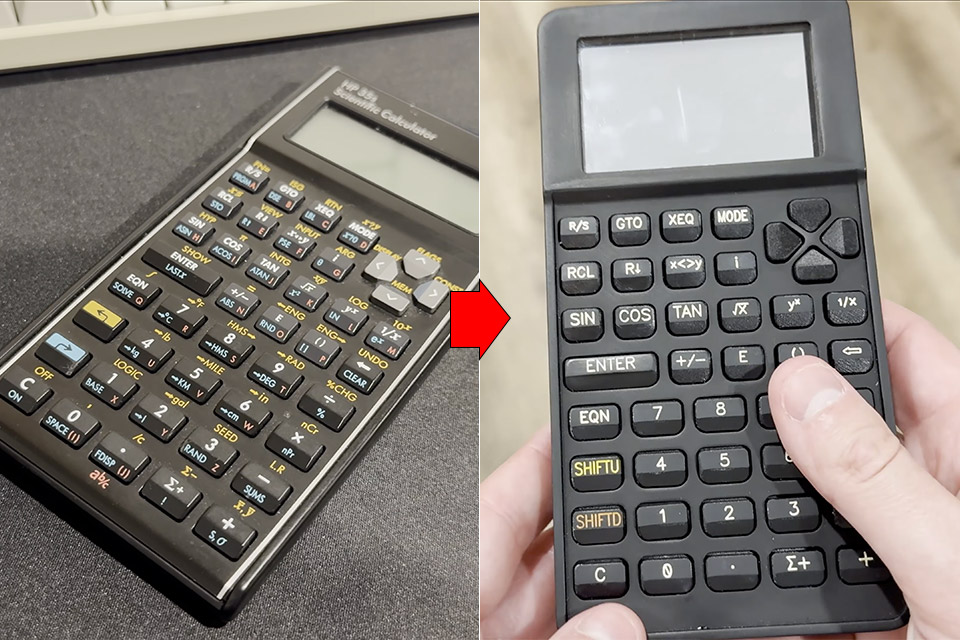
Used copies of the HP 35s now clear two hundred dollars, and the SwissMicros machines that carried the reverse Polish habit forward sit even higher, around three hundred ten dollars for a 42n. Inevati Systems wanted that kind of calculator back: programmable, comfortable on an engineering exam, able to graph, handle matrices, store expressions, solve equations, and take input in reverse Polish notation or ordinary algebraic entry. Buying one was out of reach. Building one became the project, and this first video is the hardware half of that work.
The STM32L431 microcontroller powers this little beast. It includes plenty of flash and RAM to handle what has to be done, an SPI link to connect the screen, and a super-frugal stop mode that should allow two CR2032 cells to work in tandem to meet all power requirements. That’s a power plan without a charger or a large battery pack, simply regular coin cells like the HP 35s. The screen is a Sharp memory LCD with 400 by 240 pixels. It will hang onto its image with almost no current draw once the pixels are all set, allowing a pocket-sized gadget to talk about remaining up for decades. Two boost converters increase the cell voltage to 3.3 volts for the chip and 5 volts for the display. In stop mode, it appears that there is a builder estimate that suggests the runtime should be around 29 years; this is only a guess, of course.
Sale

TI-84 Evo Graphing Calculator Texas Instruments, White
- Newest in the TI-84 series: Built for everyday classroom use
- Icon-based home screen: Popular math tools are front and center for faster, more intuitive navigation
- 3x faster performance: A powerful processor delivers quicker calculations and smoother graphing
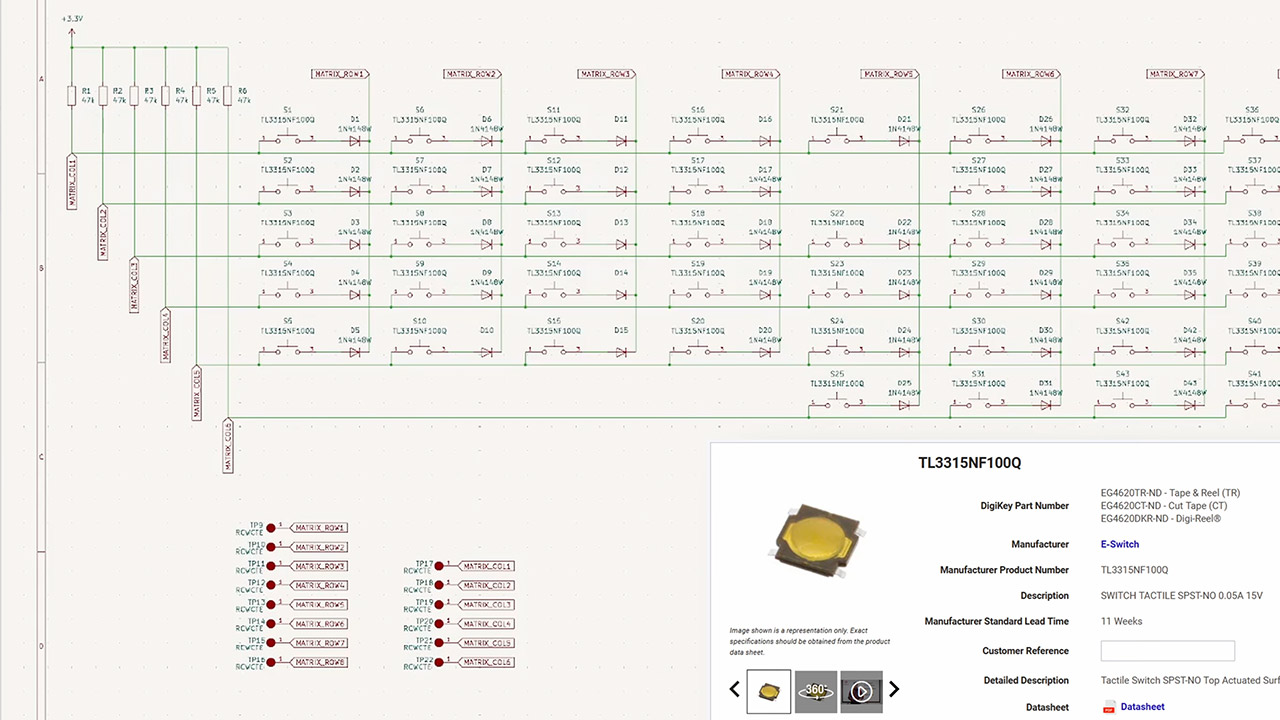
There are 43 keys in a scanned matrix laid out on a 1mm thick two-layer board, each with its own diode so you can read them all at once and short-circuiting a key will not bring the entire thing down. The majority of the work was done in KiCad, but JLCPCB had to create the prototypes because DigiKey supplied the parts, which resulted in a $20 bill without shipping. The keys themselves spin into their seats rather than sliding in, which protects them from wandering around, even if a small amount of play remains after assembly.
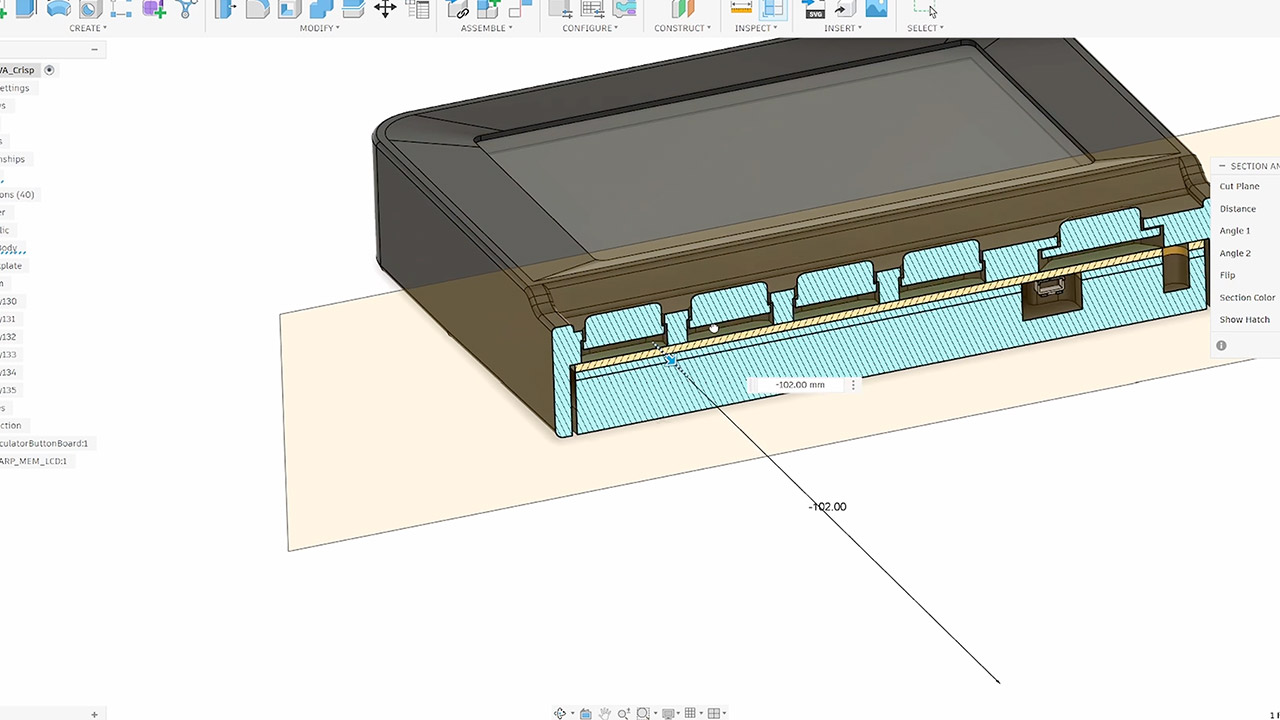
He experimented with Fusion 360 and disassembled the shell into a front case, a back plate, and keys, all intended to sandwich the board. JLCPCB came through and created those pieces in a beautiful black resin. Some of the lettering had to wait since it was a task for the Prusa MK3, which was outfitted with a hand engraver held in a vise and slanted at a shaky 29 degrees so he could manually chamfer each key face. Then he filled in the grooves with lacquer, which took a long time and was far more stressful than it needed to be, so the next pass will most likely cut over some of that work or simply remove the individual caps entirely.
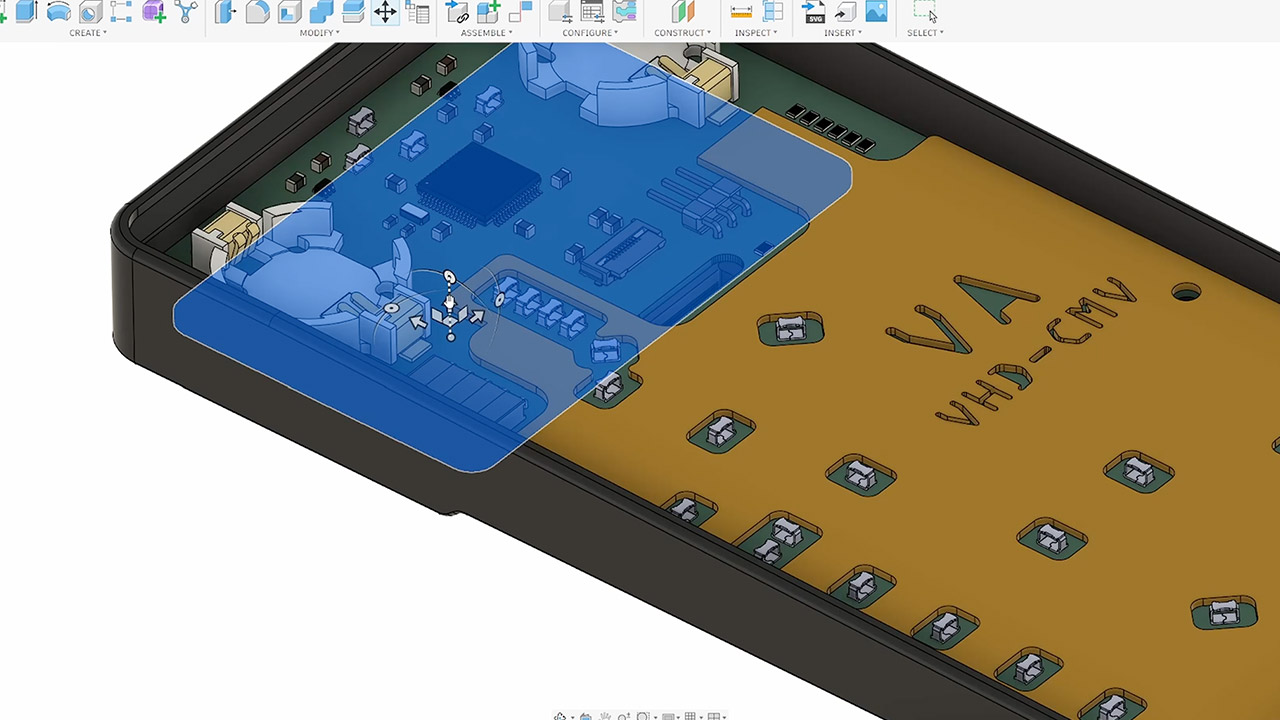
The first assembly demonstrated where the design went wrong: flux seeped under the Kapton tape and caused havoc with several of the connections. He was able to clean up some of them with alcohol and a few of laser cut stand-ins, but the plungers turned out to be far too large and will need to be downsized or replaced. The keys rattled a lot, so they probably need more silicone preload. Then there were the diodes, which were positioned on the incorrect side of the board in the design. Finally, those individual keys were expensive, costing $20 each.
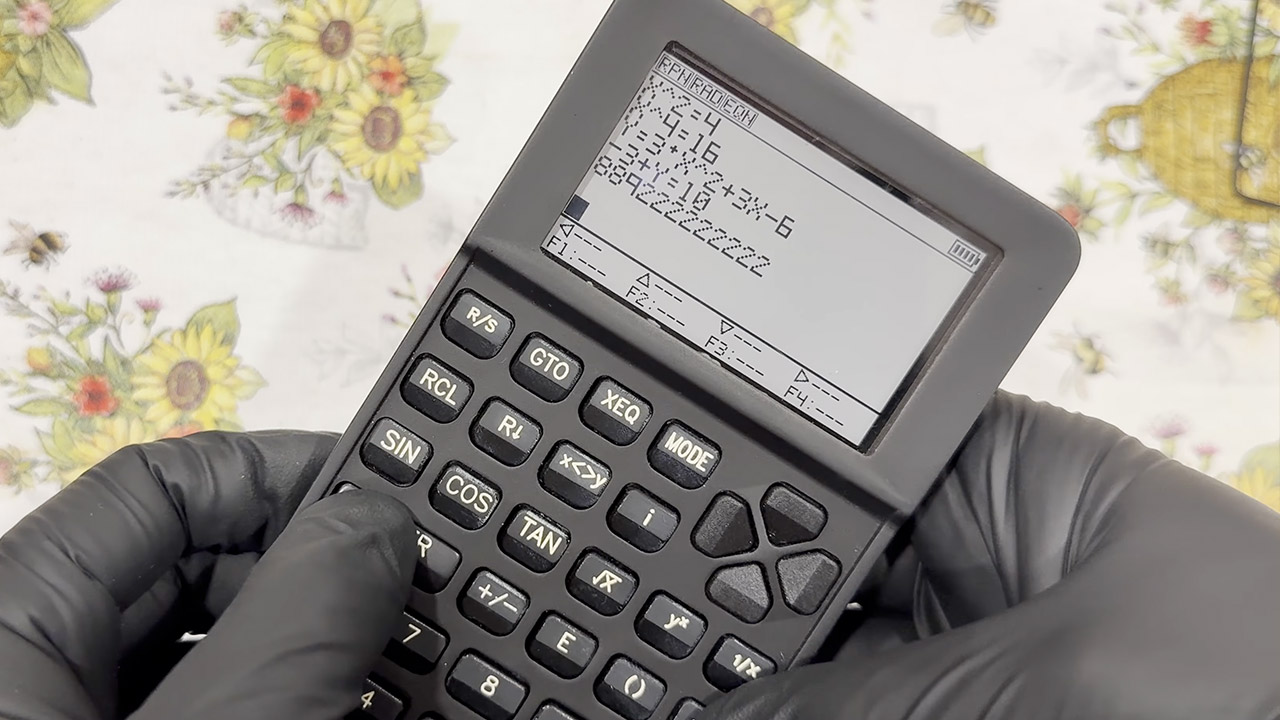
Software is the unfinished half of the project, and it represents half of the puzzle that has to be solved. A second video is currently in the works. Reverse Polish Notation stands beside an algebraic mode, both with a history list that resembles a TI calculator. Graphing is a simple function that allows you to manipulate x and y values. Matrix work is where things become fascinating, as it can support up to 17 by 17 arrays. You can save expressions, solve them, and store the results. Registers run from A to Z, but you can access hundreds more through the I and J indexes. One feature he does have that is unusual even for a smartphone calculator is that each value is associated with a running uncertainty, which is updated following the conventional rules for sums and products. If you like, you may even mark a number as accurate so that it does not appear as an error bar when converted.
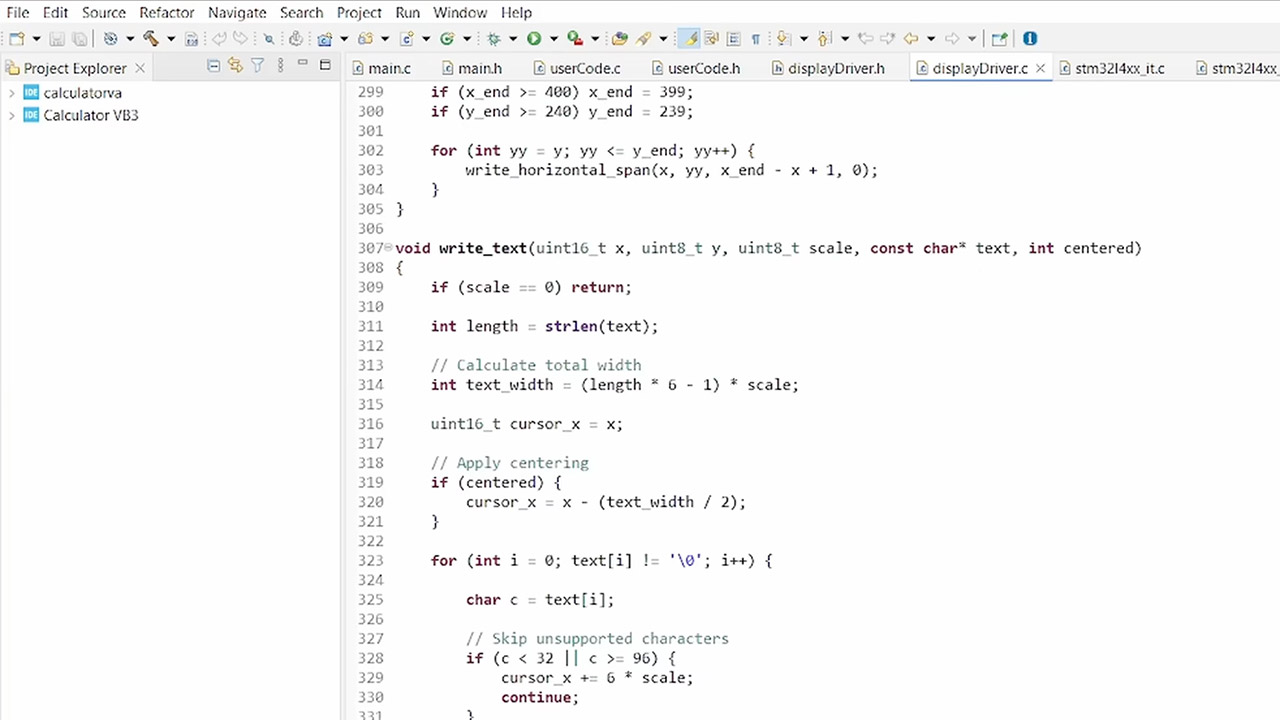
Every iteration has been the same old cycle. Build the board, press the buttons, and note what goes wrong before changing the design and ordering the next round of parts. Part one is almost finished; we now have a lovely clean casing that shuts, a display that wakes up on its own with a couple of coin cells, and a keypad that basically works with the firmware; however, part two is where the real math comes in, and it must keep up with the hardware.
Inevati Systems Builds a Reverse Polish Scientific Calculator Meant to Last for Decades
#Inevati #Systems #Builds #Reverse #Polish #Scientific #Calculator #Meant #Decades