Archaeologists ‘amazed’ after ‘mysterious’ tunnel discovered close to key Bible site
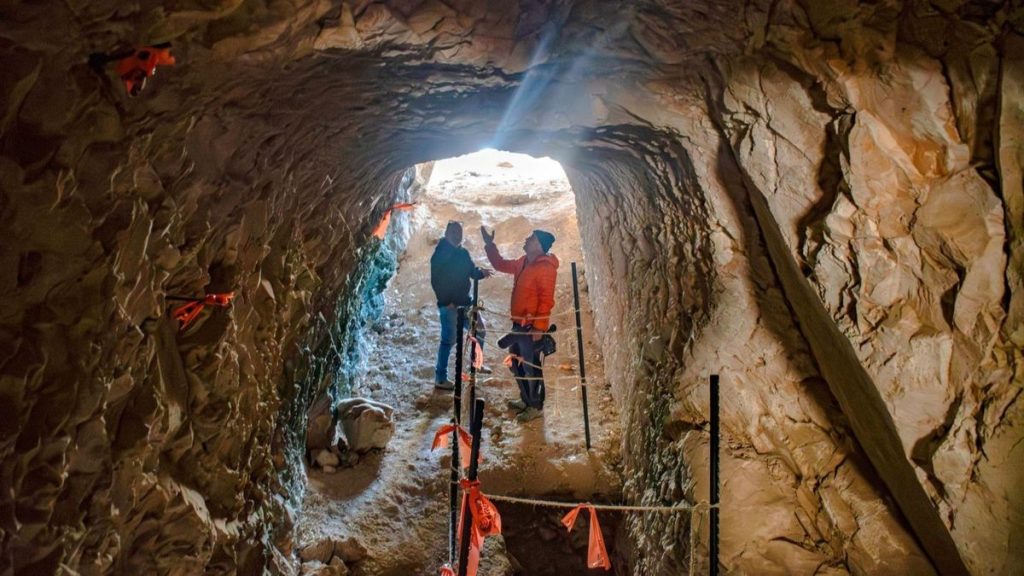
The “mysterious” tunnel has left experts “astonished and amazed” after it was uncovered during excavation work being carried out ahead of the construction of a new residential neighbourhood

The “mysterious” tunnel was discovered during excavation work on a new neighbourhood in Jerusalem(Image: Israel Antiquities Authority)
Experts are “astonished and amazed” following the surprising discovery of a “mysterious” tunnel which was found during excavation work – but the ancient passage “has not yet revealed all its secrets”.
The excavation work was being carried out by the Israel Antiquities Authority (IAA) in preparation for the construction of a new residential neighbourhood north of Ramat Rachel. It was found near Kibbutz Ramat Rachel, an archaeological site linked to the biblical-era Kingdom of Judah, per previous IAA excavations.
The rock-cut tunnel is approximately 164 feet long, around 10 feet wide and 16 feet tall. According to officials, its creation was “executed meticulously”.
The IAA confirmed the discovery in a statement made on May 14. It said: “The tunnel itself was discovered filled with layers of soil that had accumulated over hundreds, perhaps even thousands, of years.
“It is clear that whoever carved this tunnel invested tremendous effort [and] careful planning, and possessed the capabilities and resources necessary to achieve this goal.”
The discovery was unexpected, though, as confirmed by excavation directors Sivan Mizrahi and Zinovi Matskevich who spoke to the IAA.
In a joint statement, the directors said: “We were excavating in relatively rocky and exposed terrain when suddenly we discovered a natural karstic cavity.
“To our amazement, as the excavation progressed, this cavity developed into a long tunnel. Parts of it are still collapsed, so the tunnel has not yet revealed all of its secrets.”
The age of the tunnel is unknown and none of the evidence that’s been uncovered so far links it to the Kingdom of Judah, or the biblical era.
Mizrahi and Matskevich said: “The tunnel lies only a few hundred meters, as the crow flies, from two significant ancient sites — a public building from the Iron Age (First Temple period) in the Arnona neighborhood, and Tel Ramat Rachel, where settlement remains dating from the Iron Age through the Islamic period have been documented.”
Researchers have theorised what the tunnel may have been used for as its actual purpose remains unknown. One theory is it was cut out to create access to a chalk layer for the purpose of building and agricultural materials.
Pure chalk, a soft form of limestone, is a naturally occurring calcium carbonate, making it ideal in the production of breathable, workable and traditional lime putties and mortars often used for heritage conservation and ecological building.
The tunnel may also have been used for quarrying stones for building work.
The IAA said: “Possible evidence supporting this interpretation includes a shaft carved into the tunnel’s ceiling, which may have been used for ventilation, as well as quarrying debris discovered on the tunnel floor, although this interpretation, too, remains uncertain.”
Some theories have been ruled out, though – experts are sure the tunnel wasn’t part of an ancient water system.
Some believe the tunnel may have been abandoned before it was finished.
“Alternatively, the findings may indicate that the quarrying and construction of the tunnel were never completed, and therefore its intended purpose and nature remain unknown,” the IAA added.
World News Guru reports Amit Re’em, a Jerusalem district archaeologist at the IAA, said the find “joins many others being uncovered every day, hour by hour, throughout the city.”
Re’em said: “The archaeologists and researchers of the Israel Antiquities Authority are constantly at work, because this city never ceases to surprise.
“Usually we have explanations for the discoveries we uncover, but sometimes, as in this case, we stand astonished and amazed.”