Before Computers Could Render Worlds, View-Master Built Them on Spinning Reels of Film
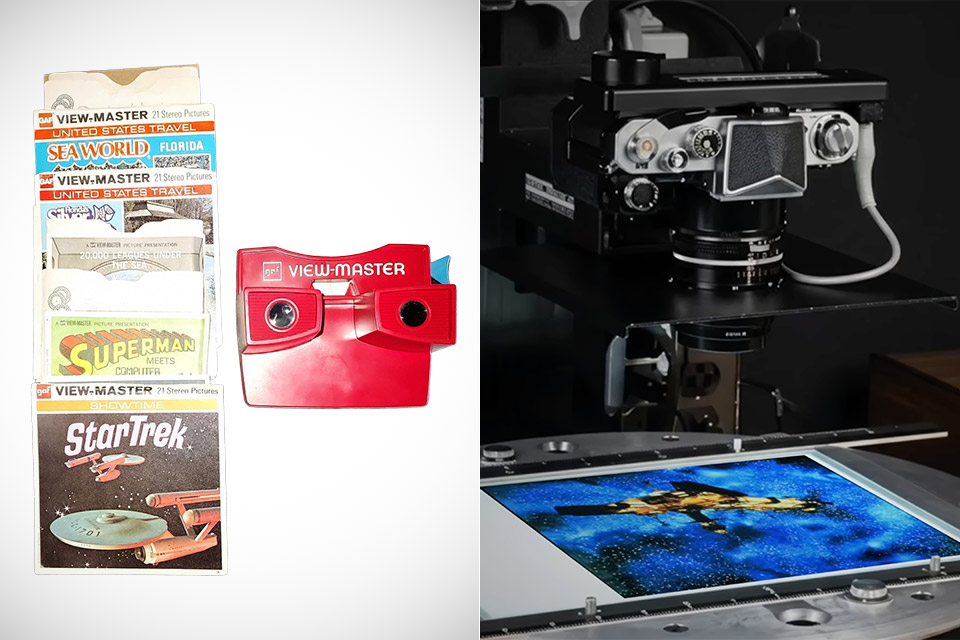
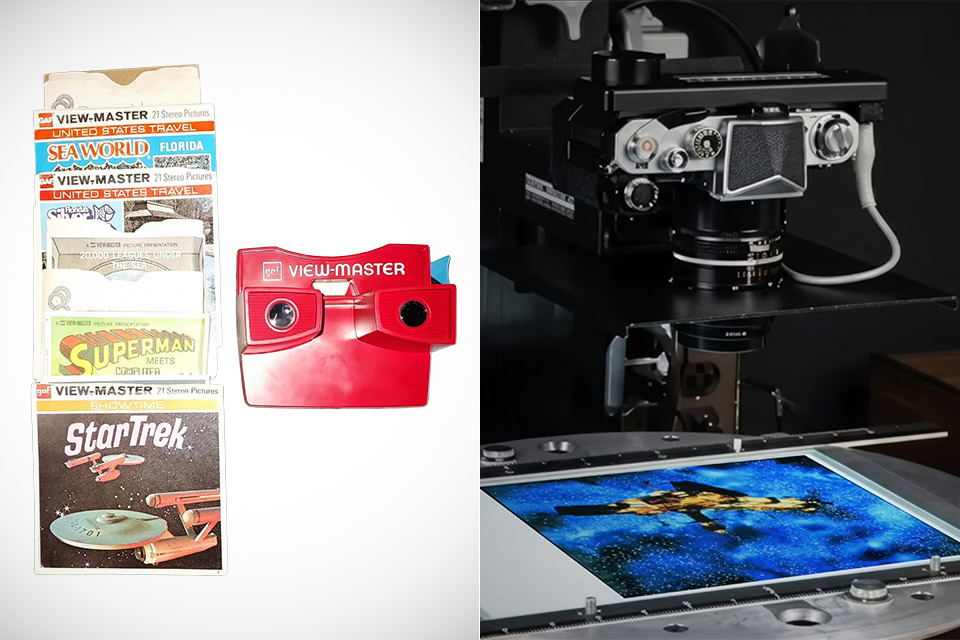
William Gruber tuned pianos and organs for a living in Portland, Oregon, yet he kept returning to one question in his spare time. How could someone bring the depth of real scenes to ordinary people without the heavy, expensive viewers that had dominated stereo photography since the 1800s? A moment spent cleaning his revolver supplied the missing piece.
The cylinder’s rotation reminded you of a flat disc that could easily hold a large number of image pairs and line them up one after another. Gruber designed a cardboard reel that held 14 tiny transparencies, 7 pairs of them arranged in a circle, which was simple yet smart. He then set about developing a simple viewer that would only move the reel two positions with each draw of the lever. Having an odd number of pairs almost ensured that you would always end up with a properly oriented stereo pair.
Then Kodachrome film came along, making the entire thing possible. The fine grain and consistent colors ensured that even when shrunk to the size of a fingernail, the film would still stand up. So Gruber put two Kodak Bantam Special cameras side by side on a solid bar, positioning their lenses precisely to match the typical distance between a person’s eyes. Then all you had to do was push the shared shutter release to acquire both perspectives at the exact same time. The 35mm transparencies were then converted to 16mm feature film for the final reels.
When you’re aiming to produce a large number of images, your workflow must change. Workers would make super-long rolls, one with thousands of identical left eye frames and another with matching right eye frames. Both rolls went through the processing at the same time, thus the colors kept consistent. After they were developed, the film was sliced into individual pieces and placed onto cardboard discs in precisely the proper place. Any minor change between the left and right chips would cause the 3D effect to fail.
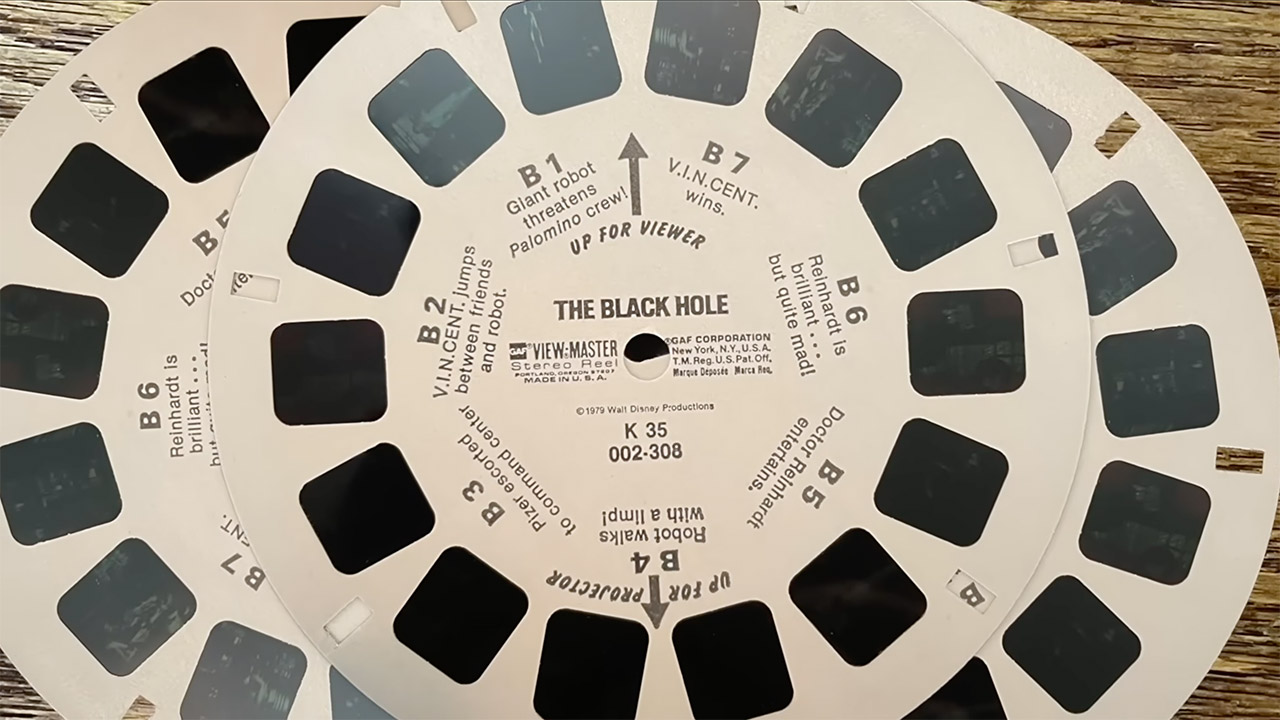
The viewer itself did not need to be complicated. A basic clamshell body, initially composed of Bakelite and subsequently of plastic, held two matching magnifying lenses. These expanded the microscopic film chips and positioned them at a suitable distance from your eyes. Most of the early ones relied on light coming in from the outside, so simply point the front of the item at a window or lamp to illuminate the transparencies from behind. Later versions had a small inside bulb, but the core design remained same.
A really cool mechanical advance arm lay inside the viewer, and its purpose was to lock onto notches or holes in the reel’s edge. Every time you squeezed the side lever, the disk rotated by two exact frame locations, and the next stereo pair was perfectly square behind the lenses. The key concern with this technique was how reliable it was, not how complex it was. You know what? People are still flipping through the same reels today, and the picture is still rock solid because the makers got the spacing just perfect and used high-quality materials.
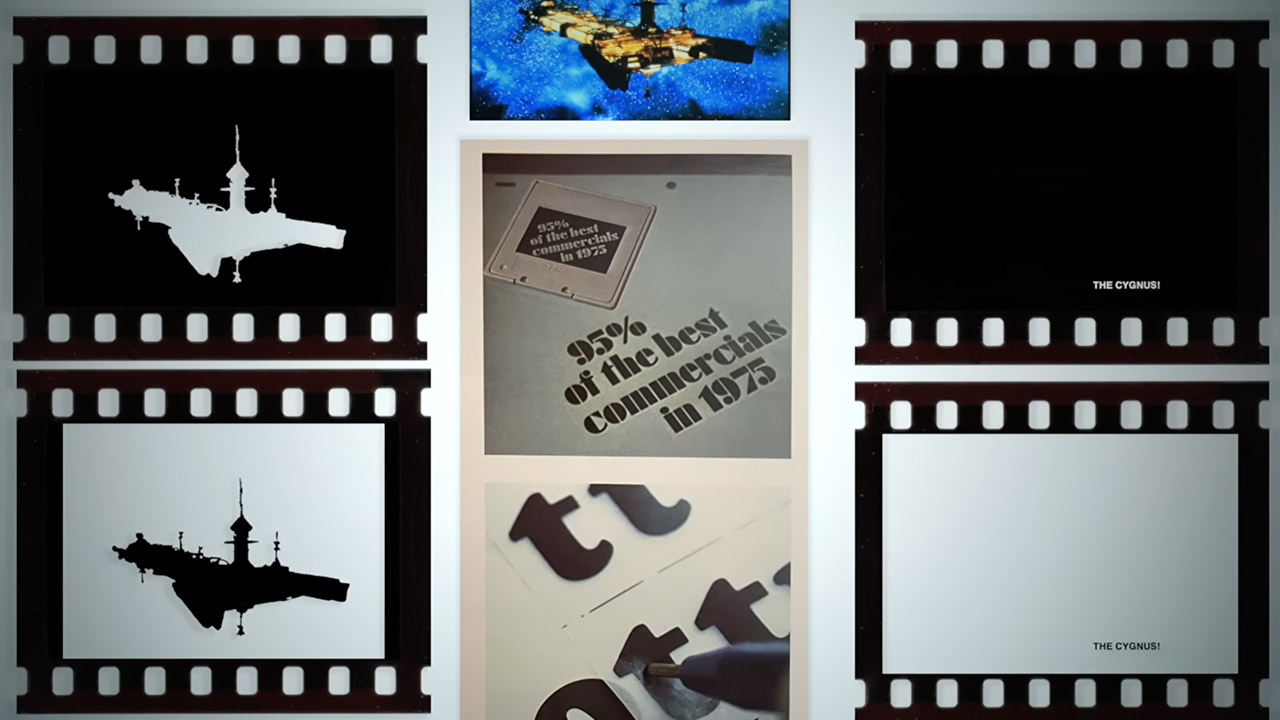
Some reels went beyond just depicting real locations; for fantasy sequences or instructive graphics, the technicians would actually manufacture the image on the 16mm film itself. They’d blow up reference artwork or pictures on a light box using a pin-registered technique to ensure that every layer was perfectly matched. They’d cut out masks from red plastic sheets to isolate individual features, such as a spaceship or a field of stars. Those masks were photographed on high-contrast black and white film, resulting in negative separations as vivid as day. Multiple exposures on the final color stock, led by those masks, stacked the various pieces together, keeping the little horizontal offset that creates the appearance of depth. The resulting image appeared to be a single snap, but it actually consisted of several carefully controlled planes that your brain interprets as varying distances away from you.
[Source]
Before Computers Could Render Worlds, View-Master Built Them on Spinning Reels of Film
#Computers #Render #Worlds #ViewMaster #Built #Spinning #Reels #Film