Boston Dynamics’ Spot Robot Crosses the Last Fifty Feet to Your Door
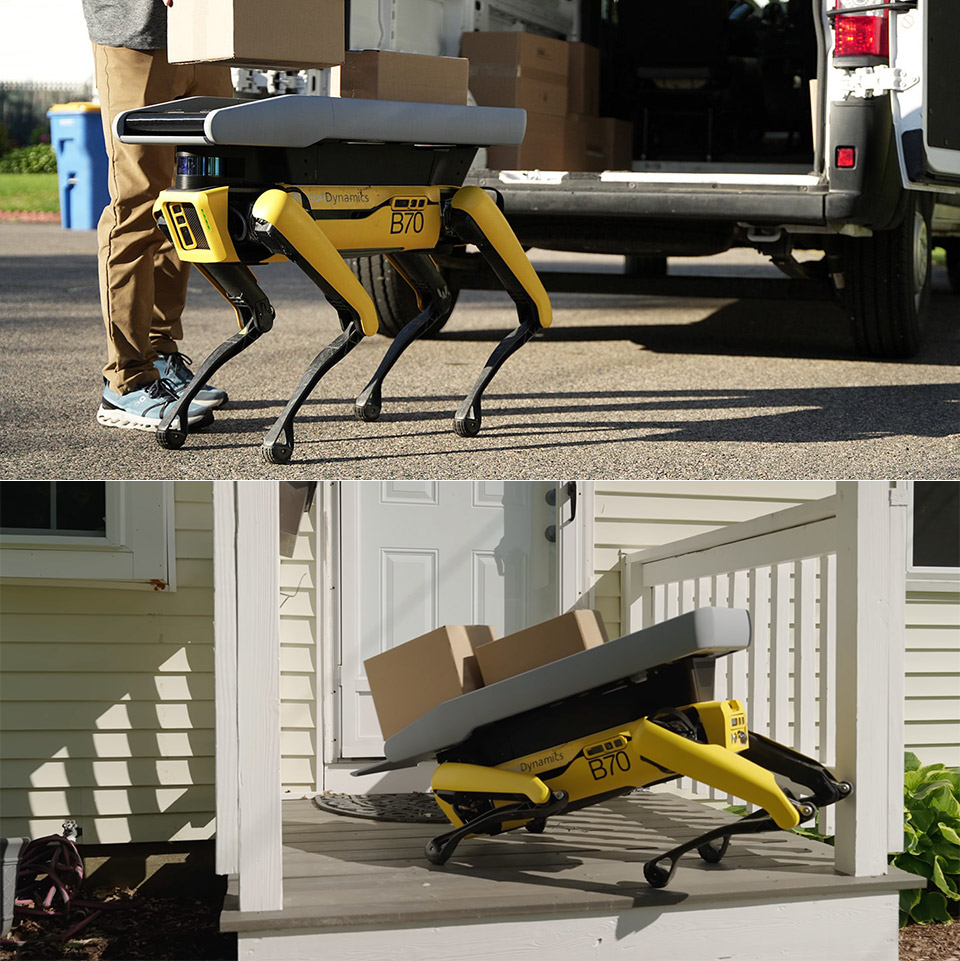
Boston Dynamics just gave its yellow four-legged Spot robot a new assignment that still stumps most machines. Spot now hauls packages from a delivery van and sets them carefully on doorsteps, closing the short but costly stretch that carriers call the porch gap.
Spot emerges from the back of a delivery van. A driver places two ordinary-looking boxes on a conveyor belt attached to Spot’s back. Spot then moves across the neighborhood, stepping over obstacles, ascending porch stairs as needed, and lowering its body so that the boxes slip off smoothly. It moves on to the next location, completes all deliveries, and then returns to the van to pick up the next load. The final stretch, from the curb to the porch, is where all of the expenditures are incurred; more than half of it is due to reaching the last mile of the supply chain. US airlines alone spend around $90 billion per year on delivering products to the correct door.

LEGO Disney & Pixar Wall-E & EVE Building Set for Adults, Ages 18+ – Home Office, Book Shelf, or Room…
- LEGO SET FOR ADULTS – The WALL-E and EVE (43279) building set offers adults 18 years old and up an immersive construction challenge featuring…
- 4 DISNEY PIXAR CHARACTERS – Builders can create iconic robots WALL-E, EVE, M-O and Hal from the hit movie—each with authentic functionality like…
- MINDFUL BUILDING EXPERIENCE – This detailed construction set lets builders practice advanced construction techniques for an immersive and relaxing…
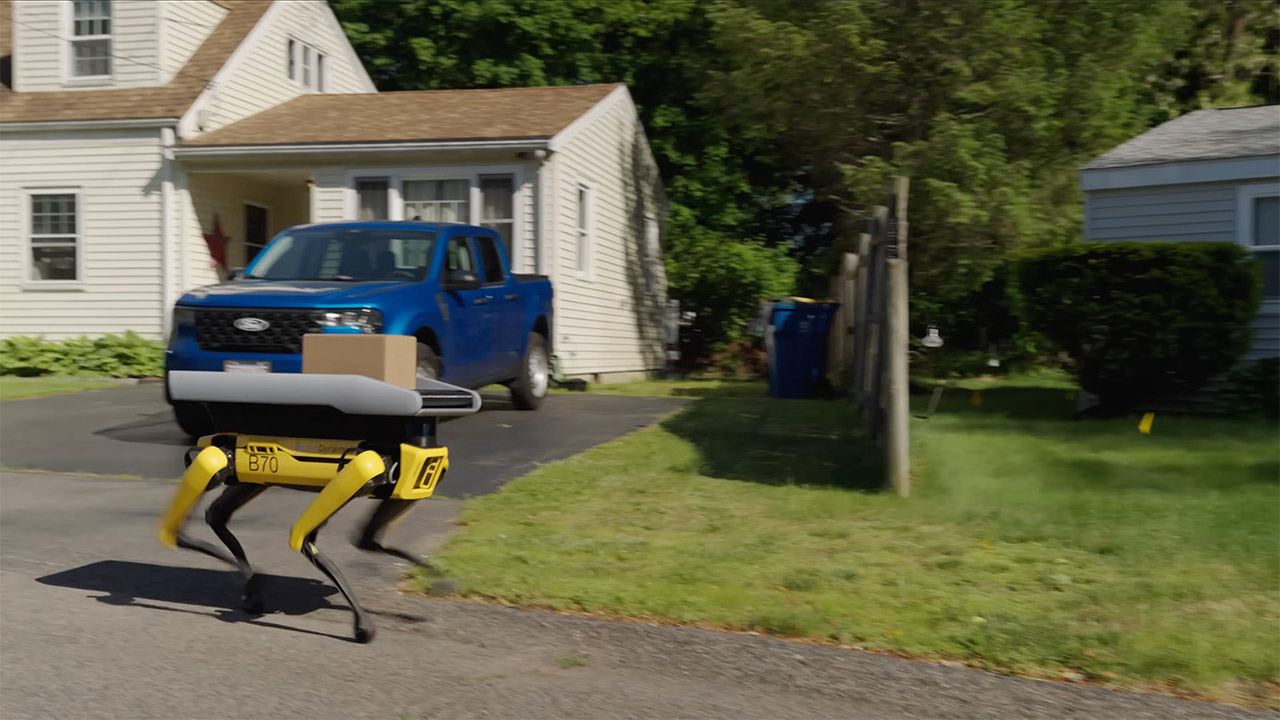
Currently, drivers are transporting every box manually, frequently down lengthy driveways or up staircases, which slows down the entire process and exhausts them. Spot is carrying two bundles, each measuring 16 by 12 by 10 inches. That is a usual size for packages that fill a typical van, accounting for at least 60% of the total. Paige Miller, Spot’s senior staff product manager, believes that for every three parcels handled, there is room for one more in the van. Drivers can prepare the next cargo or serve other residences while Spot is on its rounds, allowing the same truck to travel to more locations in less time.
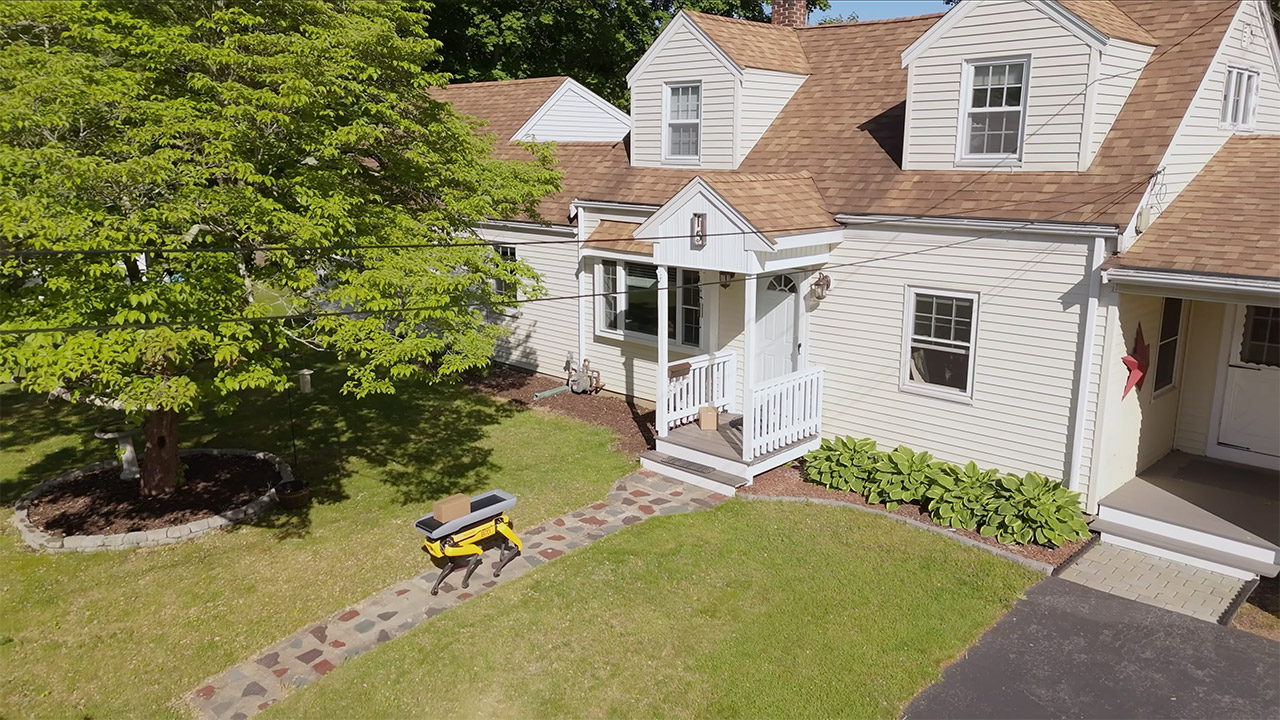
Spot has an advantage over other machines since it has legs. Drones cannot reach the porch, and other wheeled robots become stuck in a variety of conditions, including steps, gravel, snow, ice, and uneven sidewalks. Spot is capable of handling all of this and has also been tested in rubble for search and rescue and on industrial floors for inspection. The same capacity to deal with a variety of barriers allows it to cross the suburbs’ clutter without trampling flowerbeds or grass. The team even tested the conveyor with an egg carton to ensure it could handle gentle drops.
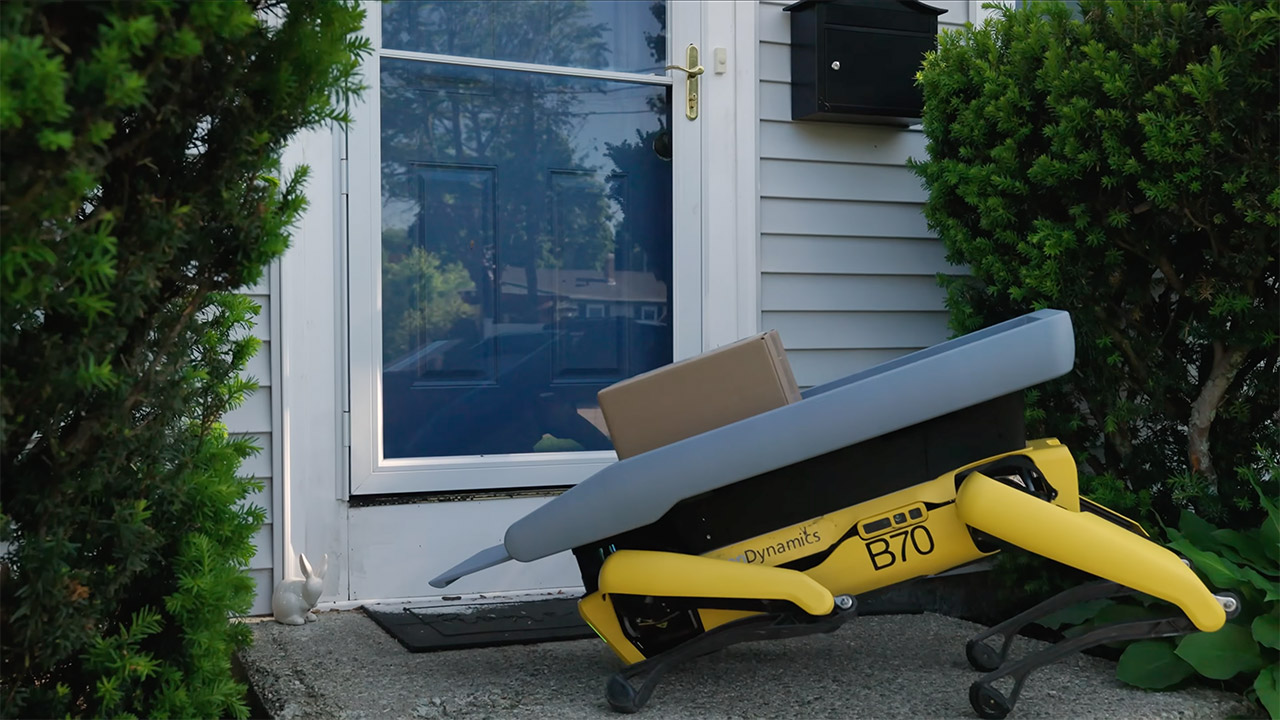
Early runs will have a driver. They load the items and can direct Spot if it becomes stuck, exactly like they do now while sketching out the path. Saved routes then operate on their own, with a teleoperator on standby in case things don’t go as planned and Spot gets into trouble. Boston Dynamics offers Orbit software that determines the optimum path by considering a variety of parameters such as client preferences, such as where the delivery should be left.
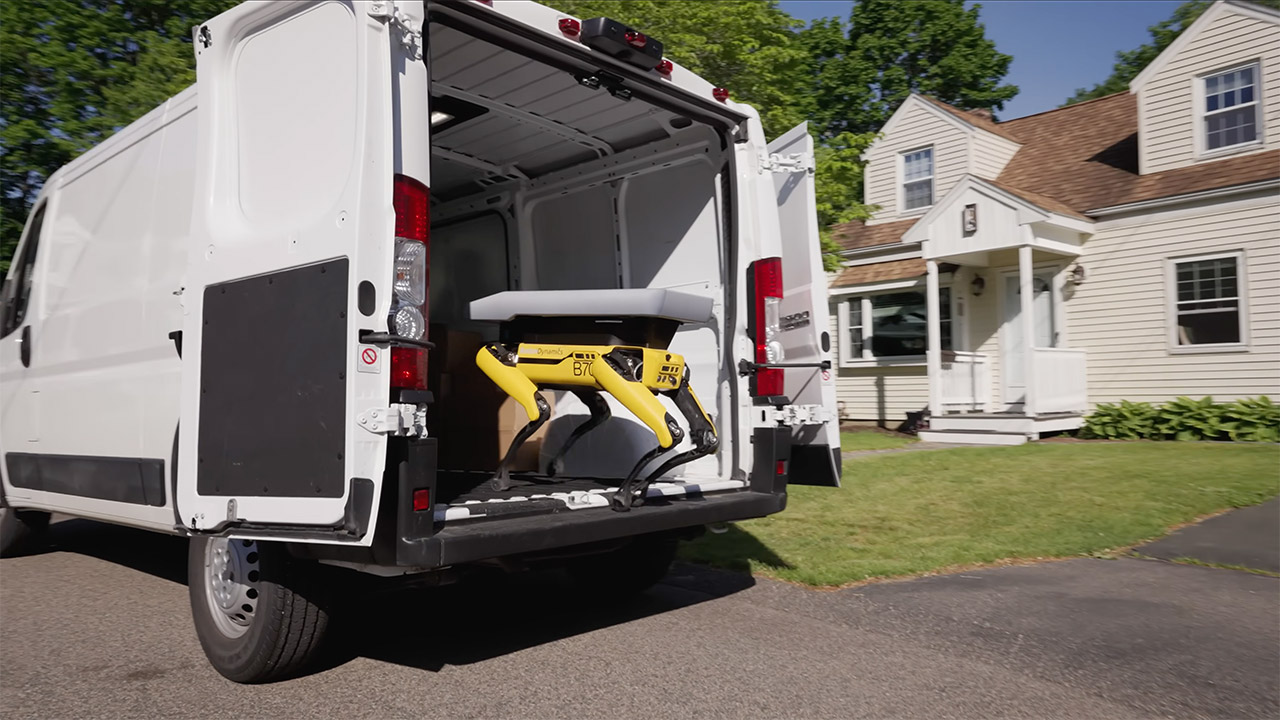
In the future, vans may be outfitted with robotic arms that grab packages and place them in the appropriate location for Spot to pick up, and autonomous trucks with a slew of Spot robots on board are also a possibility. Marco da Silva, Spot’s VP, believes that reaching the last 50 feet of a job is the next frontier of logistics automation. Spot costs $75,000, so it must be able to pay for itself by getting more things delivered much faster and relieving drivers of the constant wear and tear of heavy lifting.
Boston Dynamics’ Spot Robot Crosses the Last Fifty Feet to Your Door
#Boston #Dynamics #Spot #Robot #Crosses #Fifty #Feet #Door