Chronova Engineering Crafts an Intricate Reciprocating Pencil Sharpener for Ideal Concave Tips
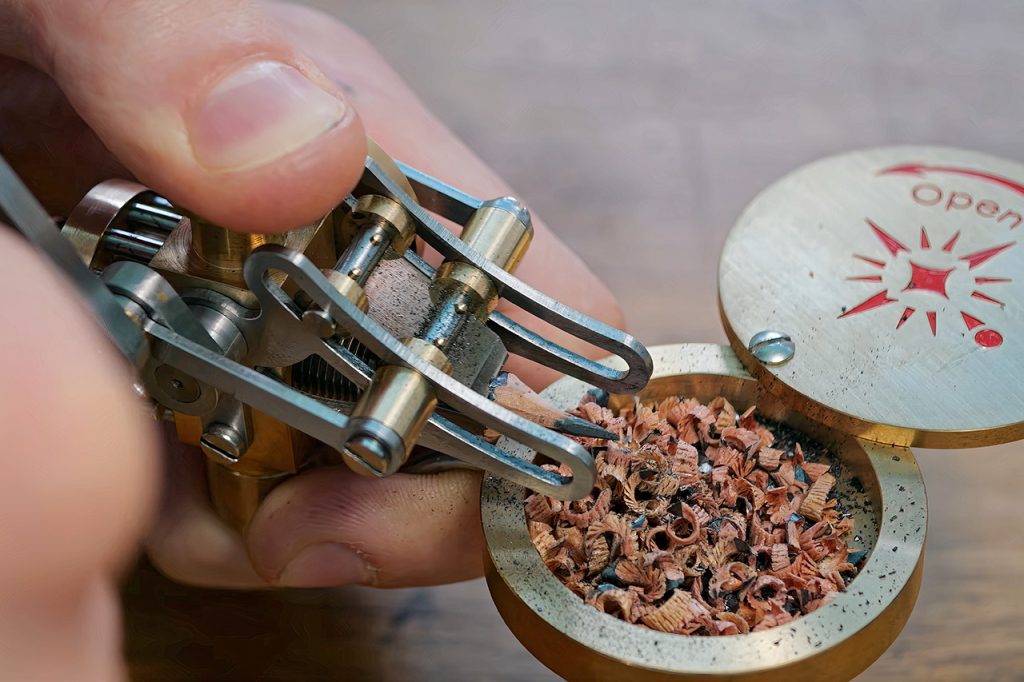
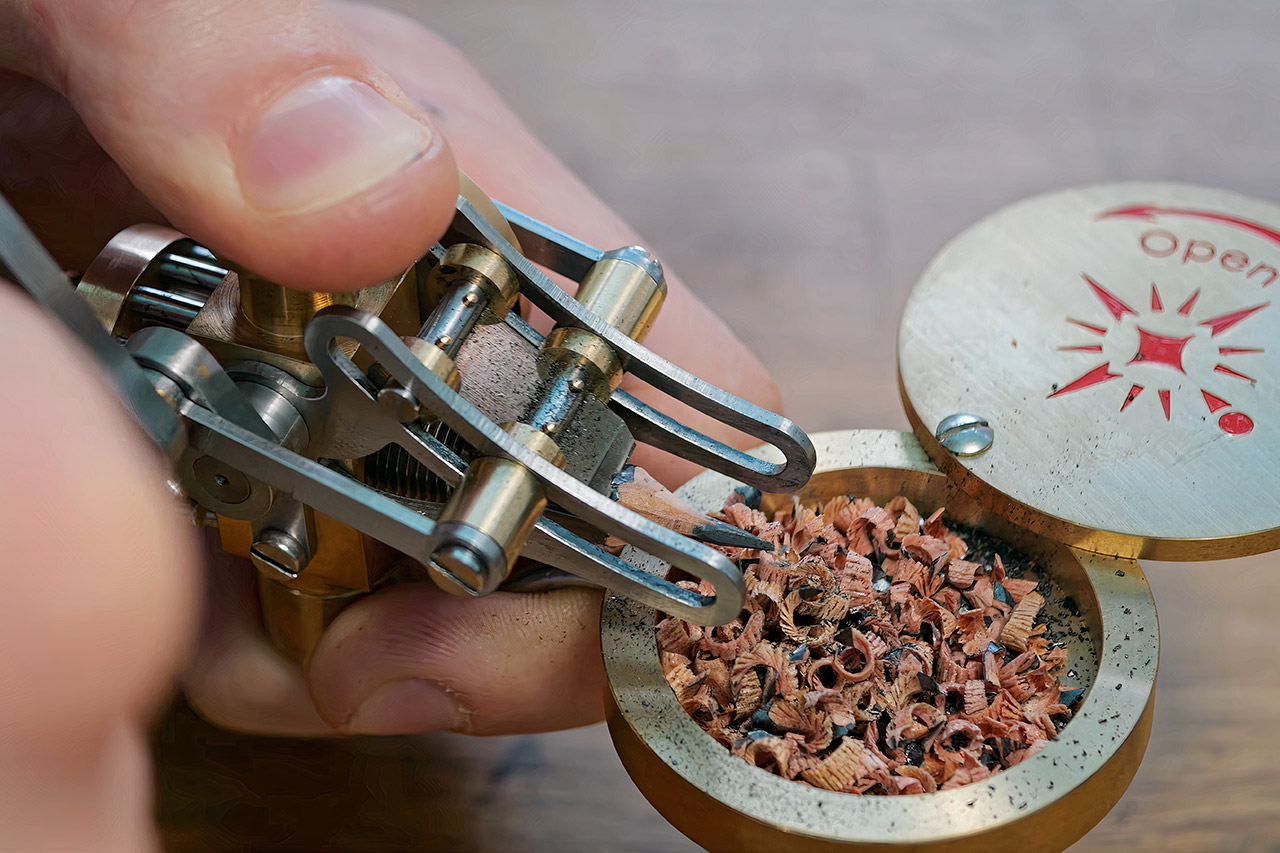
Mike from Chronova Engineering wanted a pencil tip that stayed sharp longer and showed the lead more clearly than the usual straight cone. Childhood sessions with a knife had convinced him that a gentle concave shape, sometimes called a pseudo-sphere, simply feels better on paper. Ordinary sharpeners cut straight across the wood grain, so the casing tends to tear unless the blade is perfect. A helical cutter reduces the problem, yet it still cannot trace the curved profile he preferred.
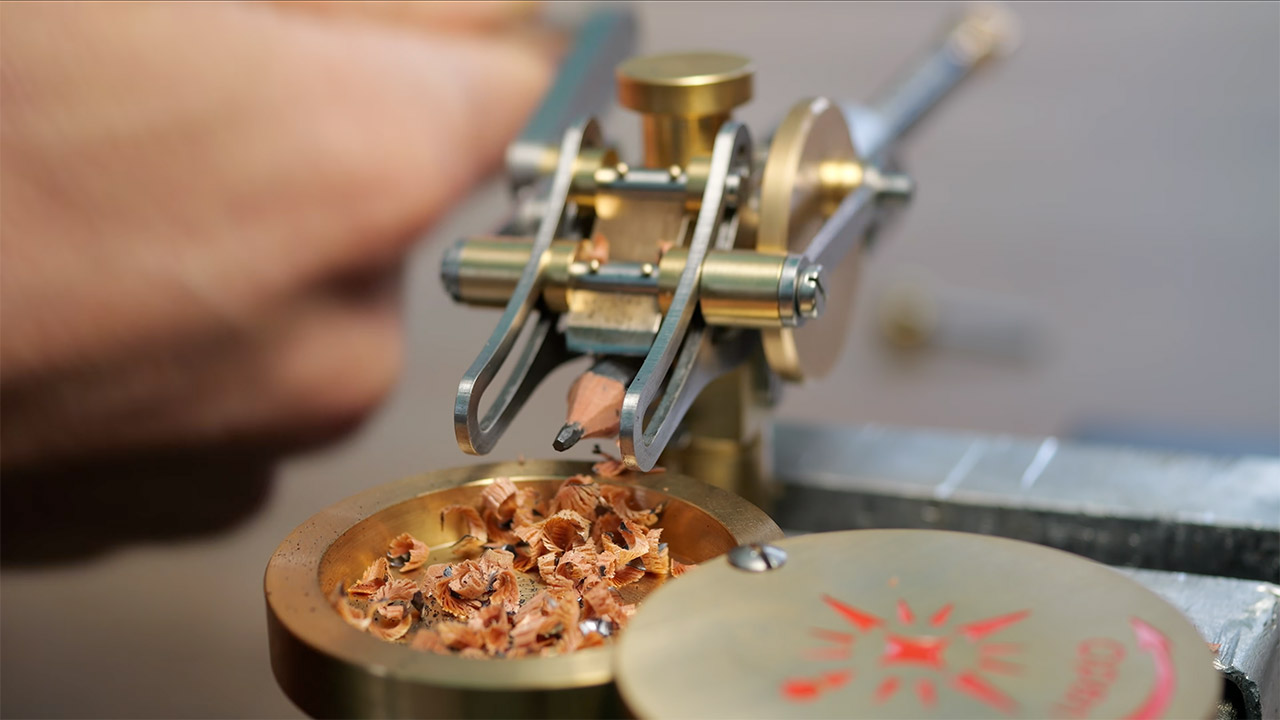
Two slim rods mounted on special steel blades are pinned inside precision-machined guide tracks. As the blade travels forward, the rods force the tip to follow a smooth curve as the entire edge tilts; this results in a near-perfect cut that is practically parallel to the grain and leaves an accurate concave form. The blade is held in place by four tapered pins, making it easy to remove, resharpen, or replace when it becomes dull. Early research revealed that this method worked even when your finger briefly touched the moving steel.
Sale

Electric Pencil Sharpener for Classroom, Fully Automatic, Black | Type-C Rechargeable, Auto In/Out…
- [ Hands-Free Automatic Pencil Sharpener ] This electric pencil sharpener equipped with a helical blade can sharpen quickly in 3-5 seconds (5 seconds…
- [ Rechargeable Pencil Sharpener ] With built-in 2000mAh rechargeable battery, this colored pencil sharpener for classroom can be recharged and reused…
- [ Three Adjustable Sharpening Settings ] Three sharpening levels are available, allowing you to adjust the nib as you wish! Simply slide the bottom…
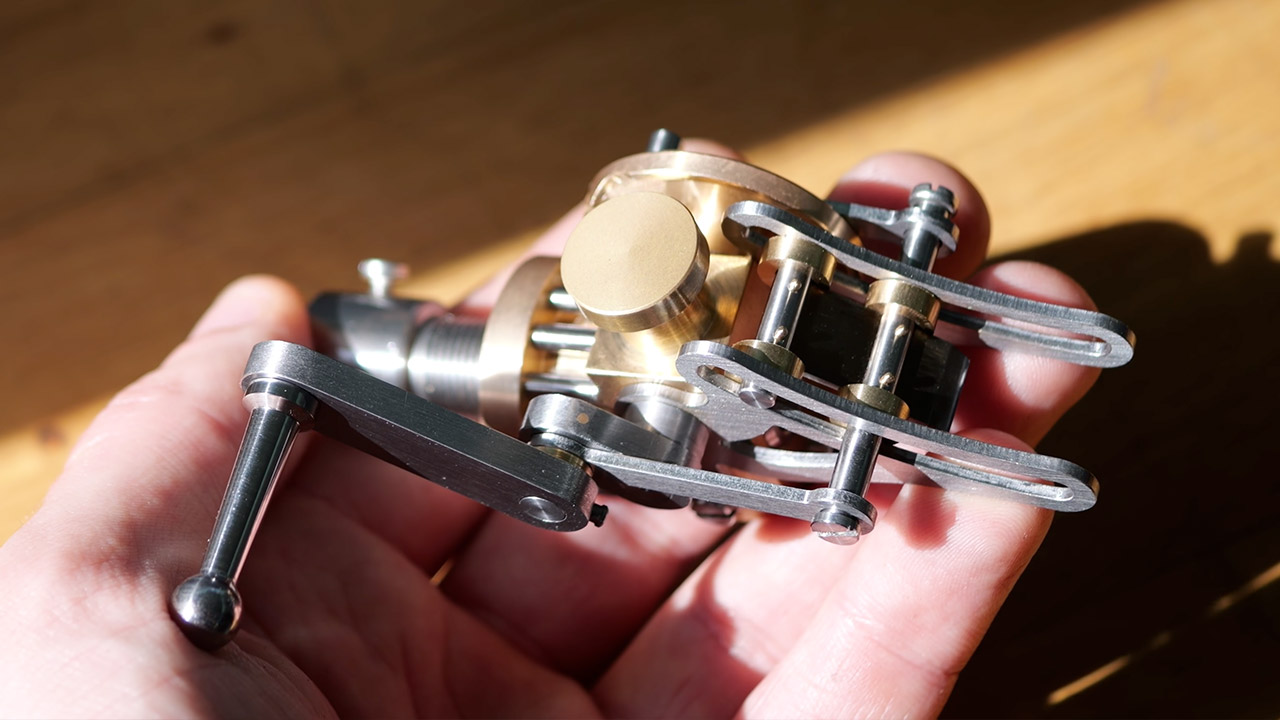
The pencil merely turns between cuts, thanks to a little mechanism that activates only when necessary. It’s powered by the crank, but only for a small amount of its rotation. The rest of the time, it simply stays set. This is all due to a particular little pinion that meshes very momentarily and carries 13 little pins. Because of the uneven number of pins, the pencil advances in little stages and then stops dead the rest of the time, preventing the blade from wobbling around. As you turn the crank, the pencil moves ahead a tiny fraction of a millimeter with each turn, so after a few passes, it’s quite a deal longer.
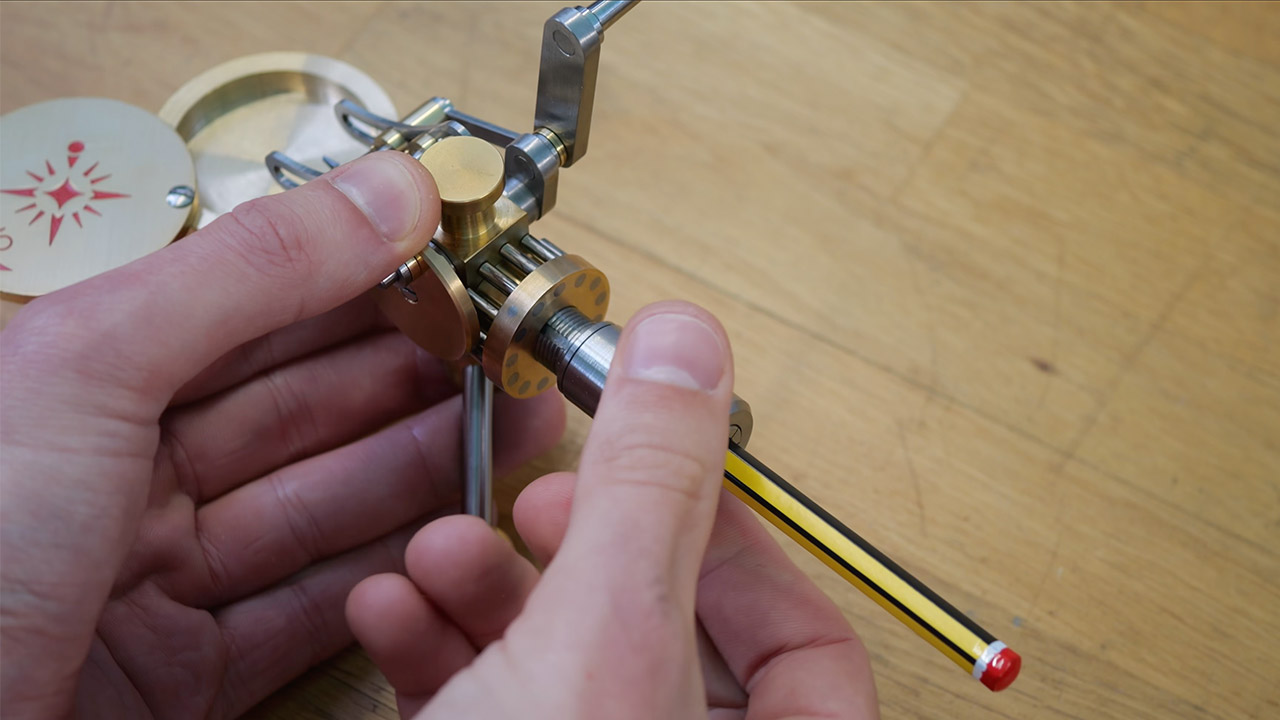
It all fits into a compact brass body with attractive bronze wear surfaces. The handle and connecting rods function like a miniature engine running backward, propelling the blade through its stroke. A collet chuck securely grips the pencil, and there’s a comfortable palm rest to support your hand and a small tray to capture shavings. A flat pencil can be sharpened by rotating it steadily for around 30 seconds. If you dial in the blade bevel and point exactly right, the surface will be as smooth as silk, and the concave bit will be durable and resistant to wear. Winding the threads back after each use ensures that it is ready to go the next time.
If you look at historical patents, you’ll notice that people were experimenting with reciprocating sharpeners over a century ago, but none of them ever left the workshop. Mike’s version works quite well after a few changes to get rid of the tiny graphite lump that occasionally appears where wood meets lead. If you wish to see full drawings and CAD models, visit the channel’s Patreon page. As for the finished device, it’s still a lot slower and more fiddly than a pocket sharpener from the stationery store, but the way all the pieces function together, as well as the overall 90-degree indexing structure, demonstrates what you can do when you put a little love and attention into something basic like this.
Chronova Engineering Crafts an Intricate Reciprocating Pencil Sharpener for Ideal Concave Tips
#Chronova #Engineering #Crafts #Intricate #Reciprocating #Pencil #Sharpener #Ideal #Concave #Tips