Commander rejected plans to rebase farther from Iran before deadly drone strike, sources say
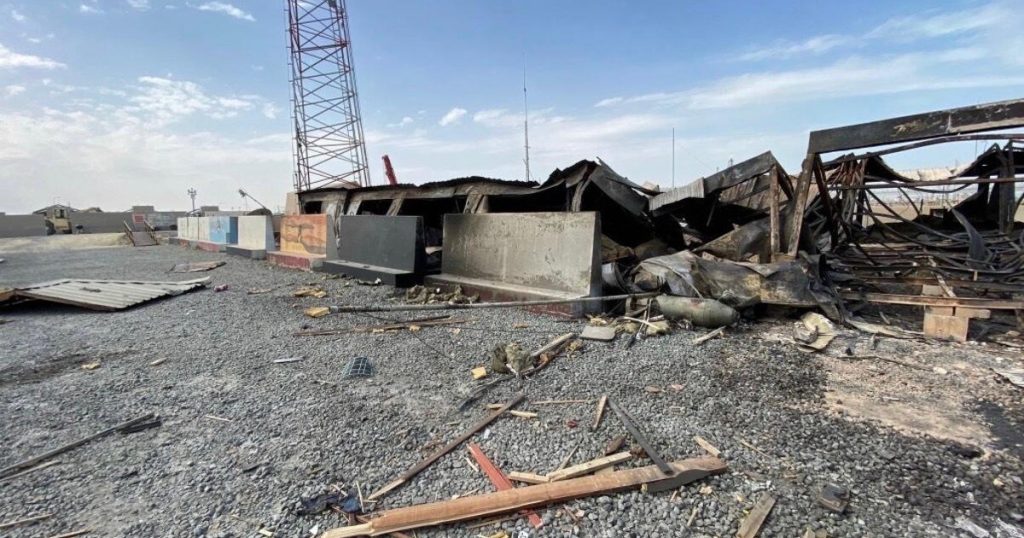
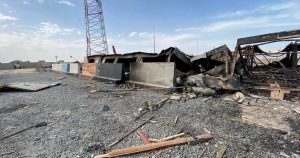
The dozens of U.S. troops bombarded by Iranian drones at a small Kuwaiti port in the opening days of the Iran war could have relocated to safer positions in western Saudi Arabia, multiple sources told CBS News, but those plans were rejected by the unit’s commanding general despite intelligence warning of a potential attack on their post.
About one week before the launch of Operation Epic Fury, most American soldiers and Air Force personnel stationed in Kuwait were moved to Jordan and Saudi Arabia — farther away from Iranian missile range. At least two options were scouted, planned and presented to the leadership of the 103rd Sustainment Command, the Army Reserve unit that ran logistics for U.S. Central Command: one was Logistical Support Area (LSA) Jenkins, a U.S. military base near the southwest port city of Yanbu, and another was Prince Sultan Air Force Base, just southeast of the Saudi capital city Riyadh.
A third option, supported by the commander, Brig. Gen. Clint Barnes, was to follow the playbook from the unit that was previously deployed to Kuwait before the 103rd arrived in September 2025. During the 12-day war between Israel and Iran that July, the active unit briefly moved from their home base at Camp Arifjan in Kuwait to Port of Shuaiba, roughly 30 miles south of Kuwait City and just 65 miles southwest of Iran.
“That was a totally different scenario,” one service member, speaking on condition of anonymity because he was not authorized to speak with the media, told CBS News. “Missiles and drones were flying overhead between Iran and Israel and we were more worried about one of them being intercepted and falling out of the sky.”
The U.S., Israel and other allies joined in shooting down dozens of the Iranian ballistic missiles fired at Israel that summer, but Iran never directly targeted U.S. positions in the Mideast.
By late fall 2025, however, Army intelligence began to map out potential Iranian retaliation scenarios in the event the U.S. became more engaged in military activity against the Iranian regime.
In January, the sources said Army intelligence began briefing Barnes that Port of Shuaiba was a potential target, but in the days before the launch of Operation Epic Fury, he nonetheless chose to move the unit there instead of Saudi Arabia.
“Shuaiba was the easy button,” another service member said.
The Army on Thursday declined comment. CBS News has also reached out to Barnes but has not received a response.
The revelations are the latest in a series of whistleblower accounts made by active and reserve service members regarding the decision-making process leading up to and following the deadliest attack of the war. Six U.S. troops were killed in the strike on March 1, and more than 20 were wounded.
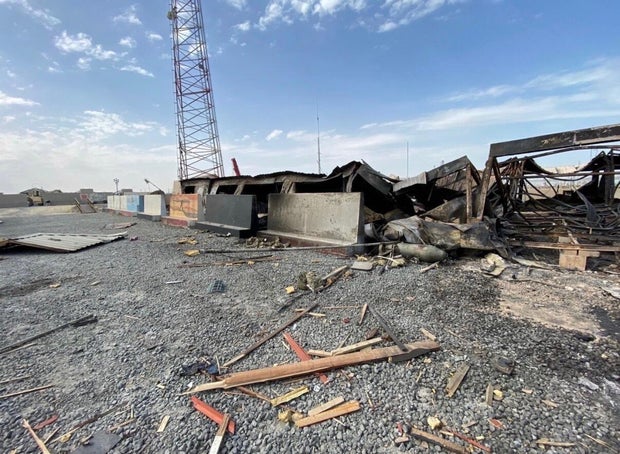
Notably, Prince Sultan Air Force Base, one of the other options for the unit’s relocation, was also attacked by Iranian fire. Pictures obtained exclusively by CBS News showed damage to a large Air Force jet, though there were no reported deaths as a result of the strikes on PSAB.
U.S. Army Central and Third Army this summer ordered a Pentagon probe “to determine the facts and circumstances” of the Iranian attack at Port of Shuaiba, but before the review was underway, a CBS News investigation began shedding light on what several survivors of the attack described as “strategic failures” ahead of, during and after the strike.
One day after the deadly strike, Defense Secretary Pete Hegseth described the Iranian drone as a “squirter” — suggesting that the drone managed to slip past the defenses of a fortified unit inside Kuwait. In April, one of the injured soldiers told CBS News that “painting a picture that ‘one squeaked through'” was not accurate. The soldier said the unit was “unprepared to provide any defense for itself. It was not a fortified position.”
Jim and Stacey Khork, the Gold Star parents of Maj. Cody Khork, told CBS News in an exclusive interview that their son, as one of the unit’s force protection officers, was among the key soldiers warning Barnes of the site’s vulnerability.
“My son died unnecessarily,” Stacey Khork lamented. “Yes, he died for my country. Yes, he was a patriot. Yes, he was a hero. I hate to use the word murder because it’s strong, but if a loved one of yours was murdered, our justice system is built to have accountability and to have atonement for that and for the grief of the family.”
CBS News spoke with other survivors of the blast who detailed requests to leadership for more resources ahead of the strike. Those requests focused on the number of medical personnel as well as the availability and accessibility of medical supplies.
“This was a failure,” Maj. Stephen Ramsbottom said in an interview with CBS News in May, adding he believed Master Sgt. Nicole Amor, another of the six soldiers killed, could have survived her wounds had there been a doctor, a fixed aid station or more than one ambulance at the post. The soldiers, according to witnesses, instead triaged themselves with makeshift bandages, braces and tourniquets. They commandeered civilian vehicles to drive the wounded to two local Kuwaiti hospitals.
The Pentagon has repeatedly pushed back on claims that the Army tried to downplay the incident. In a post on X in March addressing prior CBS News reporting on the strike, Pentagon spokesperson Sean Parnell said “every possible measure has been taken to safeguard our troops — at every level” and that “[t]he secure facility was fortified with 6-foot walls.”
Earlier this month, an Army spokesperson confirmed to the Khorks and CBS News that its probe into the deadly Iranian attack was completed in early July, but officials have yet to release it. In a statement to CBS News, an Army spokesperson asked for “patience” and said the Pentagon “will not comment on specific details, individual accounts, or leaked portions of the report at this time.”
A spokesperson for the Iowa-based 103rd Sustainment Command declined comment, while multiple requests to Brig. Gen. Barnes have gone unanswered.
Congressional Democrats urge committee hearings
As families like the Khorks await findings from the Army, more than 20 congressional Democrats from both chambers are urging the House and Senate Armed Services Committees to hold investigative hearings on the deadly strike.
A new letter sent this week to GOP Sen. Roger Wicker of Kansas and Rep. Mike Rogers of Alabama, the chairmen of their respective committees, cited multiple CBS News reports on the attack. Lawmakers who signed the letter include military veterans Rep. Pat Ryan of New York and Rep. Jason Crow of Colorado. Signatories also include Senators Amy Klobuchar and Tina Smith of Minnesota, the home state of Master Sgt. Nicole Amor.
“It is critical that Congress gets answers on the failures that led to the attacks, and on the subsequent mistreatment of survivors and families of those killed,” the letter reads. “We urge you to hold public hearings to determine why [the Department of Defense] was not properly prepared for this attack and why it has failed to ensure that injured service members get access to the care they need. As the administration continues to ask Congress for more resources for this war, we can no longer afford to wait for DoD to deign when they are going to answer these questions.”
The chairmen’s respective offices did not respond to inquiries from CBS News about the letter.
The Senate on Thursday again rejected a resolution aimed at limiting President Trump’s war powers in Iran, though the Democrat-led effort picked up one new GOP supporter.
In a 49-50 vote, four Republicans — Sens. Susan Collins of Maine, Lisa Murkowski of Alaska, Rand Paul of Kentucky and Thom Tillis of North Carolina — joined Democrats in voting to advance the measure. Sen. John Fetterman of Pennsylvania was the sole Democrat to oppose.
The resolution would have directed the president to “remove the use of United States Armed Forces from hostilities against the Islamic Republic of Iran or any part of its government or military, including potential ground forces in a combat role or used for occupation, unless explicitly authorized by a declaration of war or specific authorization for use of military force against Iran.”
Commander rejected plans to rebase farther from Iran before deadly drone strike, sources say
#Commander #rejected #plans #rebase #Iran #deadly #drone #strike #sources