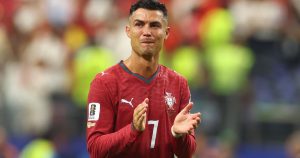
Cristiano Ronaldo’s long Portugal goodbye leaves complicated legacy

Want to bookmark your favourite articles and stories to read or reference later? Start your Independent Membership today.
Already a member?
Log in
It could be called the long goodbye, although really it was an extremely long goodbye. The beginning of the end came in Qatar, in December 2022, when Portugal beat Switzerland 6-1, with a Goncalo Ramos hat-trick. Cristiano Ronaldo took almost four years to take a hint.
His retirement from international football came three months before his 42nd birthday, more than 23 years after his debut and two major tournaments too late. The undignified finish felt sadly inevitable. There was to be no happy ending: not when Portugal’s chances of winning Euro 2024 or the 2026 World Cup were fatally wounded by picking Ronaldo.
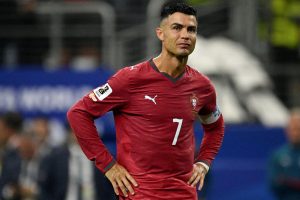
So instead the world’s second oldest toddler – it has not been a good week for ageing egomaniacs on either side of the Atlantic – ended up bidding farewell to his country by flouncing out of the camp last month after being left an unused substitute against Norway, wanting manager Jorge Jesus to apologise for “putting someone of the stature of Pele or Maradona on to warm up and then not putting him in the game”, in his own words, posting a self-pitying, self-important 2,000-word opus on Instagram. Ronaldo’s 30-day suspension from the Portuguese FA is as irrelevant as the much-mocked £215 fine; the real punishment for a billionaire is the eventual recognition that he cannot carry on for Portugal forever.
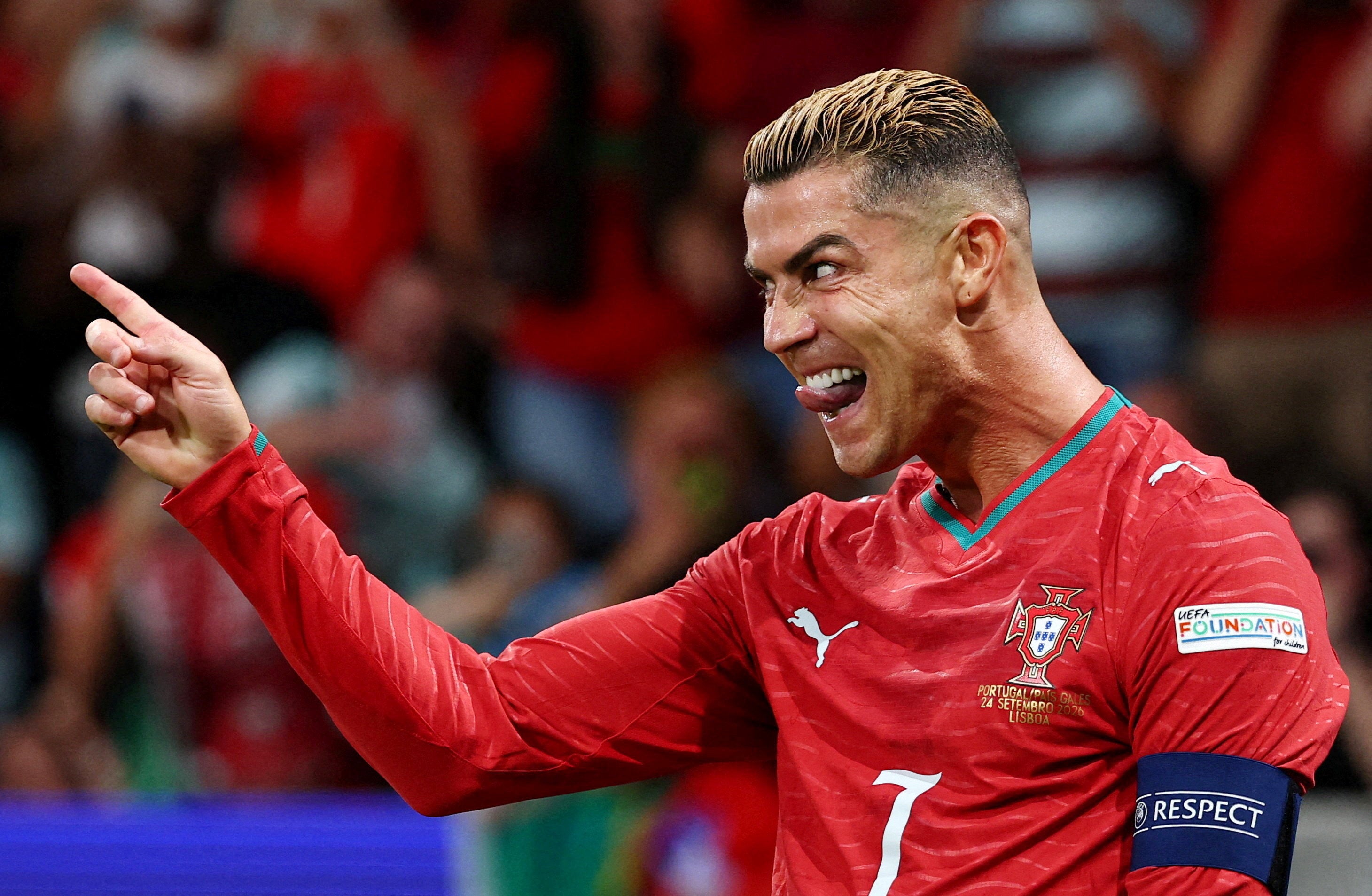
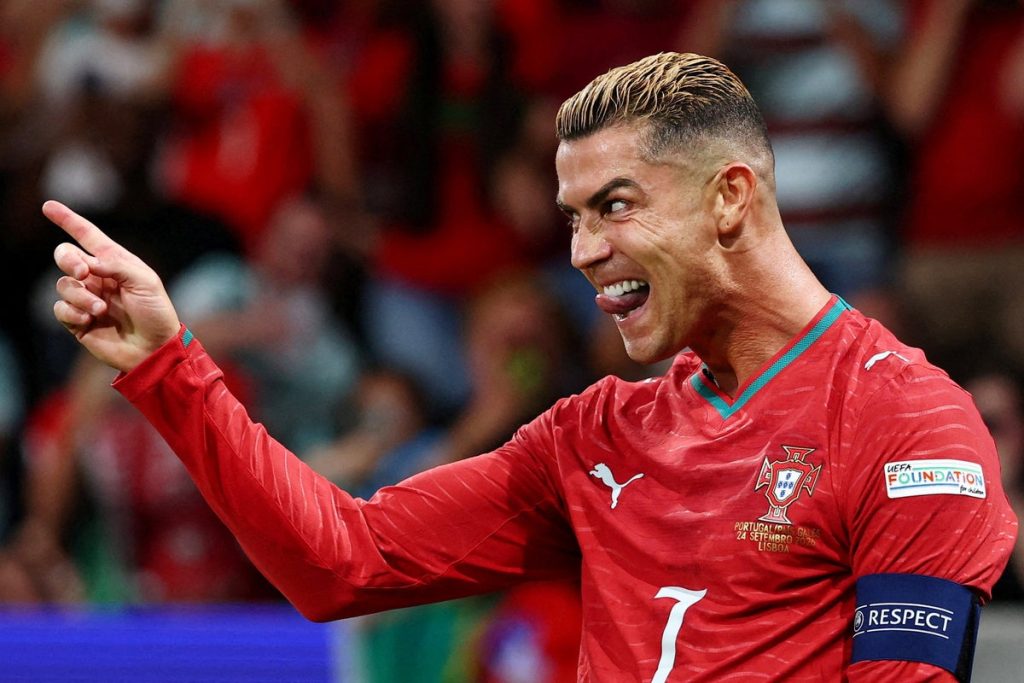
And the final chapter should not obscure what an astonishing career it has been. The numbers are beefed up by the last four years, but Ronaldo’s 234 caps and 146 goals are records in international football, and should remain so for quite some time. Astonishingly, he is 99 goals clear of Portugal’s second top scorer, Pauleta. Between them, Luis Figo and Eusebio scored half as many goals for their country as he did. For a long time, Eusebio’s status as Portugal’s greatest football went unchallenged. Now it is clear he stands in second place.
The last four years mean some of the statistics need qualifying. Ronaldo is Portugal’s record scorer in world cups; but it was only in the sixth that he passed Eusebio, who played in one. He is the only man to score in six World Cups, but the fact only one of those goals came in a knockout game, and that was a penalty in a last-32 match, means he underwhelmed on the global stage.
Yet he can nevertheless be called the greatest player in the history of the European Championships; with 30 appearances and 14 goals. He is the only Portugal captain to lift a major trophy and while he went off injured in the final of Euro 2016, the sight of Ronaldo on the sidelines, part coach, part super-fan, is one of the indelible images of his two decades of international football.

Perceptions of Portugal have been transformed in part by Ronaldo; until the generation of Figo and Rui Costa, 1966 was the great anomaly, the time Eusebio powered them to a World Cup semi-final the exception for a country who rarely qualified for anything. If Ronaldo’s best tournaments included his first two, in 2004 and 2006, when the core of a team was an older generation, he gave them a level of consistency and competitiveness.
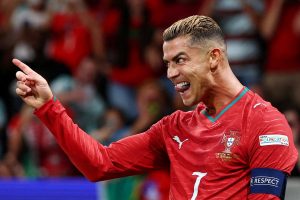
There were two remarkable hat-tricks: one against Sweden to ensure they qualified for the 2014 World Cup, another against Spain in the 2018 tournament. There was also Ronaldo’s remarkable transformation from flair player to finisher. He scored 19 times in his first 50 caps, 37 times in his first 100: very good by anyone else’s standards, but he was only warming up. He scored 109 international goals after his 28th birthday.
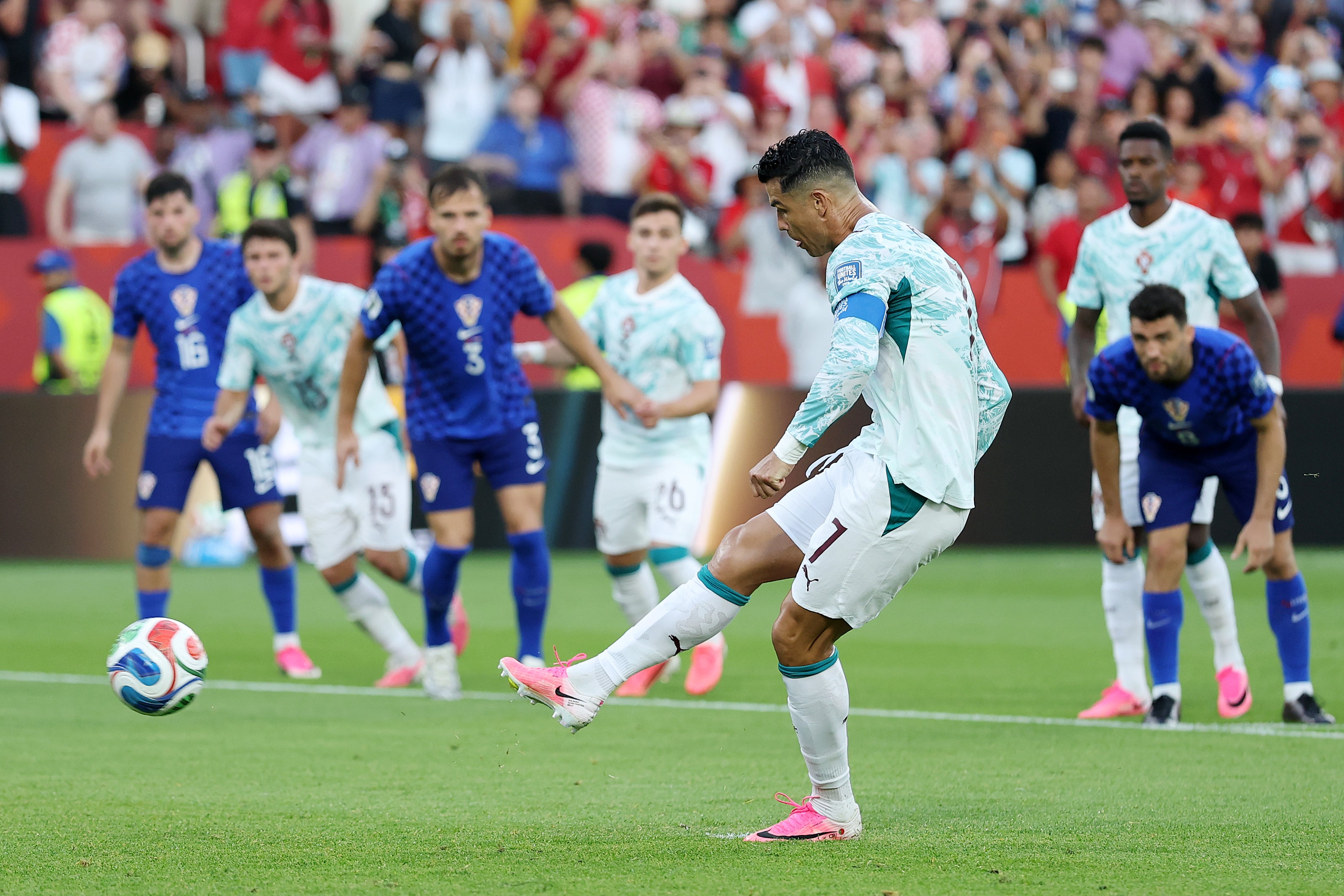
His 146th and last strike for Portugal was the penalty against Croatia in Toronto. By then, however, Ronaldo had descended into selfishness and self-parody. In the 2022 World Cup, he tried to claim a goal Bruno Fernandes scored. In his last three major tournaments, his only goals in open play in 15 matches came against Uzbekistan.
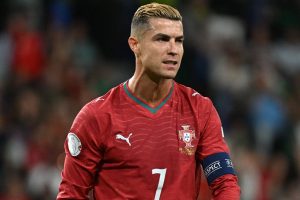
He was arguably the worst player in Euro 2024; ineffective, immobile and, when Portugal had such talent on the bench, weakening the side. Yet he played 486 minutes out of a possible 510, the most of any outfield player. He was little better in the 2026 World Cup, but played 441 minutes out of 450.
His unholy alliance with Roberto Martinez may have been a feat of diplomacy from the Spaniard, but it became ever harder to deny that it damaged Portugal. Even when Ronaldo should have been ruled out, he was somehow reprieved in a way that seemed to suit Gianni Infantino and Donald Trump: rather than being suspended for the start of the World Cup after his red card against Ireland, the last three games of his ban magically disappeared.
Ronaldo, it seemed, got preferential treatment from his manager and the governing bodies.
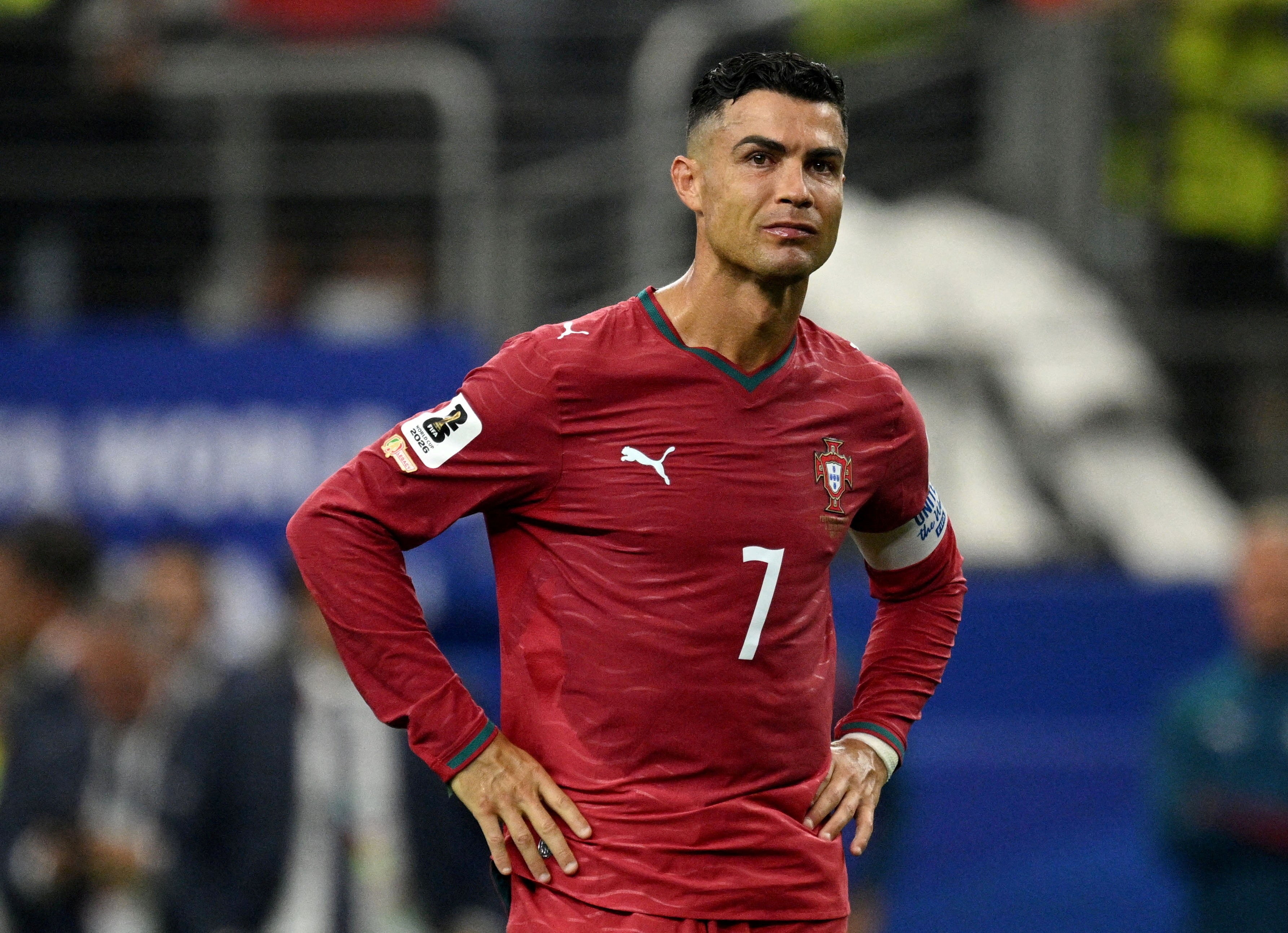
A talented Portugal team suffered, impotent when it mattered, hampered by a statuesque centre-forward. Seemingly starstruck, they sacrificed some of the prime years of Fernandes, Bernardo Silva, Ruben Dias and many another. They sacrificed Ramos, benched when it was evident the team was better with him in it.
Yet still Ronaldo carried on after the World Cup. Perhaps it took Jesus, a blunter figure than Martinez, to end the madness of it all. As Ronaldo’s Portugal career is finally over, he has many a tribute, but his manager and teammates could be forgiven for feeling a sense of relief.