Fascinating Look Back at the Scott T-33S FM Tuner and Its Unforgettable Punch-Card Presets
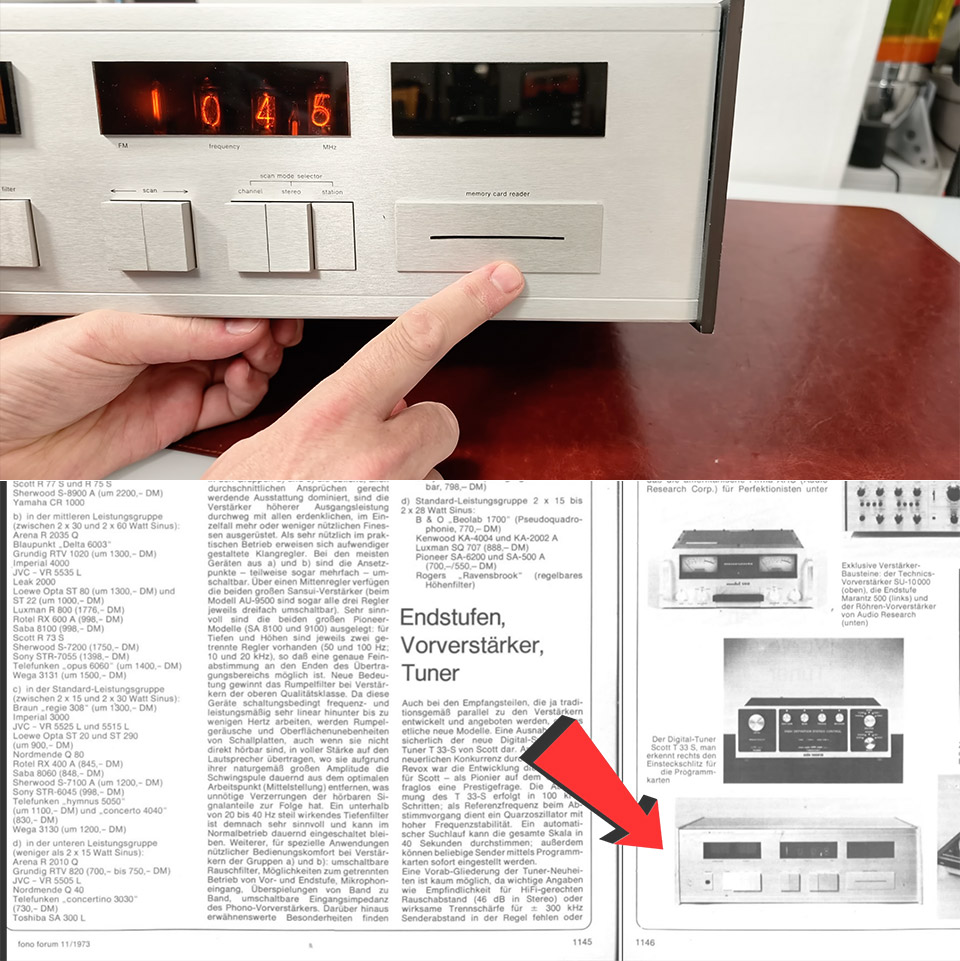
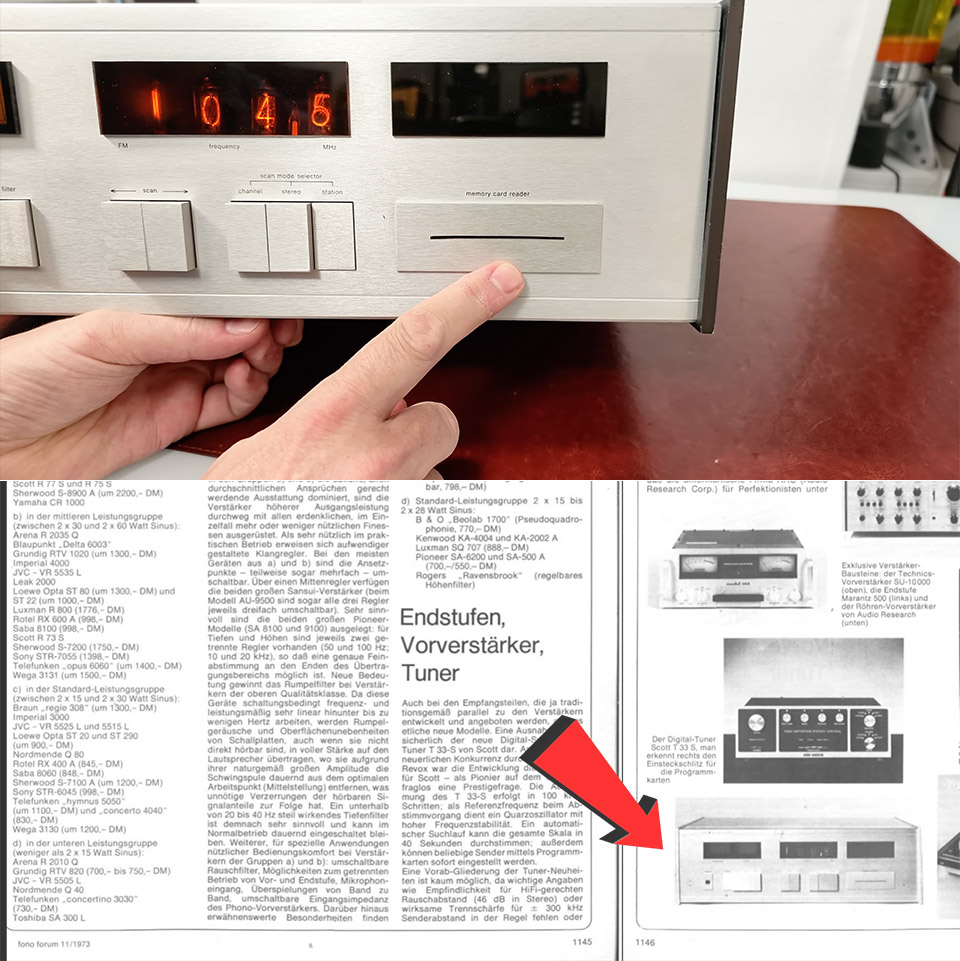
Most people who chase vintage audio gear talk about tubes, transformers, or the way certain tuners pull distant stations out of the noise. Few ever bring up an FM tuner whose most memorable feature was a thin slot on the front panel that accepted little cards punched with holes. The Scott T-33S, made between 1975 and 1977 in Maynard, Massachusetts, is one of those rare pieces. It arrived as the refined successor to the earlier Stereomaster 433, carrying forward a frequency synthesizer and Nixie-tube display while refining the one system that still feels almost alien today: station memory stored on physical punch cards.
When you sit in front of a T-33S, the sleek, brushed aluminum face is the first thing you notice. You can’t help but note the rectangular windows and push-button configuration, which provide the overall effect of a genuine instrument rather than a living room adornment. Two meters track signal strength and multipath, while LED indicators flash to indicate whether you’re in stereo mode, station lock, or memory mode. Right in the middle of it all, you’ll notice a large horizontal slot labeled memory card. Insert a properly punched card into the slot, and the synthesiser instantaneously locks onto the exact frequency that card is coded for, with no buttons to press, scrolling, or waiting for the device to hunt about. The frequency appears on the Nixie tubes in a flash, and that’s it.

PRUNUS J03 AM FM Radio Portable Plug in Wall or AA Battery Operated for Home/Outdoor, Large Speaker…
- 【AC Plug and AA Battery Operated】Enjoy the convenience of plugging in an AC cable in your living room, kitchen and office, or experience The…
- 【Portable Radio with Handle】Measuring just 8.2 x 5.2 x 2.4 inches and weighing 20.8 oz, this radios portable am fm come with a foldable handle for…
- 【Easy to Use】The large, easy-to-read frequency scale and smooth tuning knobs make adjusting simple. Switch between AM/FM stations with just one…
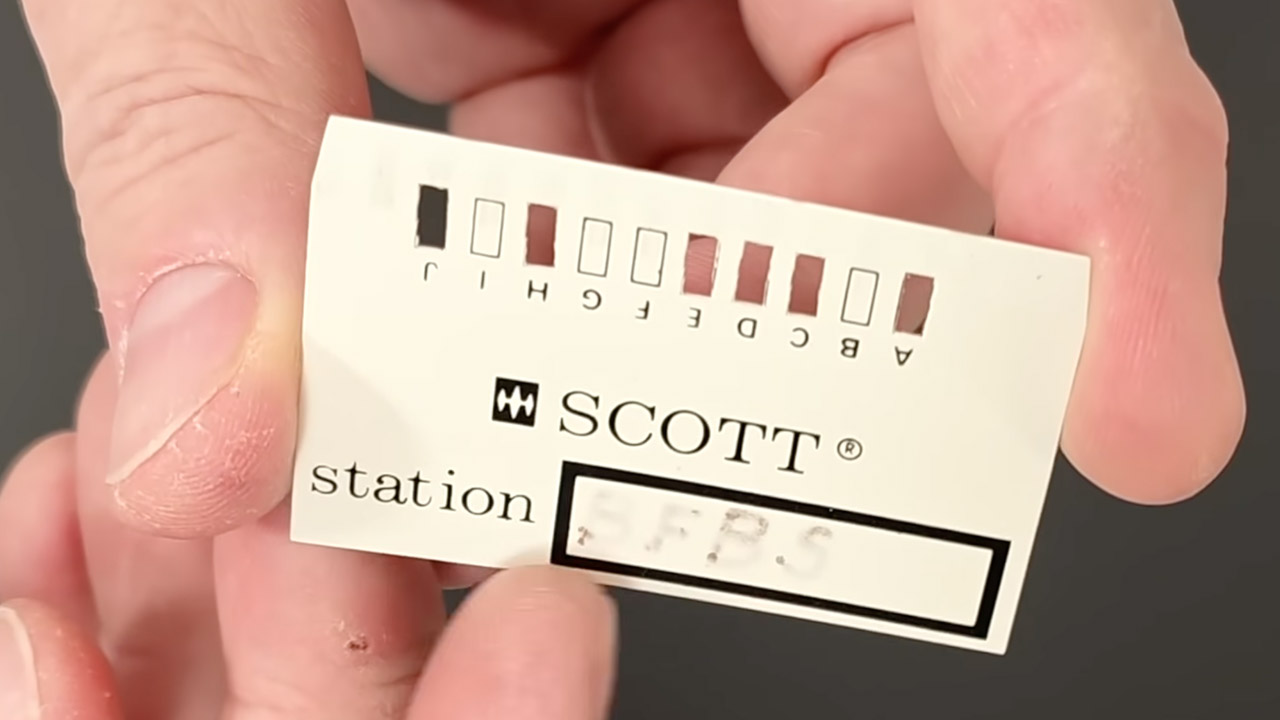
Those cards weren’t an afterthought. Back in the mid-1970s, dependable non-volatile memory that did not lose its memory when the power was switched off was still considered a luxury item or a costly nightmare for consumer electronics. CMOS RAM was only just becoming available, but it was still somewhat expensive. EPROM? Forget it; you needed a UV lamp to clean it, and magnetic storage required both room and electricity. Scott, on the other hand, came up with a whole different solution, returning to the old world of data processing and making it easy enough for a home tuner to utilize. Each card contained a small pattern of holes that represented a single frequency, in increments of 0.1 MHz, spanning the entire FM spectrum from 87.5 to 107.9 MHz, allowing the same device to be used in both America and Europe without requiring a completely different machine.
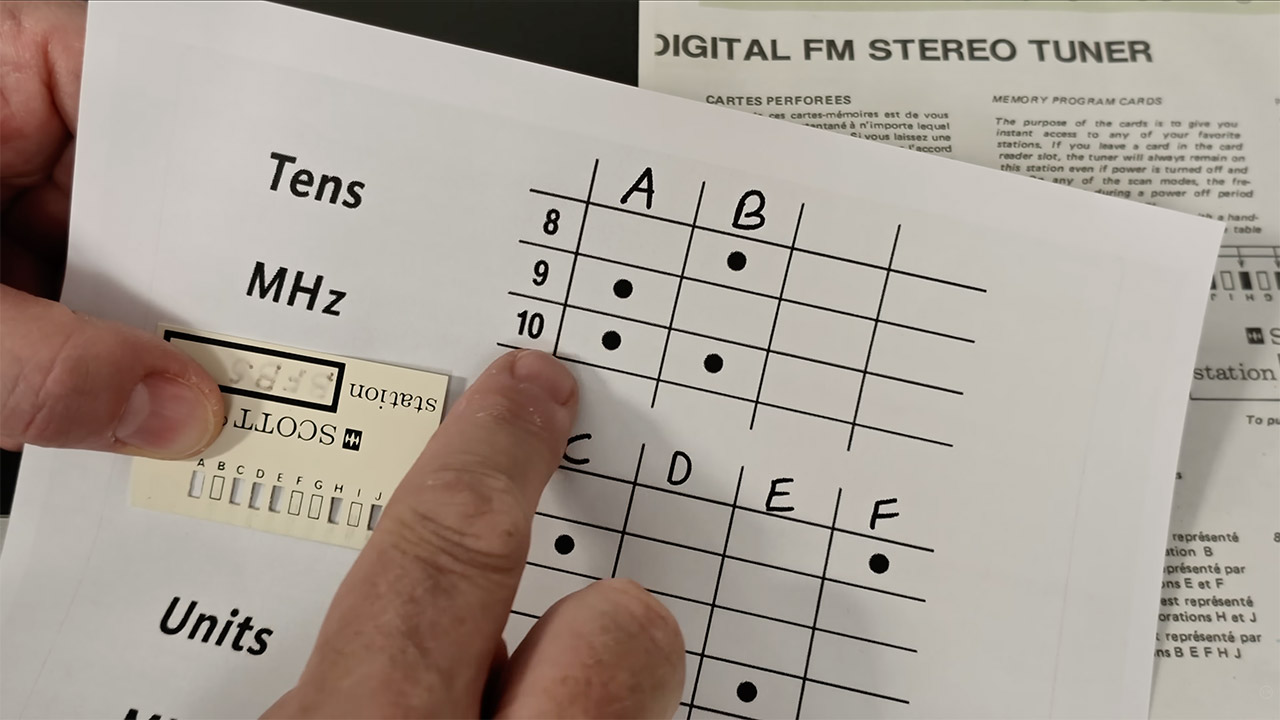
Scott supplied the blank cards and a punch tool, and all the owner had to do was follow the instructions and punch out the pattern for their favorite stations. After then, everything went smoothly, and there was no need to repeat the process. The cards required no power, never forgot anything, and could be kept in any order you desired. To top it all off, the T-33S, like some of its relatives, included a second smaller slot that allowed you to deposit a handful of your most-used cards for rapid access.
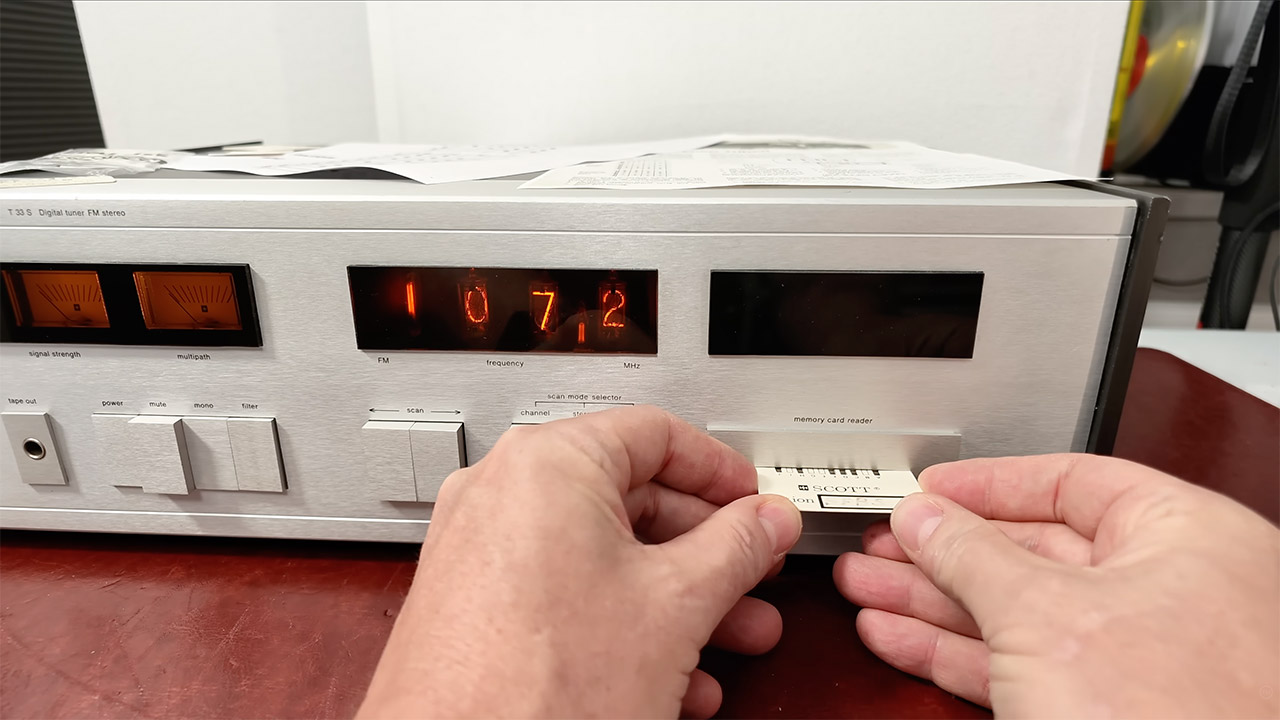
The system functioned flawlessly because the T-33S featured a phase-locked-loop synthesizer at its core, which was controlled by all of the digital logic created from both ECL and TTL chips. Simply said, the card reader fed the binary code into the logic, which locked the oscillator to the right channel. Once that was completed, the same circuitry that controlled the card reader drove the Nixie tubes, ensuring that the number matched the card exactly. You could still conduct manual tuning, moving up in 0.1 MHz increments, and there were automatic scan modes to pick up strong stations and stereo signals, but the card always took priority. That is, once one was introduced, all of the other controls just yielded.
Fascinating Look Back at the Scott T-33S FM Tuner and Its Unforgettable Punch-Card Presets
#Fascinating #Scott #T33S #Tuner #Unforgettable #PunchCard #Presets