How Han Yun Liang (also known as Jonathan Liang) is shaping the future of music
Opinions expressed by Digital Journal contributors are their own.
Han Yun Liang (also known as Jonathan Liang) is building the kind of career that draws attention before the spotlight has fully settled on him. The Richmond Symphony identifies him as its Acting Principal Trombone, and that title alone says a great deal about the level of trust he has earned. In classical music, trust is everything. A player can have brilliance, speed, and technique, but a major orchestra asks for something harder to measure: steadiness under pressure, musical judgment, and the ability to lead from inside the sound.
Liang’s story feels timely because it shows what classical musicians can look like now. The old image of a rising artist used to center on patient apprenticeship and slow visibility. His path tells a different story. Serious training, major performances, and international recognition have all arrived early, and together they suggest a musician stepping into the future rather than waiting for it.
The meaning of the principal chair
A principal brass seat is never just a seat. It is a point of pressure inside the orchestra, a place where sound, timing, color, and confidence all meet. When the Richmond Symphony lists Liang as Acting Principal Trombone, it is naming him as one of the musicians responsible for helping shape the orchestra from within. That role carries weight long before the audience knows the player’s name.
Good principal players do more than stay accurate. They help set the emotional temperature of a passage. A section can feel bold or cautious because of one person’s timing. A phrase can land with urgency or drift away because of one person’s sense of line. Liang’s rise suggests he understands that orchestral leadership is partly musical and partly psychological. People around him have to feel secure enough to play freely.
That is one reason his career stands out. The role asks for authority, yet the authority cannot feel stiff. It has to breathe. It has to invite. It has to hold shape when the music gets big and stay elegant when the writing turns exposed. Musicians who can do that well are rare, and they often signal where the art form is heading next.
Liang is originally from Taiwan, and classical music is no longer organized around one narrow center. Strong musicians now build careers across countries, festivals, and orchestras, carrying different musical instincts into the same room.
Big stages tell the truth
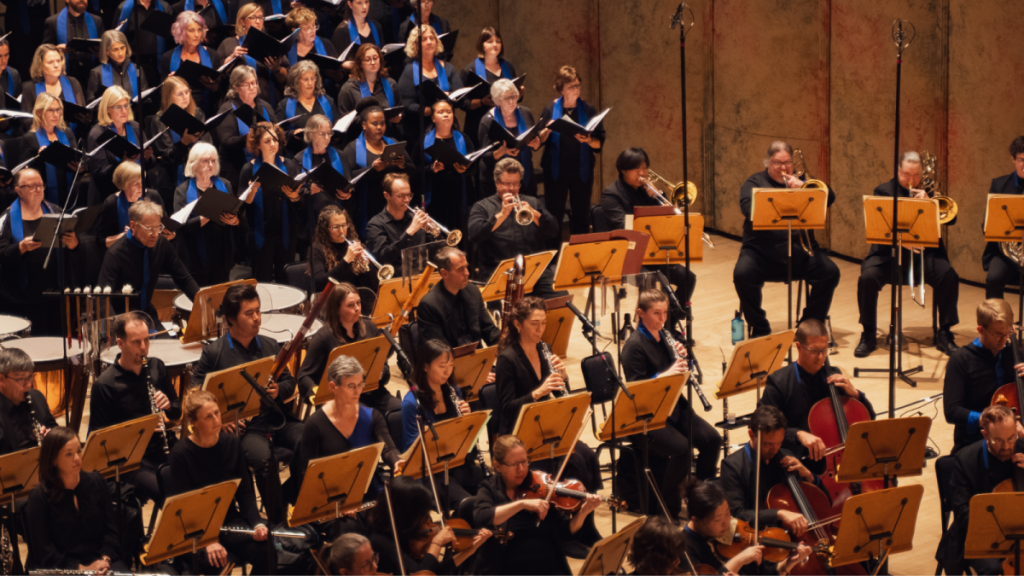
Concert halls have a way of cutting through hype. A musician either reaches the back of the room with purpose or gets exposed. He has performed with the Colburn Orchestra at Walt Disney Concert Hall, one of the most demanding spaces a brass player can enter. That kind of stage does not hand out easy victories. It reveals whether sound has depth, whether phrasing has shape, and whether a player can carry pressure without losing poise.
Work like that matters because the future of classical music will still be decided in live performance. Social media can help a career. Competitions can move it forward. Real authority still gets built in the hall, in real time, with real risk. Liang’s concert record points to a musician who has already been tested under that kind of light and has kept moving upward.
His résumé has range as well as prestige. He has performed as a trombone section substitute with the Los Angeles Philharmonic and has also subbed for the Macao Orchestra in various roles. Those details matter because they show a musician who can enter different professional environments and still make his presence felt.
A career starts to look serious when different institutions begin telling the same story about a player. Major halls and established orchestras all point in Liang’s direction. That does not happen by accident. It happens when a musician keeps proving that the sound is real and the nerve behind it is real, too.
Why the awards matter
Prize lists can sometimes feel decorative. Liang’s do not. He won first prize in both the 2025 International Trombone Association Lewis Van Haney and Robert Marsteller competitions, and he also won first prize at the Hungarian Trombone Camp International Competition in 2020.
There is something especially compelling about the mix of achievements. One part of his career speaks to orchestral command. Another points to solo strength. Another points to long-term growth under pressure. Liang was a finalist in the 2022 American Trombone National Competition Tenor 1 Division and a two-time winner of the Alessi Seminar in Asia in both the Getzen and Edwards divisions. That pattern makes his rise feel substantial. Support from training institutions strengthens the picture. He received full scholarships to both the Colburn School and the Music Academy of the West in 2024 and 2025.
He won a one-year Acting Principal Trombone position with the Richmond Symphony in October 2025. Institutions back musicians they believe can matter over time. In Liang’s case, several respected ones appear to have reached the same conclusion.
That is where his story becomes larger than the success of one trombonist. Classical music needs artists who can preserve standards without sounding trapped by them. It needs musicians who can step into old repertoire and make it feel urgent again. Liang is moving in that direction at an unusual pace. He has the seriousness of a conservatory-trained player, the calm of an orchestral leader, and the public record of someone already earning respect on important stages.
A future like that is never guaranteed. Music careers are too unpredictable for easy forecasts. Still, some musicians arrive with a kind of momentum that feels hard to mistake. Han Yun Liang appears to be one of them, and that is exactly why his story matters now.
How Han Yun Liang (also known as Jonathan Liang) is shaping the future of music
#Han #Yun #Liang #Jonathan #Liang #shaping #future #music