‘I had to sit front row to see brains pop out in North Korean executions aged 11’
Timothy Cho was just a child when his parents fled North Korea and abandoned him — he soon found himself living on the streets where he had a front row seat to grisly public executions

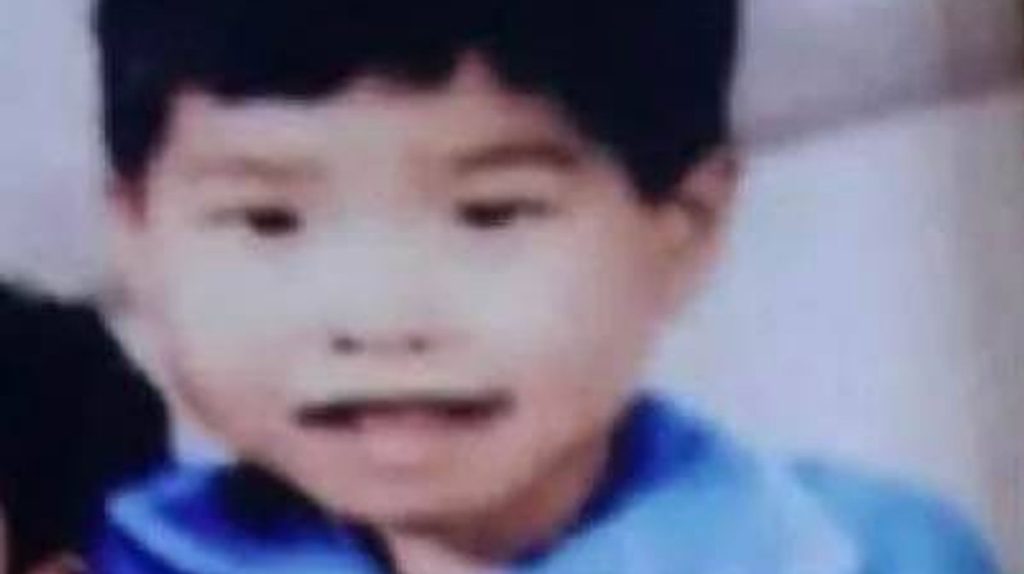
Timothy Cho pictured as a young boy (Image: Timothy Cho)
Timothy Cho was just nine-years-old when his parents, fleeing North Korea, left him behind — he soon found himself living on the streets, witnessing horrific public executions firsthand.
Since his parents, both educators, had suddenly become defectors, schooling was no longer an option for him. Instead of gaining knowledge in a classroom, his future seemed destined for forced labour.
Born in the 1980s in Onsong, a town in the northernmost part of the country, his early recollections include paying homage to portraits of the ruling Kim family each morning before heading off to school.
However, after being abandoned by his parents, he initially found refuge with his grandmother. But due to the severe famine of the mid-1990s, she couldn’t afford to keep him, resulting in him becoming homeless.
Now, Timothy, who recently ran in the local elections in Stockport, has shared his harrowing childhood experiences, from the desperate struggle for food to the normalisation of witnessing public executions.
Regarding the former, he revealed to OMG Stores: Up Close: “I was lucky how I survived living with all the homeless children. Some of these kids, they are stealing food, they are homeless kids.
“And people who are stealing food on the market, they snatch the food and run away but people then come to catch you, beating you.
“But even when they are in the middle of the beating, they are still swallowing the food.”
Timothy, who was forced to sleep rough and beg for food, then recalled witnessing prisoners being executed in front of children.
“Watching this public execution I was only around 11, but all people in that village were forced to watch it,” he shared.
“We were told to sit at the front of the crowd where three men came and shot the man tied up on the post and each policeman had three bullets and all of these nine bullets goes into three parts of the body.
“And each time it goes into the cobbled part, especially when it goes onto your brain, it pops out.”
At the age of 17, Timothy attempted his first escape from North Korea, which was then under the rule of Kim Jong Il.
He managed to cross the border into China, where he saw people wearing jeans for the first time and sporting different hair colours — something he claimed would result in execution in North Korea.
However, the teenager was eventually apprehended and returned home, where he was placed in a detention centre with subterranean prison cells.
He was later permitted to live with his grandmother before he once again fled to China.
In 2008, he arrived in the UK, where he proceeded to study English in Bolton before earning a degree in politics at Salford University and then a masters from Liverpool University.
Timothy, now in his mid to late 30s, resides in Heaton Norris, Stockport, with his wife and two children. Earlier this year, he made an unsuccessful bid as the Conservative candidate for the Heatons North councillor.
He currently serves as the Secretariat for the UK All-Party Parliamentary Group on North Korea. His recent remarks about executions came just weeks after distressing details surfaced about the severe punishments still being enforced there — from victims bludgeoned with hammers to a pregnant woman being shot.
This information came to light following a report by the Transitional Justice Working Group which charted executions in North Korea and their surge during the Covid pandemic.
The report analysed some 144 known execution and death sentencing cases involving hundreds of individuals.
It detailed how some prisoners were subjected to “indoor executions” via blunt weapons such as an iron mace or a hammer.
Most were executed by firing squad, with rifles or machine guns being the weapons of choice.
The report discovered that most of the executions were public — and some of the capital punishments were for indulging in South Korean music and films.