Netherlands reveal their secret weapon at the World Cup as Sweden’s level is exposed
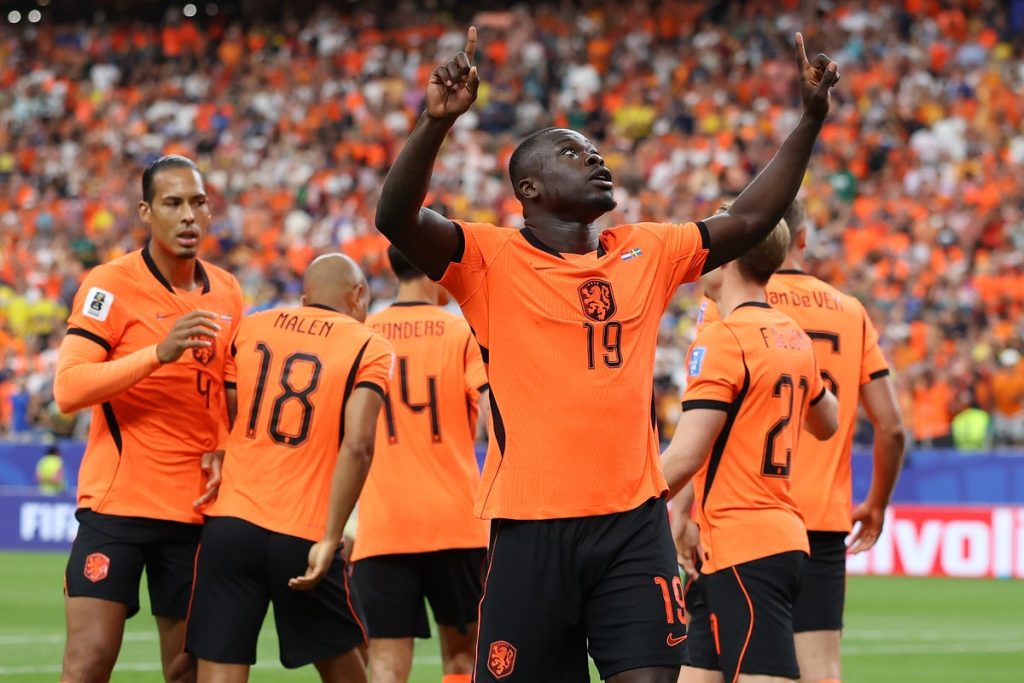
The pre-match discourse focused almost exclusively on Sweden’s luxury strikers. Graham Potter was asked three times about Alexander Isak and Viktor Gyokeres, about how he could squeeze the best from his uber-talents. Ronald Koeman was asked whether he was scared by them. “We’re not scared,” he said, and so it proved. Instead this was an afternoon in Houston when Sunderland’s Brian Brobbey out-did them both.
Brobbey scored two first-half goals which took the game away from Sweden, before the excellent Cody Gakpo added another two and Crysencio Summerville topped this 5-1 win. Perhaps most importantly, Brobbey showed the striker’s instincts that have been marked out as the great weakness of this Dutch team, a side full of defensive steel and midfield class but who supposedly lack a killer in the box.
Which was a fair assumption. Brobbey had only one goal in 13 international caps before this game. Gakpo doesn’t play like this for Liverpool. Summerville has just been relegated with West Ham. But after starting Brobbey on the bench in Netherlands’ 2-2 draw with Japan, Ronald Koeman may now have a formula for Dutch success at this World Cup.
Sweden remain the great enigma of this tournament, a team of technical midfielders and a luxury front line, hoarding two elite strikers when most countries would spill blood for one. Spain would trade a playmaker for Isak. Brazil and Germany would be scary with a ruthless goalscorer. Imagine Portugal playing to Gyokeres instead of a famous relic.
On paper, Sweden should be the side that tore apart Tunisia in their opening game, and there were flashes of that quality here in Houston after Potter switched from 5-3-2 to 4-3-3 during the first hydration break – a pointless exercise in an air-conditioned stadium which was loudly booed. From there on Gyokeres was excellent, linking play with one-touch flicks that found rushing teammates and the chances flowed.
But defensively, this performance was more like the Sweden who lost to Kosovo in qualifying, and who can be found plying their trade in Nations League C along with Luxembourg and the Faroe Islands. Atalanta centre-back Isak Hien was bullied by Brobbey, and Hien wasn’t helped by the way the Dutch prised open the Swedish flanks and fired in the low crosses which brought about their first three goals.
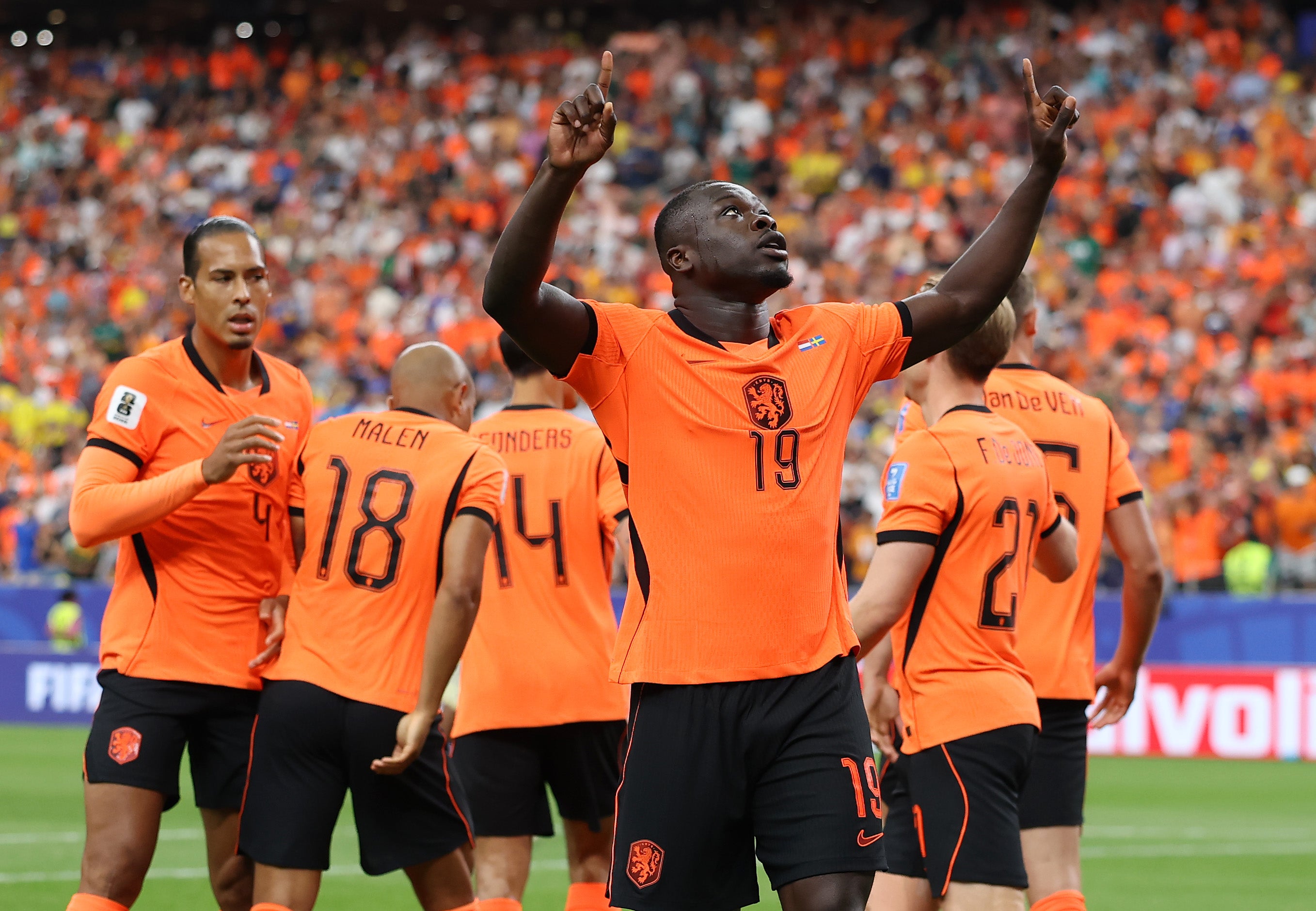
Instead it was the Netherlands who looked like a serious World Cup force. It helped that this was almost a home game, with orange shirts outnumbering yellow by perhaps 10 to 1. There are around 9,000 Dutch-born residents in Houston and most of them seemed to be here alongside thousands more who travelled across the Atlantic.
The NRG Stadium emerges from the concrete like some great alien office building, all square corners and steel girders hanging over the sides. It is very Houston, a city that doesn’t buy into aesthetics or pretence. Big is good. Metal is strong. Inside there are photos on the walls celebrating the occasional glories of the Houston Texans, interspersed with pictures of other stars to have graced this venue: mainly country musicians, monster trucks and cattle.
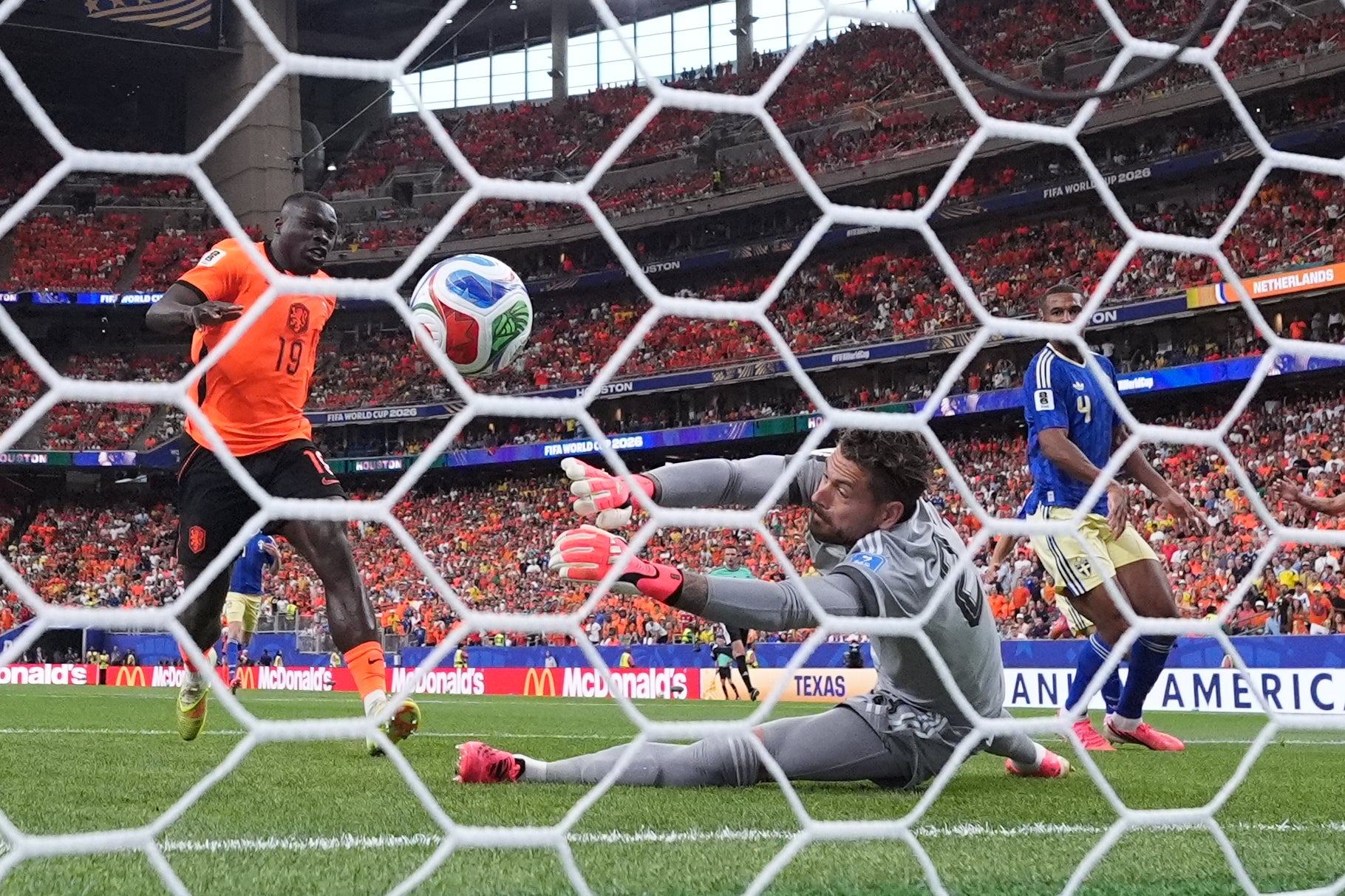
Koeman’s decision to start Brobbey paid off within six minutes. Netherlands made football seem like a simple game in those opening forays. Goalkeeper Bart Verbruggen played a long pass to Brobbey, who bumped off Hien before racing past him to knock in Gakpo’s low cross. Brobbey’s second was another piece of classic centre-forward play, again bursting past Hien to toe in Denzel Dumfries’ cross.
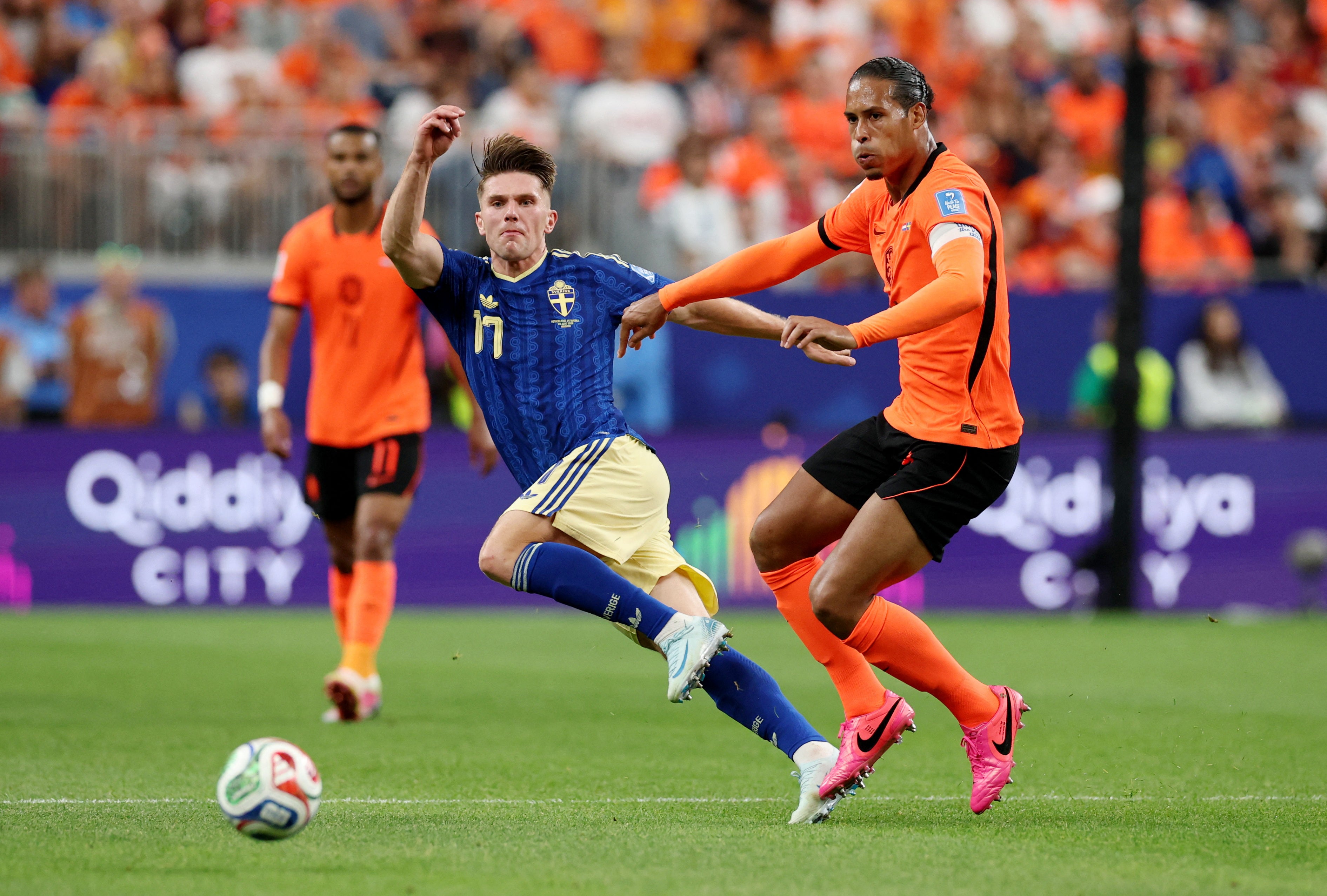
Sweden looked panicky in midfield, where Jesper Karlstrom and Yasin Ayari kept lobbing aimless balls forwards rather than bringing it down to play as they did so well against Tunisia. The hydration break came at a good time for Potter, who chatted to an assistant for the first minute before gathering his players in a huddle.
His switch to a back four put Sweden on the front foot. They began creating chances, first for Ayari who chose to chest the ball rather than head it, wrongly as it turned out, when his torso trampolined the ball behind. Gyokores tried a curling shot and Verbruggen saved at full stretch. A Gustaf Lagerbielke header was ruled out for offside, and Verbruggen saved well from Ayari before half-time.
The game felt alive despite the 2-0 scoreline, but it was effectively killed off two minutes into the second half when Dumfries again scurried free down the right and sent a low cross into the six-yard box. Gakpo did his best to miss the open goal, skewing the ball in with his ankle from two yards. Gakpo cut inside to drill in Netherlands’ fourth, proving World Cup Gakpo is a different beast to Liverpool Gakpo.
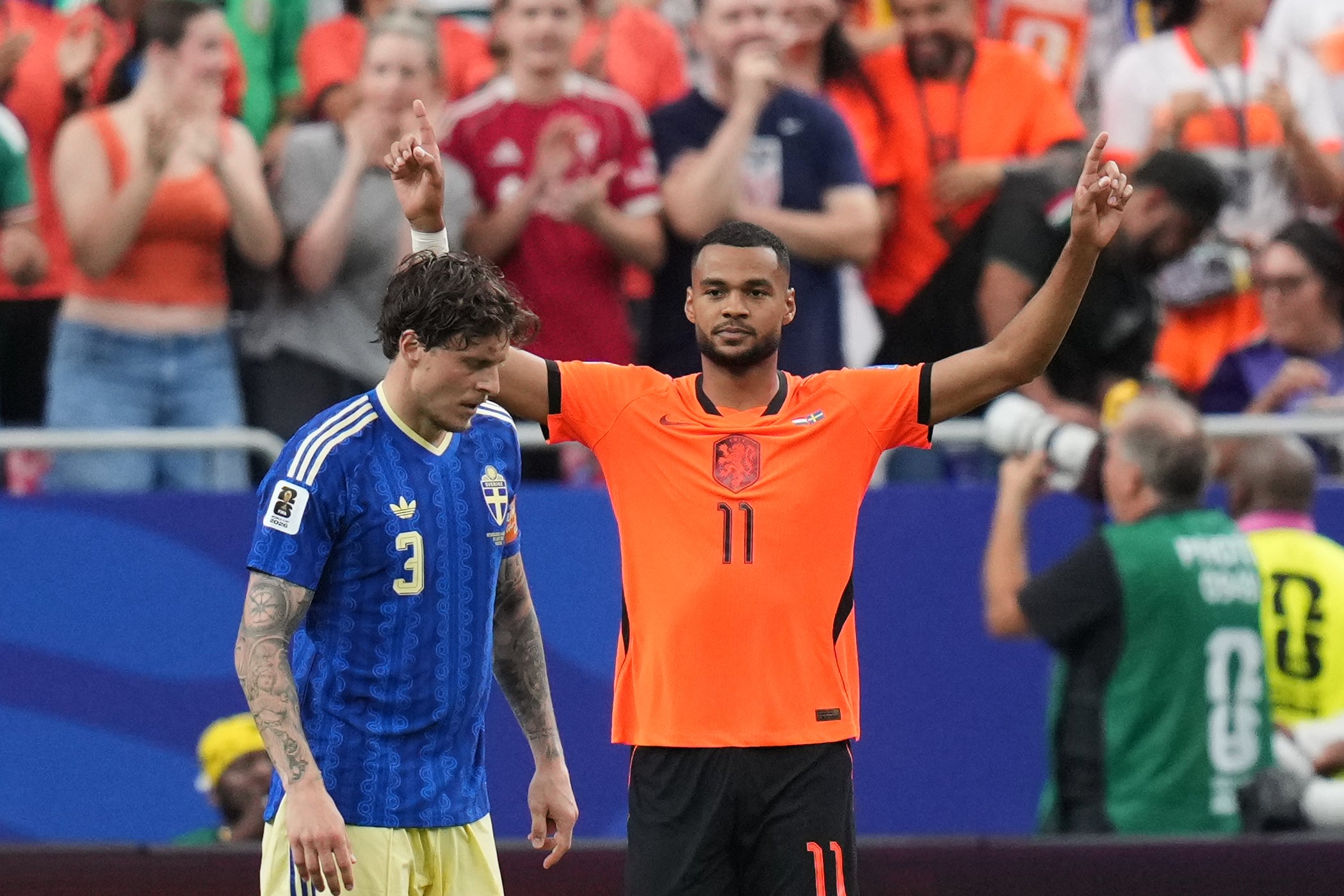
The introduction of Anthony Elanga gave Sweden new energy and he scored on the break, Verbruggen’s floodwalls finally breached. Elanga evoked a little history too, pulling off a Cruyff-turn-nutmeg which brought ooooos from the crowd, 52 years after Johan Cruyff first produced his famous turn against Sweden at the 1974 World Cup.
But Summerville added a fifth and ultimately the Netherlands were too good. Perhaps Sweden’s passive start was a tacit admission of that fact before the game had even begun. It was a match partly shaped by the two managers, by Koeman’s decision to start Brobbey, by Potter’s decision to switch to a back four. It just happened that Koeman’s decisive move came before kick-off, and Potter’s was made during a hydration break that shouldn’t exist.