New Hubble and Webb Image Showcases The Black Eye Galaxy’s Dusty Reminder of a Violent Past
A dark ribbon of dust slices across the glowing heart of a spiral galaxy in Coma Berenices, creating the appearance that earned Messier 64 its well-known nickname, the Black Eye Galaxy. The feature stands out even in modest amateur telescopes, yet it only hints at far deeper activity inside.
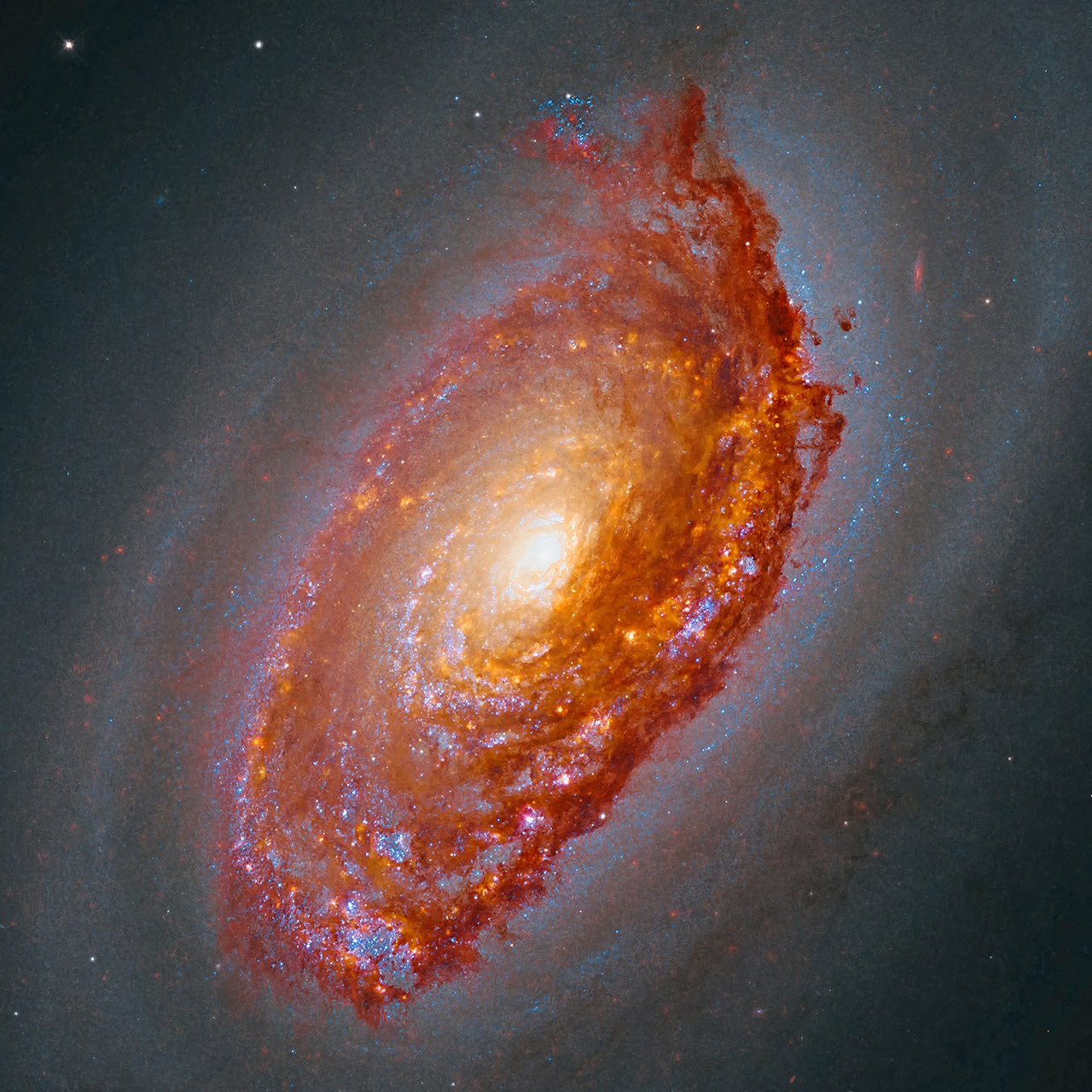
Lights from this galaxy travelled for 17 million years before reaching us. This indicates that this spiral is one of the larger ones, close enough to examine in detail but not so close that we’ve seen it all before. Its light recounts the story of a past period. Charles Messier put it on his famous list in 1780, although it was most likely already a done deal because Edward Pigott and Johann Elert Bode had looked at it first.
Sale

NASA Lunar Telescope for Kids – 90x Magnification, Includes Two Eyepieces, Tabletop Tripod, and Finder…
- INSPIRE CURIOSITY – The NASA Lunar Telescope allows your child to see the moon in incredible detail; the perfect gift for girls and boys interested…
- HIGH-QUALITY OPTICAL GLASS AND FINDER SCOPE – This easy-to-use telescope comes with a finder scope, low power, and high-power eyepieces; when used…
- TABLETOP TRIPOD & SMOOTH MOUNT SYSTEM – Use the included tripod to steady your Lunar Telescope for optimal viewing, with a smooth mounting system…
Scientists have just combined data from Hubble and the James Webb Space Telescope into a single composite image. Hubble used UV, visible, and near-infrared radiation to highlight all of the emerging stars and flaming gas. Webb, on the other hand, gave some near- and mid-IR coverage, allowing them to see through the dust and into the galaxy’s hot structures. Guess what? Combining the two yields significantly more detail than either could supply on its own.
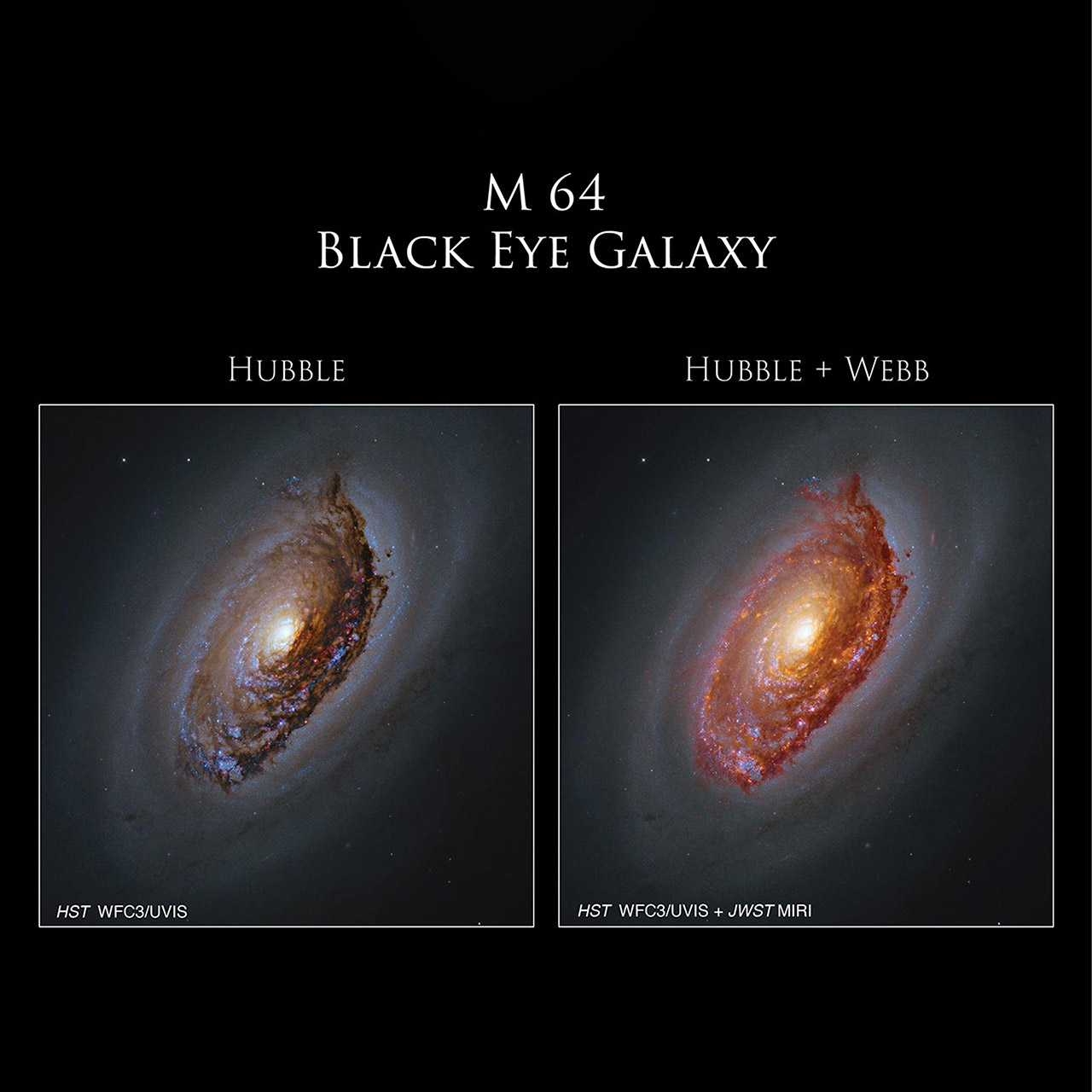
The dust lane is massive, millions of light years wide, and it lies directly in front of the brilliant central region. It absorbs and scatters light from the stars behind it, creating a stunning contrast with the core. That same channel is the inner disk, which collects all of the gas and dust. When you look deeper, you’ll see something interesting: the stars and gas inside the disk are all moving in the same direction, but the gas on the edges is flowing in the other way. The two groups clash at a dividing point and crush together. As a result, many new stars form in those constricted locations, along with hot blue stars and pink clouds of hydrogen gas irradiated by UV radiation from all those young stars.
The astronomers appear to have found out why the gas is moving in the opposite direction, as they believe there was an event billions of years ago when a smaller galaxy passed by or perhaps merged with Messier 64. The other galaxy must have contained some material with the incorrect spin, causing everything to spin in the other direction. That gas finally settled into a disk that spins in the wrong direction, but the original stars continued on their path as they always have. As a result, this galaxy now has two enormous gas systems merging, while the stars simply follow the inner gas.
The ongoing collision of those two gas systems is producing the new stars we see around the center. The compression at the contact causes the gas clouds to collapse and form stars, and because new material is constantly arriving at the border, the process will continue endlessly. Similar events have occurred in numerous galaxies throughout cosmic history, although few are as obvious as this one.
[Source]
New Hubble and Webb Image Showcases The Black Eye Galaxy’s Dusty Reminder of a Violent Past
#Hubble #Webb #Image #Showcases #Black #Eye #Galaxys #Dusty #Reminder #Violent