This DIY Belt-Fed Potato Cannon Turns Single Shots Into a Stream of Spuds
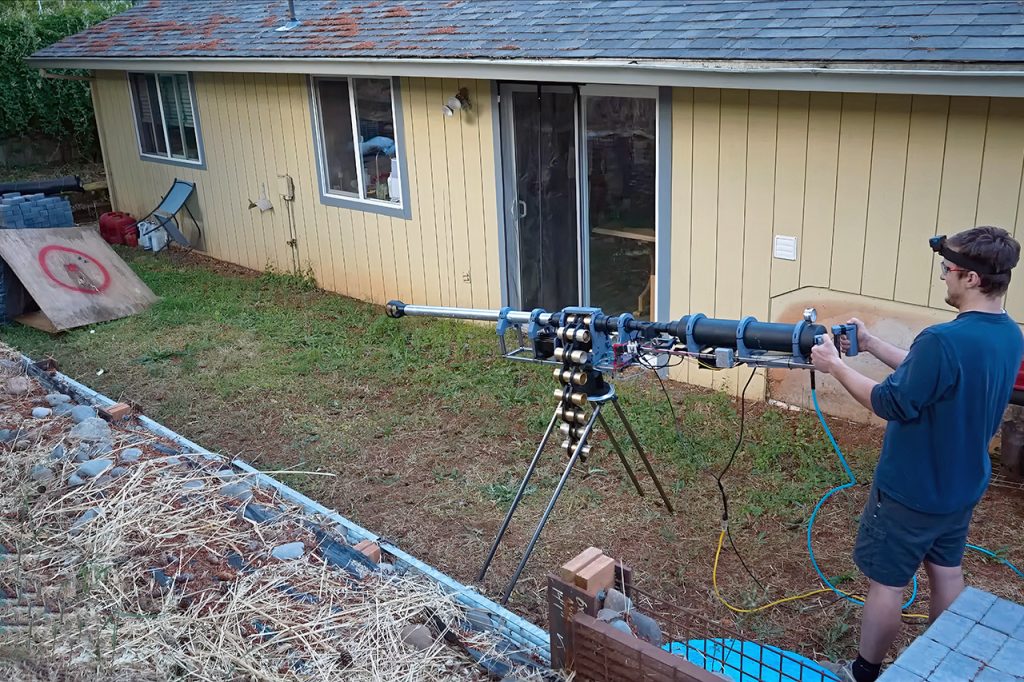
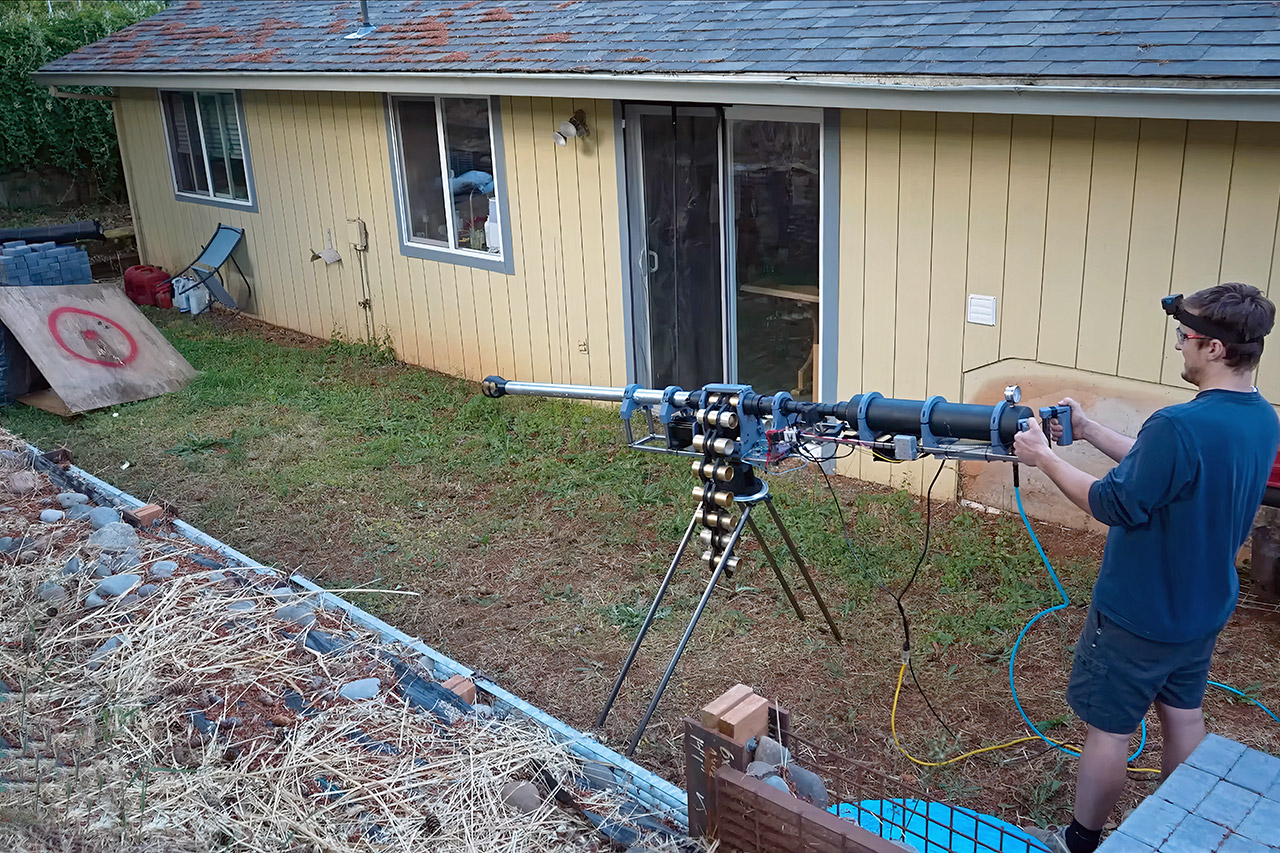
Current Concept, a maker who tackles ambitious mechanical builds, decided the classic potato cannon needed an upgrade. Single-shot models require constant reloading by hand. His version adds a belt that carries multiple potatoes forward one at a time, paired with sliding seals and a stepper-driven feeder. The result edges closer to the automatic fire many enthusiasts dream about, even if real-world limits keep it from true full-auto speed right now.
A long, sleek silver barrel spreads out in front of you, and you can’t help but stare. Behind it lies an ominous-looking black pressure chamber, missing just a sinister scowl. The brass-colored belt, which runs between those two parts, is loaded with one potato each tube. It’s all connected to a bipod for optimum stability, giving the entire thing a solid feel. Someone passing by might mistake it for a serious piece of equipment put up in the backyard.
Sale

Bambu Lab A1 mini 3D Printer + LED Lamp Kit, Set Up in 20 Mins, High Speed & Precision, Full-Auto…
- A1 mini + LED Lamp Kit for Creative Light Projects: Bring your ideas to life with the included LED Lamp Kit. Simply print compatible lamp models and…
- The Perfect 3D Printer for Beginners: A1 mini 3D Printer is designed to make 3D printing easy from day one with automatic calibration, simple setup…
- Experience the Bambu Lab Ecosystem: Access MakerWorld’s huge library of ready-to-print models, manage prints through the Bambu Handy app, and enjoy…
The project began with an old air cannon that Current Concept already had. He simply slapped on a new pressure chamber that appears more traditional for a cannon, and then assembled the entire thing onto a steel frame that he purchased as a pre-cut kit from eBay. The frame had been held together with a powerful adhesive. The belt itself was an anomaly he discovered in the back of his closet, with each potato simply sitting within its own tube casing, ready for the firing sequence to begin.
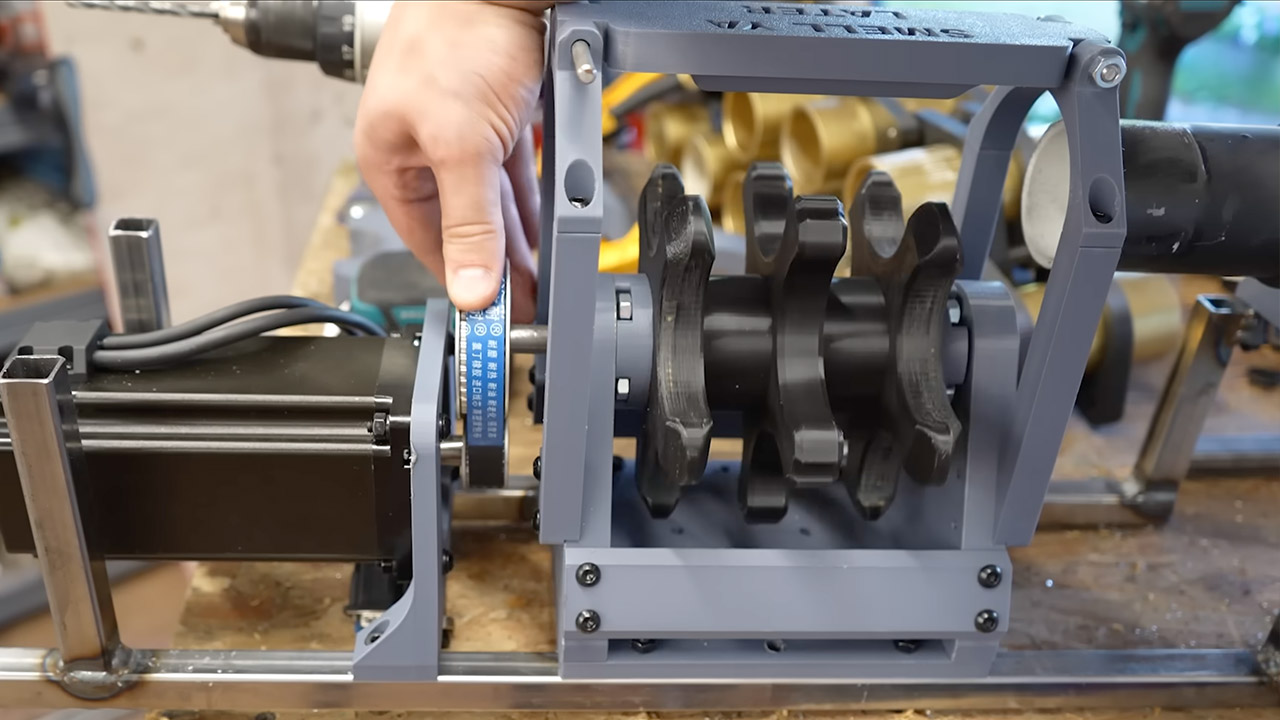
A 3D-printed indexer that resembles a nice little wheel powers the entire feeding mechanism. This is rotated around by a powerful stepper motor. You can count the motor steps and then use a custom-made key to ensure everything is lined up correctly. Initially, the indexer used a simpler star-shaped feeder that was prone to alignment errors. So a more detailed 3D model was constructed, and things began to operate smoothly, with the belt sliding in and out without snags.
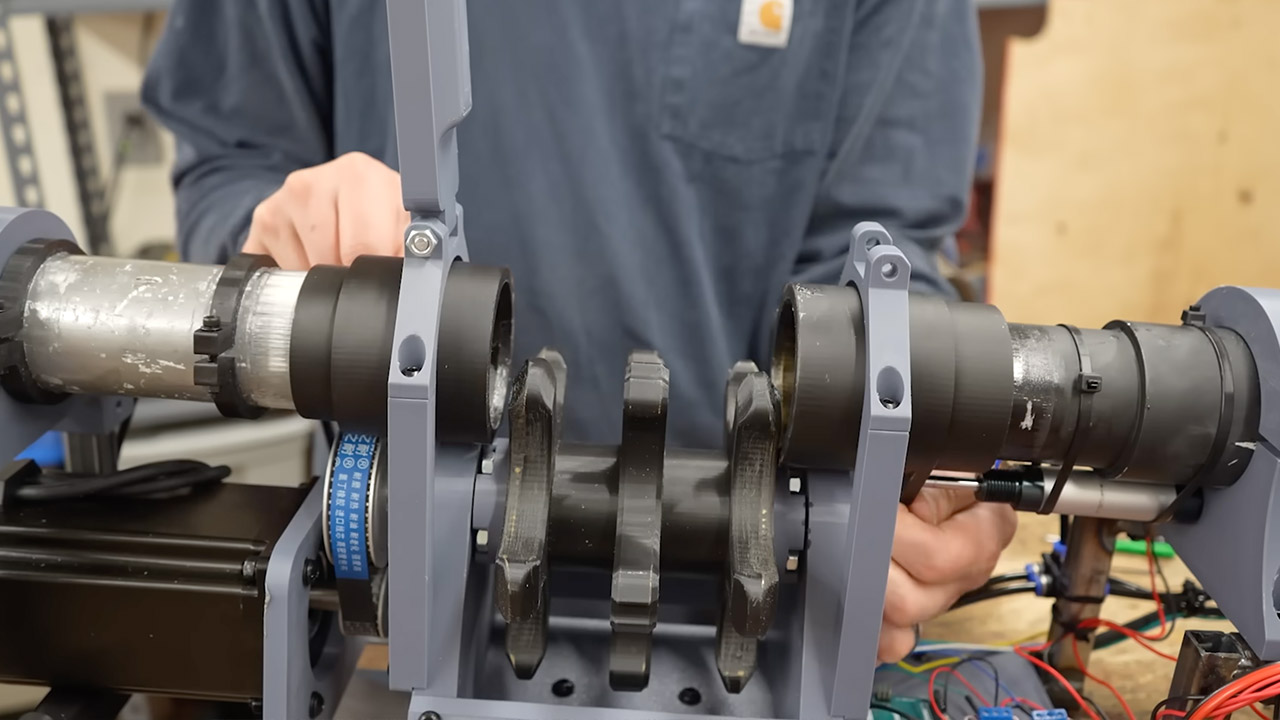
Current Concept’s largest engineering problem was most likely sealing the device under pressure. At 60 to 80 pounds per square inch, any space between the chamber and barrel allows air to escape. However, Current Concept developed a solution in 3D-printed sliding coverings that are moved by pneumatic pistons. When a potato rotates into position, the pistons simply push the covers shut over the casing to form a temporary seal. The air then shoots through the chamber and out of the barrel, ejecting the potato. The covers then retract, the belt moves on to the next casing, and the process continues indefinitely.
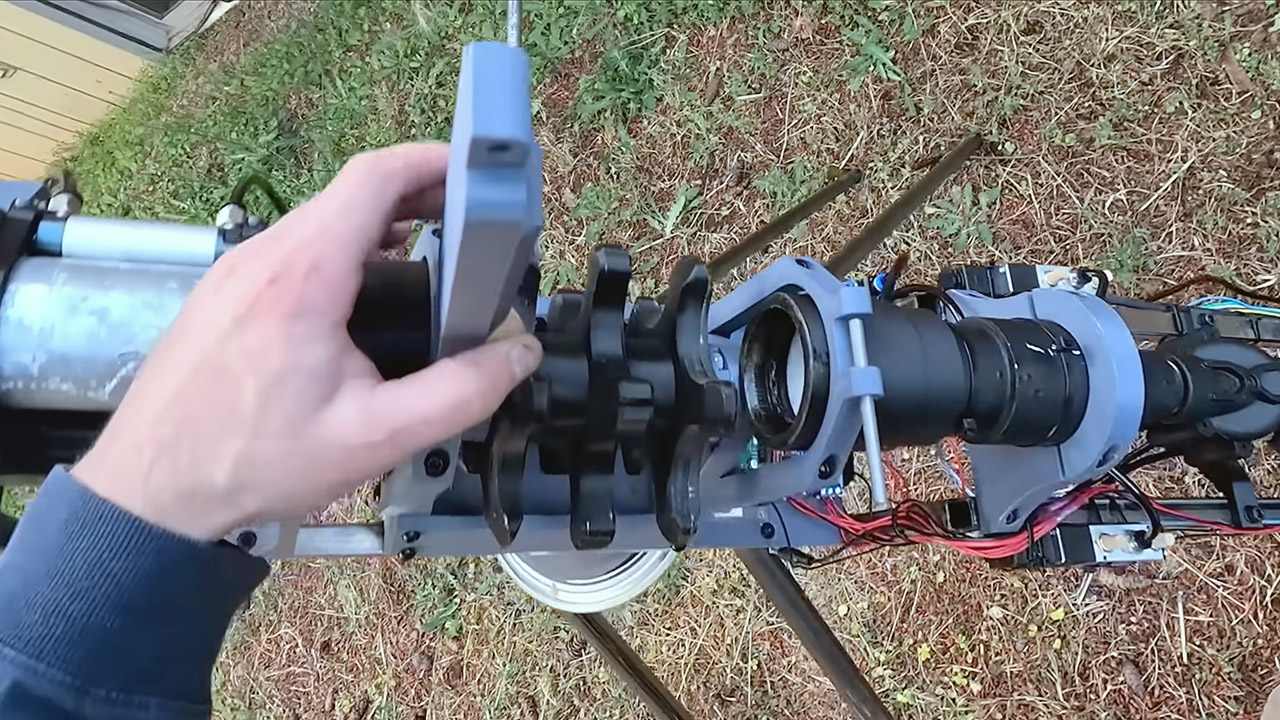
Because the onboard reservoir can only contain compressed air for one shot, it is powered by an external compressor. This means that the launcher can only fire around once every six seconds while the chamber repressurizes. The mechanical components could cycle much faster, but the air supply is slowing things down, causing the rocket to function in semi-automatic mode for the time being.
[Source]
This DIY Belt-Fed Potato Cannon Turns Single Shots Into a Stream of Spuds
#DIY #BeltFed #Potato #Cannon #Turns #Single #Shots #Stream #Spuds