Webb Telescope Spots Supermassive Black Hole Born Before Its Galaxy
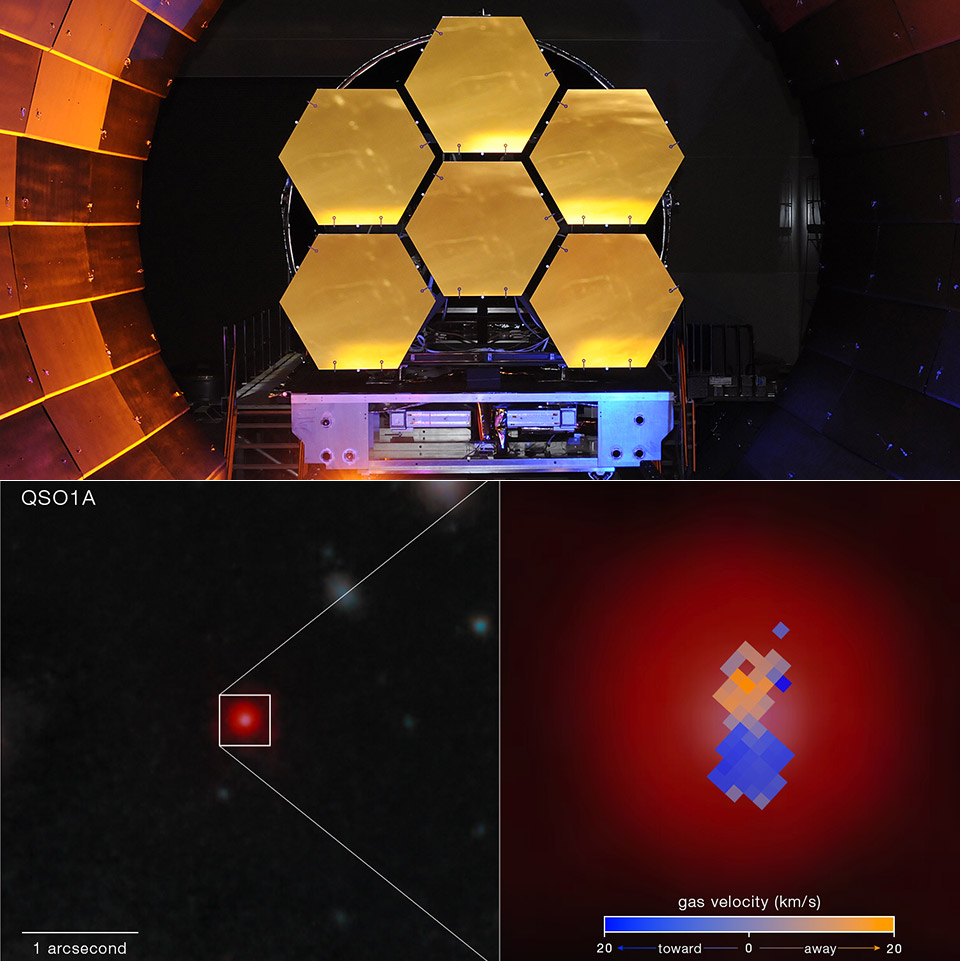
Astronomers examining deep views from NASA’s James Webb Space Telescope have identified a supermassive black hole that reached enormous size while the material around it had barely begun to form stars or build a full galaxy. The object, known as Abell2744-QSO1 or simply QSO1, sat in the universe when it was only about 700 million years old. Its light has traveled more than 13 billion years to reach us.
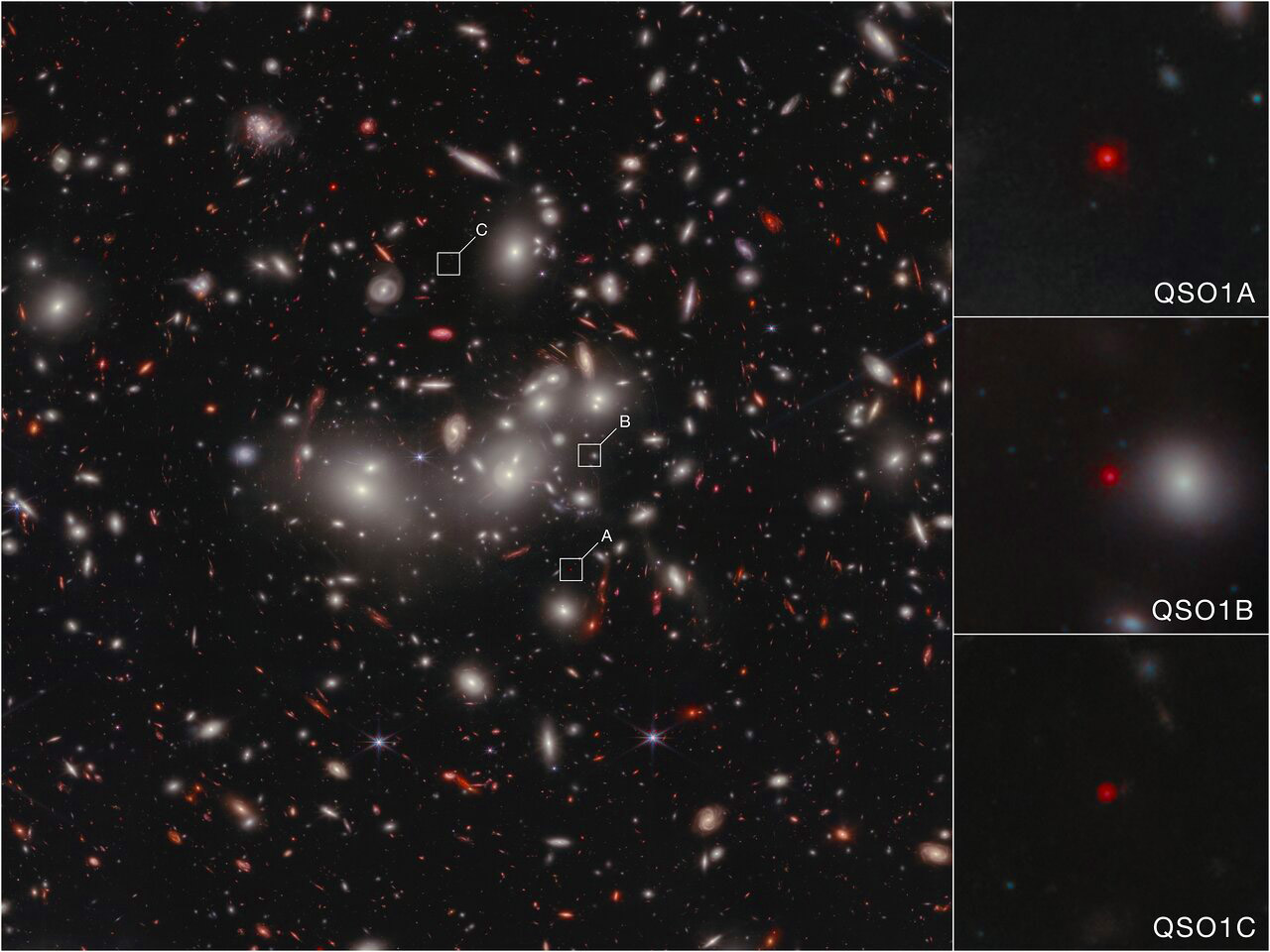
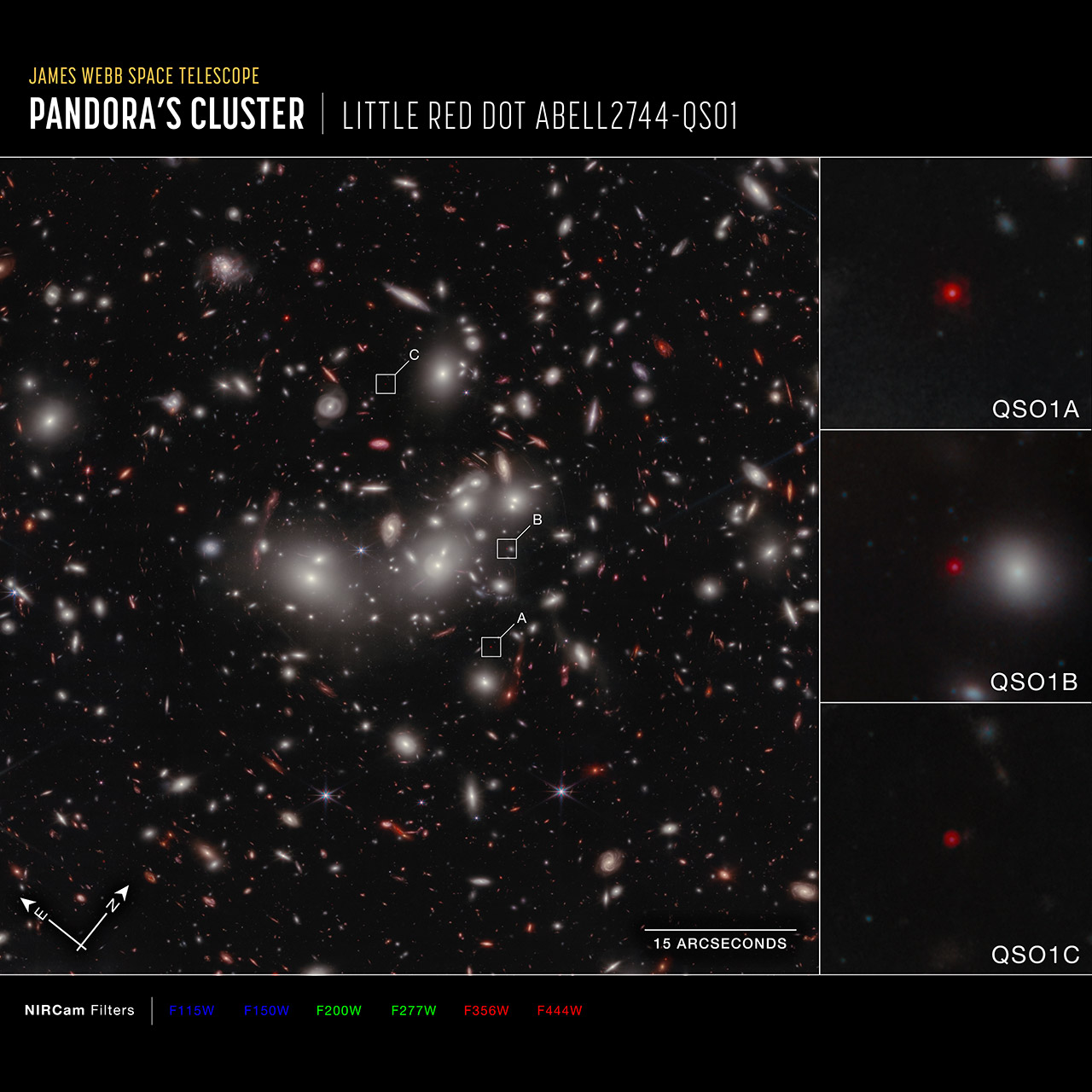
The discovery is the result of very targeted observations of a location behind the galaxy cluster Abell 2744. Without the gravitational lensing generated by that foreground cluster, even Webb’s extremely powerful instruments would have been unable to see the light from QSO1. Without the natural magnifying effect, the little mechanism would still be a mystery. QSO1 is a small operation, measuring only 1,300 light-years across, but it is home to a monster of a black hole with the mass of almost 50 million suns. The spectrographs on Webb’s Near Infrared sensor revealed that this single black hole accounts for the majority of the system’s mass. The rest appears to be a compact ball of gas that glows from the immense energy generated near the black hole.
Sale

LEGO Technic Planet Earth and Moon in Orbit Building Set, Outer Space Birthday Gift for 10 Year Olds…
- Interactive model – Inspire kids to build a representation of the Earth, Sun and Moon in orbit with this LEGO Technic Planet Earth and Moon in Orbit…
- Educational space toy – Kids can turn the crank to see how the Earth and the Moon orbit around the Sun
- Includes months and moon phases – This solar system toy includes printed details, like the month and moon phases to help kids see how the Earth’s…
The data you don’t see in the statistics is what actually stands out: a complete or near-complete lack of chemical elements heavier than hydrogen and helium. Oxygen and other heavy atoms thrown out by stars are only found in trace amounts. That indicates that there hadn’t been any star formation up to that moment; in fact, the environment had barely changed at all. The team was also able to chart the motion of the gas using a high-resolution spectrograph, and it follows a rather predictable circular path around the center, much like the planets in our own solar system. By measuring the speed of the gas as it flows further away from the center, they were able to calculate how much mass is required to keep everything in control, and what they discovered was a black hole with approximately the proper mass. This black hole is the only entity that could possible cause such motion, as no large collection of stars or gas could produce the speed they measured.
This is the first proper measurement of black hole mass in the early universe, which is significant because previous estimates for distant black holes were based on assumptions extrapolated from galaxies visible now. However, we now understand that such assumptions may not have held true in the early cosmos, when things were much simpler and less chemically complex. People used to believe that galaxies formed first from massive clouds of gas and dark matter, and that once the gas settled, stars began to form within the galaxy. Then, if you’re unfortunate enough to have a supermassive star, it can collapse into a black hole. These black holes sink to the center of the galaxy and begin to develop over hundreds of millions of years as they consume more and more material. But QSO1 does not suit that picture.
Instead, the black hole appears to have reached a supermassive size before many stars could develop around it. The surrounding structure includes significantly less star mass than we would expect for a galaxy with a black hole of this size. In nearby galaxies, the central black hole typically accounts for only a small fraction of total mass, but in this case, the opposite is true.
Researchers from the University of Cambridge, led by Ignas Juodžbalis and co-authored by Roberto Maiolino, believe that this object provides evidence that some supermassive black holes grew rapidly rather than gradually developing within existing galaxies. There are two hypotheses. The first is that the black hole formed from a large cloud of gas that fell directly into a little black hole to begin with. Alternatively, the black holes could be older than we think, with beginnings dating back even earlier, but the data isn’t clear on this yet.
[Source]
Webb Telescope Spots Supermassive Black Hole Born Before Its Galaxy
#Webb #Telescope #Spots #Supermassive #Black #Hole #Born #Galaxy