Toronto’s One-Foot Pogo Bot Finds Its Grip on Ice and Sand
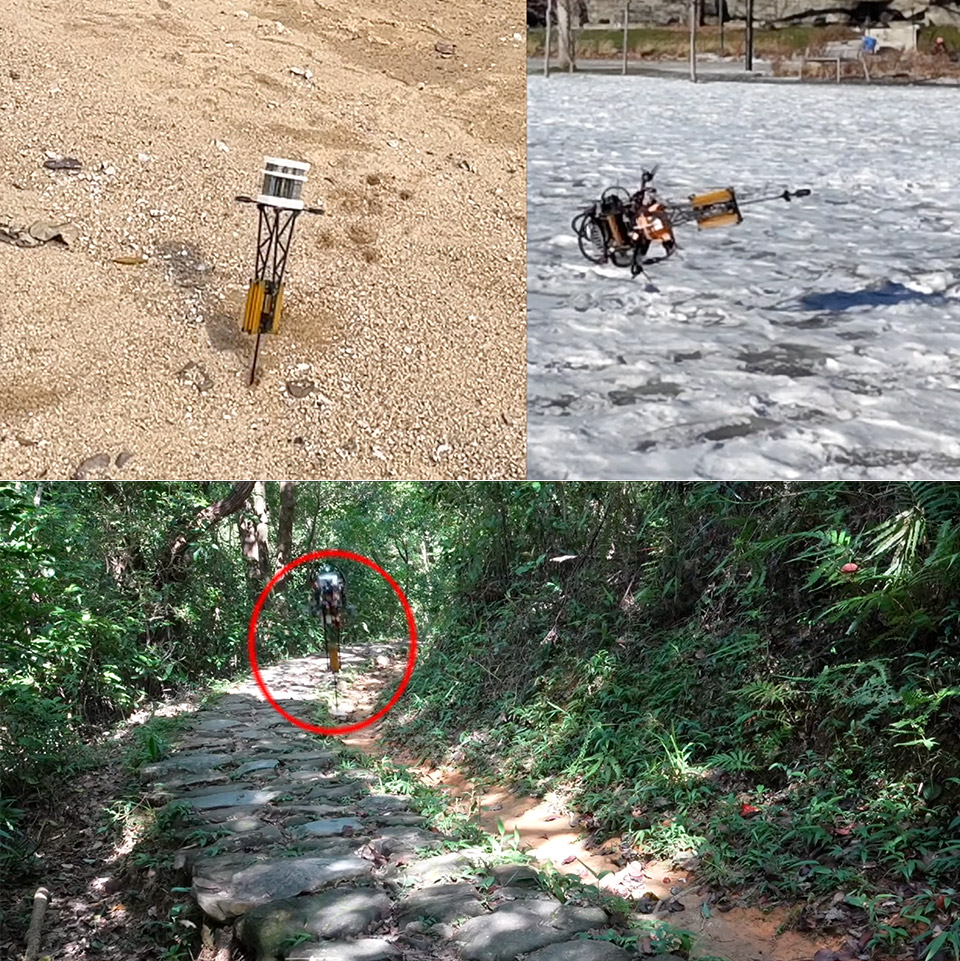
Four small propellers sit over a single spring leg, and the pair turns a quadcopter into a machine that travels the way a pogo stick does. Researchers at the University of Toronto’s CLIMB Lab send it up with rotor thrust, then let a passive telescopic leg take the landing and hand that energy back as the next hop. Early copies ended in a sharp metal spike. On a clean floor the spike was enough. On anything softer or slicker it skated, punched in, or left the robot tipped and finished.
Rock snags it at an awkward angle, sending the rebound spinning off course. Lab videos show those missed opportunities in all their splendor, and the solution is rather simple. Give the monopod a proper, solid sole, as the new pad is flat and lightweight, hung from a flexible joint that allows the foot to tilt and settle against whatever it hits. Once the robot is airborne, the straps shown in the demo reel pull the pad back in toward the center, allowing the next landing to begin from a known location.
No products found.
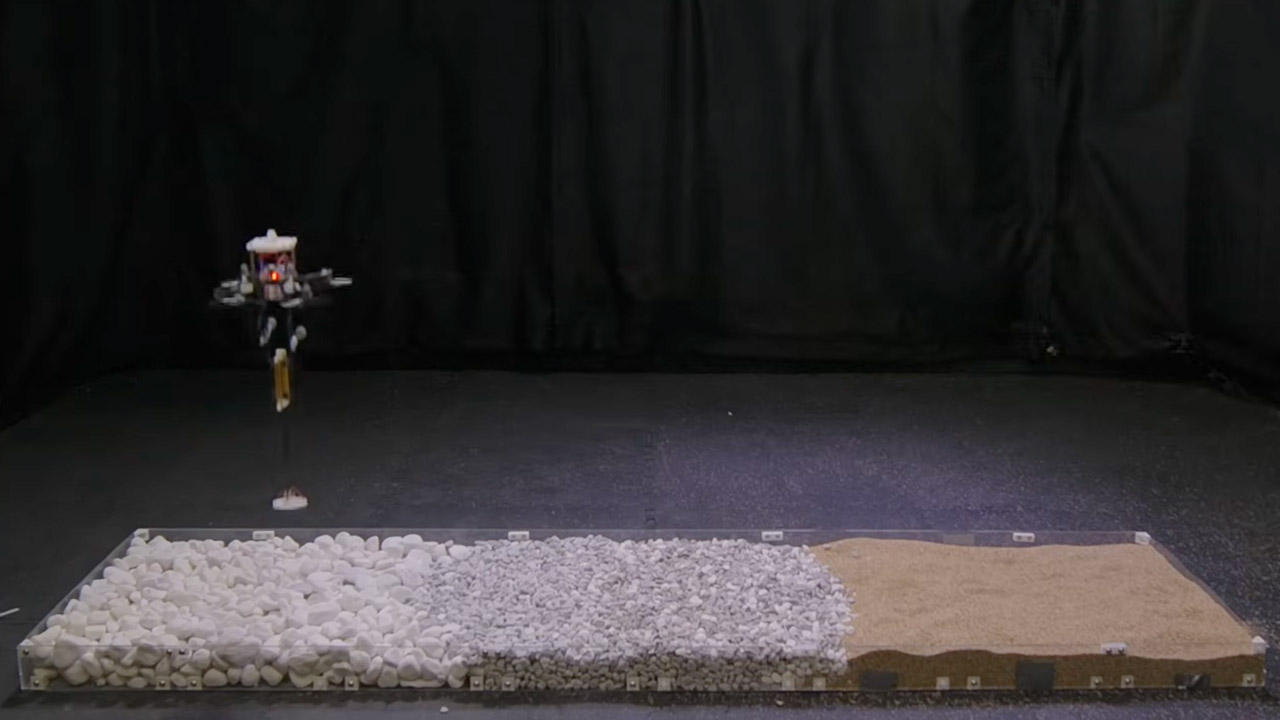
Steel ‘fingers’ inserted into the sole perform the same gripping function as the spike, but over a larger region of the ground. The pad comes in two versions: one that stays smooth and the other with a spine array for grit or ice. Spreading out the contact area prevents the foot from becoming stuck in soft ground, and that joint keeps the leg axis pointing in the correct direction even when the surface slopes. Controlled drop testing kept the short stance phase steady on surfaces ranging from concrete to loose grains to soft padding, resulting in less slippage and fewer incidents of the foot becoming trapped.
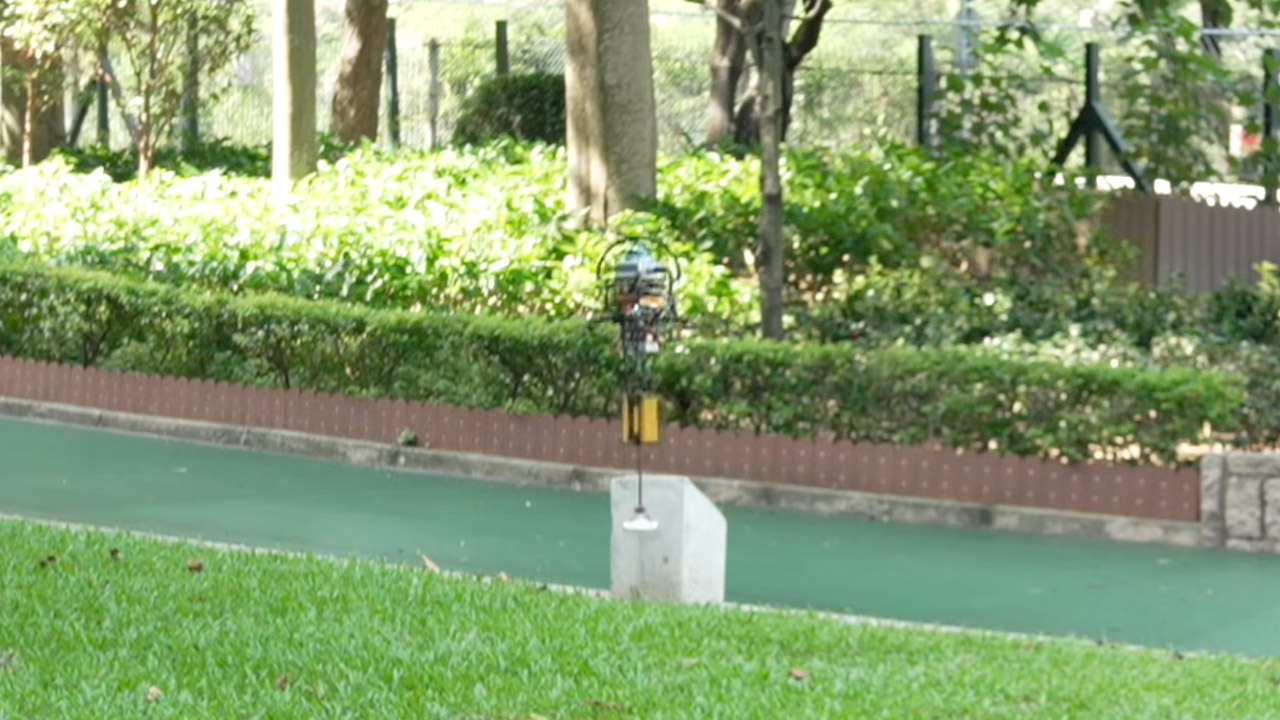
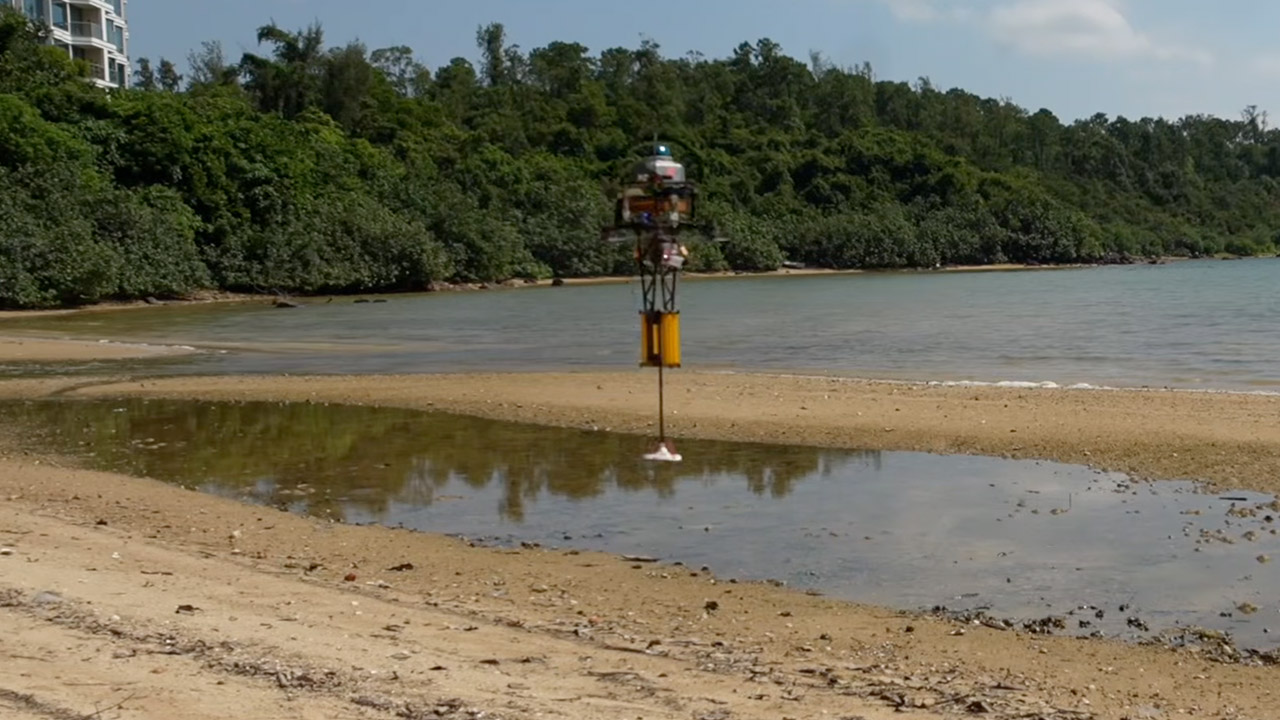
Indoor trials involved the robot following a defined path while hopping across various floors. Outside, the same foot dragged it through grass, rocky pathways, sand, and ice. The demo shows the item clearing a fence in one bound, and an icy patch that would normally send the old spike flying no longer brings the run to a halt. The propeller drive still manages the steering and energy input, while the leg handles the bouncy bit. The slight alteration that occurs in those few centimeters that meet the world has made all the difference.
The CLIMB Lab, which stands for Convergent Locomotion, Intelligent Mechanisms, and Bioinspired Robotics, is based in Toronto’s Department of Mechanical and Industrial Engineering. Pakpong Chirarattananon relocated the group there after years of working at City University of Hong Kong, and the foot document mentions Jeeraphat Kledkruemas, Song Li, Songnan Bai, and Chirarattananon, all of whom are set to join Advanced Intelligent Systems in 2026. A similar hopper from the same stable, published in Science Robotics in 2024, had a nano rotor combined with a passive telescopic leg and achieved an average vertical hopping speed of 2.38 meters per second from a leap height of 1.63 meters. This new pad is what allows that type of machine to leave the lab floor for good.
[Source]
Toronto’s One-Foot Pogo Bot Finds Its Grip on Ice and Sand
#Torontos #OneFoot #Pogo #Bot #Finds #Grip #Ice #Sand