Laser Made Muons at ELI NP Photograph Lead Blocks Through Six Feet of Concrete
Cosmic rays have been running a slow version of this experiment for as long as air has been thick enough to hit. A fast proton from space strikes a molecule high overhead, the collision throws off short-lived fragments, and some of those fragments decay into muons. A muon behaves a lot like an electron, except it carries about 200 times the mass. Extra mass means the particle sheds energy slowly, so it can cross meters of rock or metal that would stop an X-ray in a thin sheet. Archaeologists already use that natural drizzle to hunt hollow rooms inside pyramids, and engineers use it to look for gaps in ground that drills have not reached. Nature only supplies about one muon per square centimeter each second, which is why a careful scan can take months.
Researchers at the Extreme Light Infrastructure Nuclear Physics in Romania, or ELI-NP, were fed up with waiting for the sky to deliver. After all, their laser can generate 10 petawatts at its peak, a tremendous spike thousands of times more powerful than the total output of every power grid on the planet, delivered in a single quick flash rather than a continual hum. They fire that flash at a gas, causing light to produce a disturbance in the gas as electrons effectively surf the ensuing wave before colliding with a solid object, resulting in a burst of high-energy light. That light, in turn, generates a large number of muon particles via the Bethe-Heitler process, resulting in particles with a few billion electron volts.
Sale

YGSKK Mini Projector with Wifi and Bluetooth, Built-in Apps,Movie Projector
- 【The Latest WIFI 6 Technology And Bluetooth 5.3】This projector with Wi-Fi and Bluetooth is equipped with the latest Wi-Fi 6 technology, compatible…
- 【Built-in Streaming Media APP】Without any additional equipment,The YGSKK Wi-Fi projector supports streaming apps such as Prime Video, YouTube, and…
- 【Native 1080P High Definition,Compatible 4K】The native 1080P resolution presents you with clear and sharp full HD picture quality, with a…
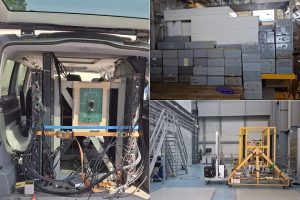
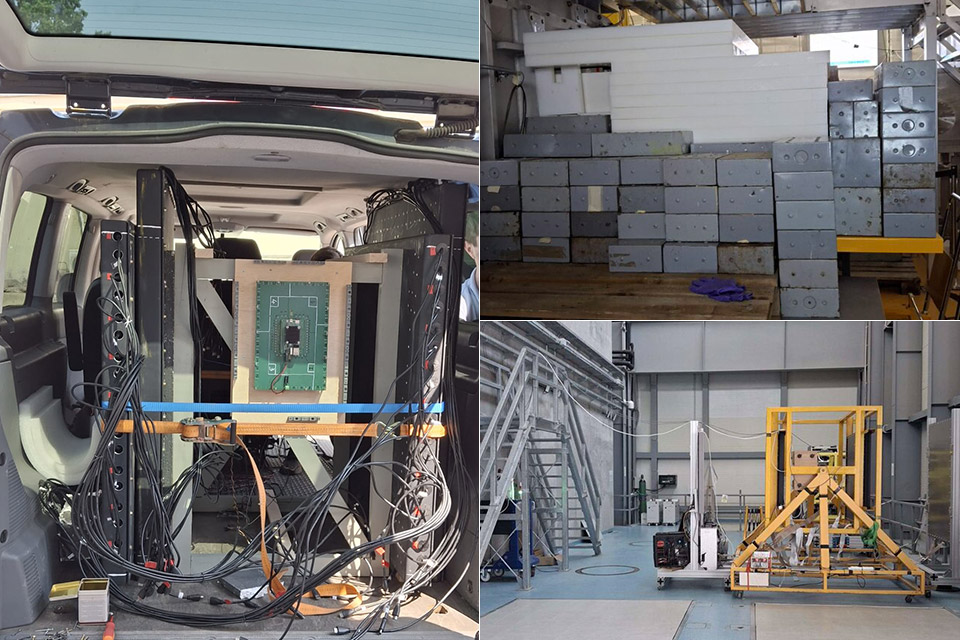
The outcome is a bit of a mixed bag, so the beam is subsequently routed through a filter comprised of polyethylene sheets wrapped around paraffin blocks. Most undesirable particles are absorbed as they pass past this filter. What does get through travels straight through a 2 meter (6 foot) thick concrete wall and continues on. Then there’s a van parked close, about 42 meters from the source, with detectors inside to follow what passes through. Later, the team compared their findings to computer simulations and discovered that approximately 90% of what was identified were muons with the appropriate energy to have originated from the laser-driven source.
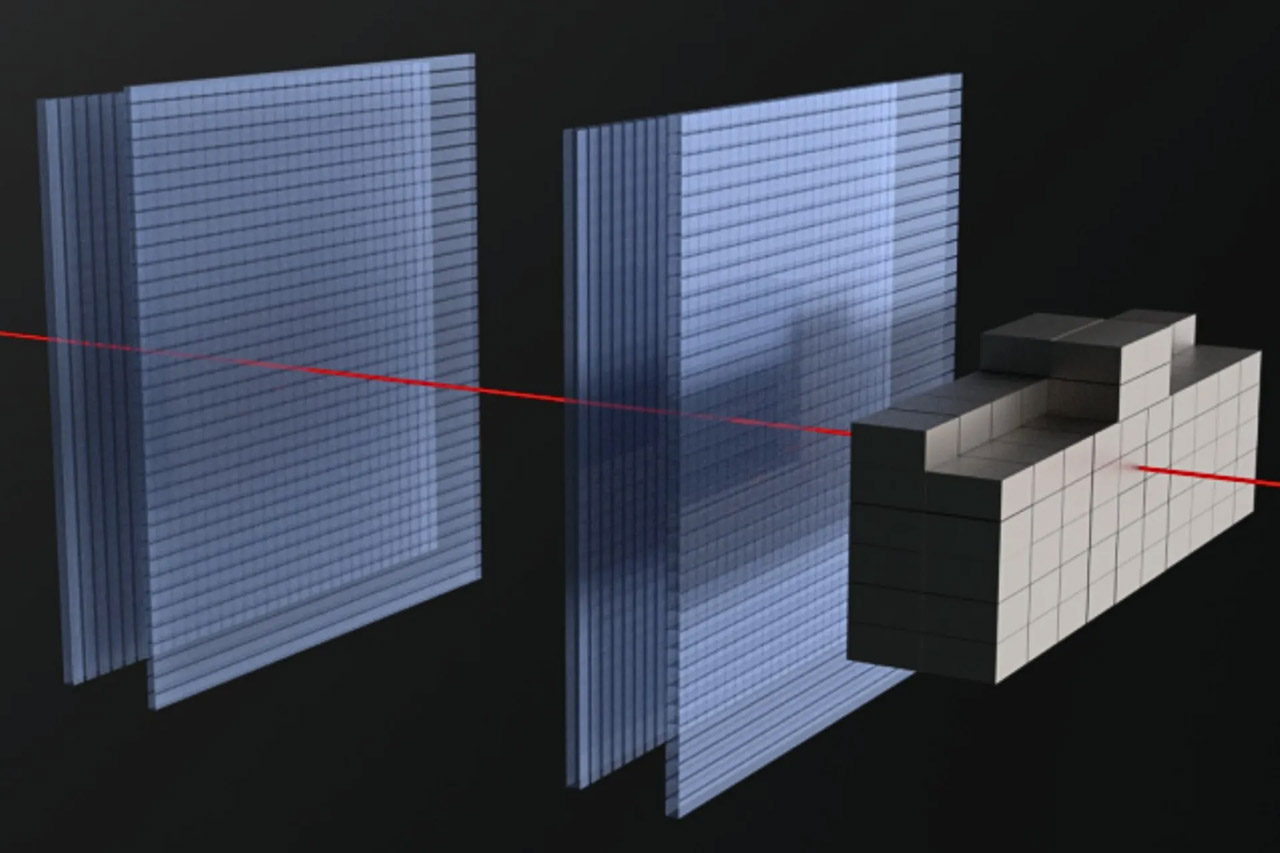
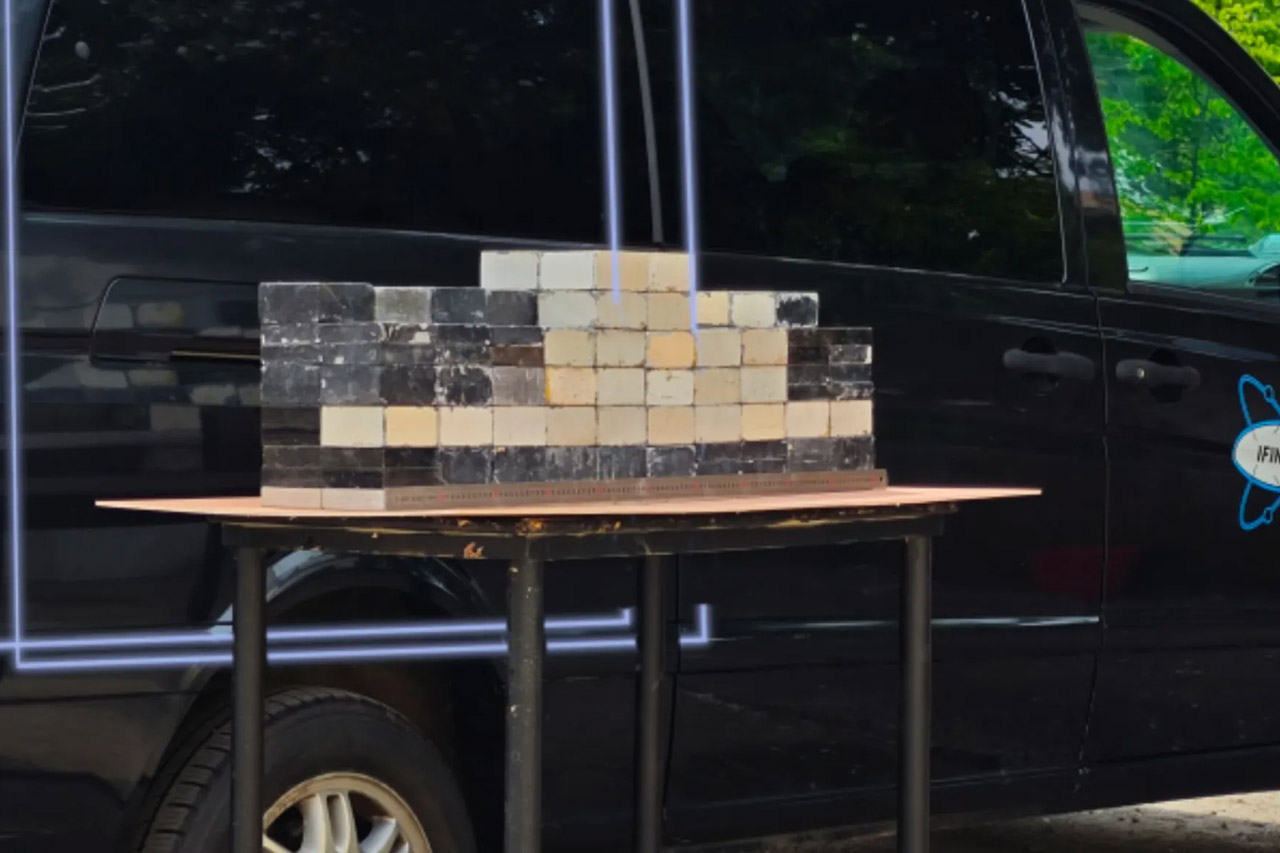
There were some lead bricks on the far side of the wall. Researchers attached detectors to see what kind of shadow the pile of bricks cast in the beam, and the shadow appeared suspiciously similar to the size and shape of the bricks themselves. Simulations of what you’d see from a few-GeV muon beam lined up rather well with the counts they obtained, which was essentially the proof they needed, as the shadow had to have come from the artificial particles produced by the laser rather than the usual background noise from space. In a publication titled Imaging using GeV muons created via laser-wakefield-accelerated electrons, published on arXiv in September 2026, they described this trial run as the first time imaging results were accomplished utilizing a laser-driven muon beam.
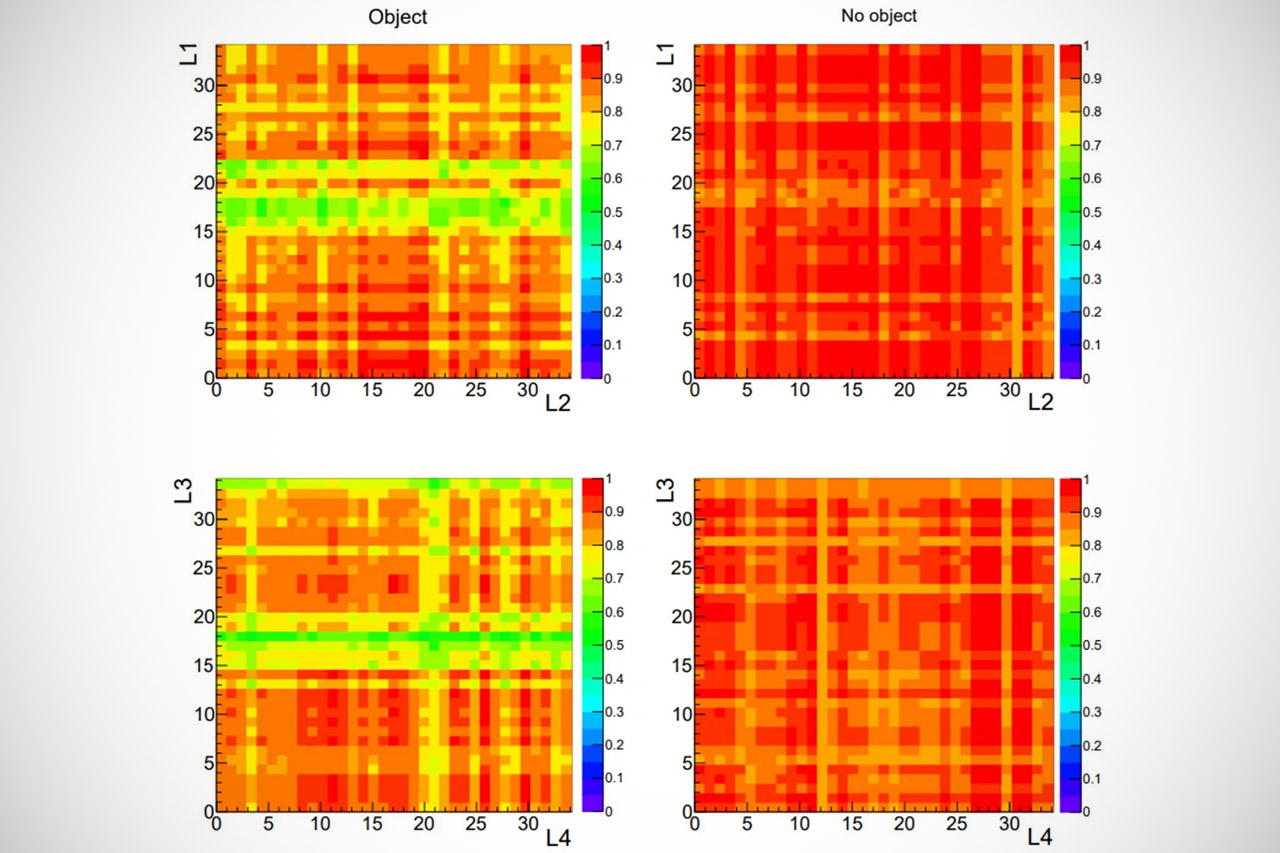
Resolution still needs more work, as the shadow is somewhat coarse, and anything finer than the basic contour of the bricks is a mystery. To achieve higher resolution, they must upgrade the detectors and lasers. Currently, you can scan a difficult item, but the results are too slow to be trusted. With an on-demand beam, you can reduce wait times from months to a few hours. That could be beneficial for recognizing problems in a variety of settings, including cargo holds, bridge piers, old stone foundations, and ship iron hulls. The aim is to have a smaller version of this setup that you can take into the field and use to scan items if the hardware improves and the scans become sharp enough.
[Source]
Laser Made Muons at ELI NP Photograph Lead Blocks Through Six Feet of Concrete
#Laser #Muons #ELI #Photograph #Lead #Blocks #Feet #Concrete