‘Peaceful’ children sacrificed in sick ritual found ‘frozen in time’ under layers of snow
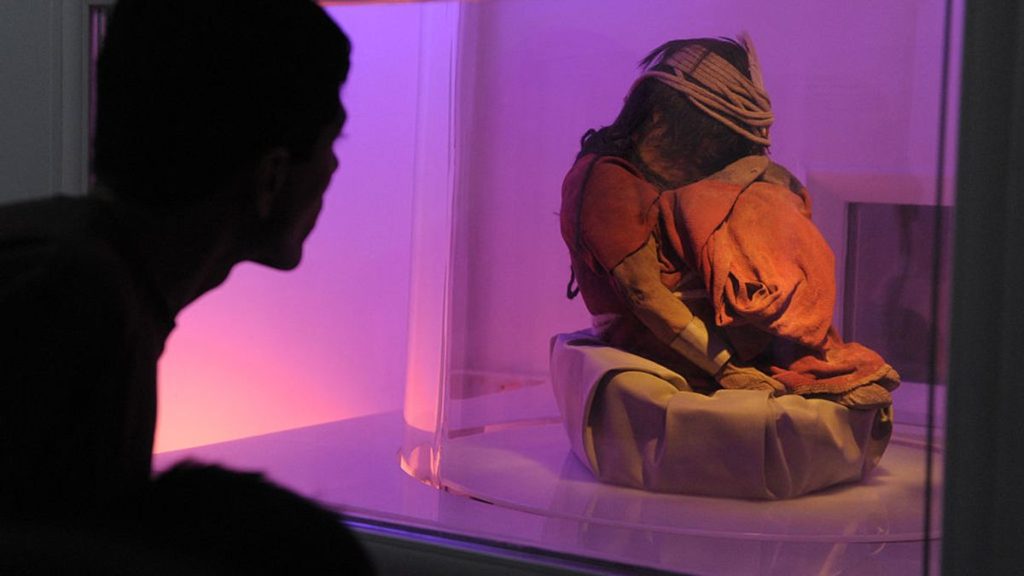
The Llullaillaco mummies were given drugs and alcohol as part of a ritual volcano sacrifice

The seven-year old Inca child found alongside two other frozen mummies(Image: AFP via Getty Images)
A horrific scene was unearthed with school age children frozen in time after months of violence and trauma was inflicted upon them.
The three Incan children were found 500 years after they were subjected to months of drugging. Their final days involved an overflow of alcohol and food before a sick, ancient sacrificial ritual.
Researchers found the children were given drugs and alcohol during their last months, to make them more compliant before they were killed on top of a volcano.
Archaeologists examined the frozen Incan mummies of three children who were unearthed in 1999.
They were buried in a shrine close to the summit of an Argentinian volcano, Llullaillaco, 6,739 metres above sea level.
Testing of their hair samples revealed the three youngsters regularly consumed coca leaves from the same plant cocaine is made, as per Expedition.
The oldest child, dubbed the ‘Maiden’ consumed far more coca and drank considerably more alcohol than the others.
Evidence indicates that the Maiden was treated differently from the other two children, given the monikers Llullaillaco Boy and Lightning Girl. The latter earned her name because archaeologists believe the girl was struck by lightning.
After being chosen for the deadly ritual, the Maiden became a revered figure in the Incan empire, with study lead author Andrew Wilson, an archaeologist at the University of Bradford, saying “her sacrifice was seen as an honour.”
It is thought the other two children may have served as her attendants. Scientists are gaining deeper insights into the lives of the children by analysing their hair samples, which reveal what was circulating in their blood at the time and even provide a timeline of their lives.
In a 2007 study, Wilson and his team discovered the children’s diets had drastically changed over time from their peasant origins, based on common vegetables and potatoes, to an “elite” diet.
This new diet included maize and dried llama meat, seemingly designed to fatten them up in preparation for their sacrifice.
The Maiden, just 13, consumed more food than the Llullaillaco Boy and Lightning Girl, who were four and five.
The scientists managed to construct a timeline of their drug and alcohol consumption.
While the younger children only started being given these substances about nine months before their death, the Maiden had begun taking them almost two years prior to her sacrifice.
In addition to this, the youngsters consumed drugs and alcohol at a steady rate, but the Maiden significantly increased her intake during her final year of life.
Her coca consumption reached its peak around six months before her death, and her alcohol consumption spiked just a few weeks before she died.
Wilson suggested this increase likely made the Maiden more comfortable with her impending death, and they believe she was sedated when she died.
The conditions of the children’s burial was crucial in understanding their last moments.
The Maiden was sitting cross-legged, tilting slightly forwards and she died with a full stomach, wearing a feathered headdress, intricately plaited hair and various artefacts arranged across her knees.
Yet, despite her gruesome fate, experts are uncertain about precisely how she met her end.
Wilson said: “It’s not clear how the Maiden died, but she may have succumbed to the freezing temperatures of the environment and was placed in her final position while she was still alive or very shortly after death.”
In stark contrast, Llullaillaco boy had bloodstains on his cloak, head lice in his hair, and cloth bindings around his body indicating he might have been smothered.
The Lightning Girl didn’t seem to have been killed as brutally, but hadn’t received the same attention as the Maiden.
“The Maiden was perhaps a chosen woman selected to live apart from her former life, among the elite and under the care of the priestesses,” Wilson said.
Many said that the sacrificial ceremonies served as a method of social control, because while they were supposed to be a tremendous honour, they probably instilled profound terror and grief.
Tragically, it was a serious transgression for parents to display any sorrow when surrendering their children to death.